
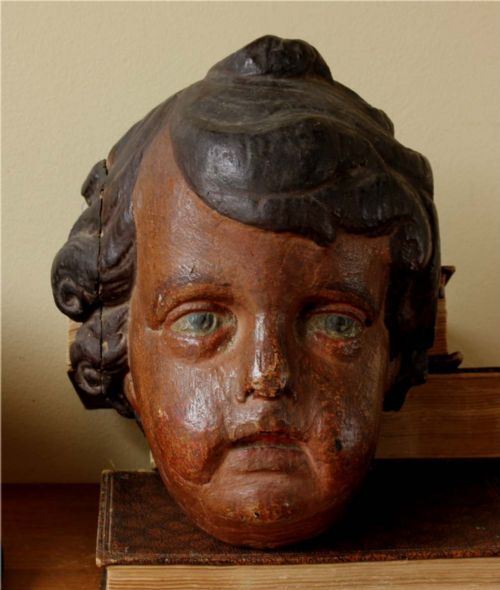


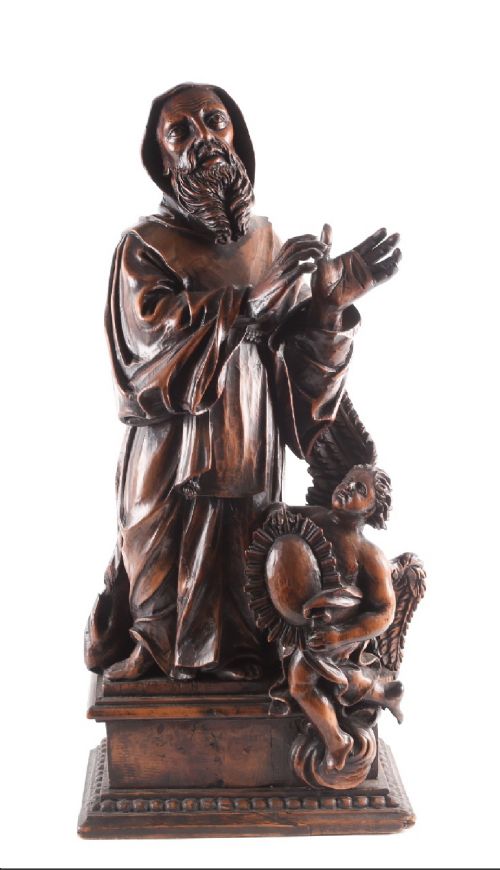


Cherub Wooden Statue
A cherub wooden statue brings dramatic continental theatre into a room, carved to catch the light from every angle.
Cherub Wooden Statue
A cherub wooden statue represents celestial figures in sculpted form, emerging from European workshops during the seventeenth, eighteenth, and nineteenth centuries. These carvings take the shape of winged putti, kneeling angels, and cherubic heads intended for sacred and decorative architectural settings.
You are most likely to encounter eighteenth-century and nineteenth-century examples on this page, often showing regional European interpretations of the Baroque style. These pieces frequently appear singly or in pairs, sometimes posed upon carved wooden clouds.
Religious sculpture forms a core part of these listings, alongside freestanding figures and architectural fragments. Originating from Italy, France, and Germany, the pieces span limewood, oak, and other carved timbers enhanced with historic surface treatments.
Materials and construction
Surfaces were frequently finished with gesso and layered with gold leaf, silver, or polychrome paint to create rich visual textures. These decorative coatings interacted with candle or window light, heightening the dramatic effect characteristic of Baroque design.
Listings span four distinct periods: 1700, the eighteenth century, the nineteenth century, and the year 1880.
Judging quality and character
The sophistication of the hand carving dictates the success of the piece, particularly in the rendering of anatomy, drapery, and facial expression. Finer examples display confident tool work that breathes life into the wood, whereas lesser works remain stiff and schematic.
The survival and integrity of the original surface finishes, whether polychrome paint or gilding, greatly influence the visual impact. Patina accumulated over centuries adds depth, reflecting the transition of these sculptures from sacred altars to domestic interiors.
The Cherub Wooden Statue Glossary
- Putti
- Plumed or wingless infant figures found in classical and religious art. They frequently animate Baroque compositions with playful or devotional energy.
- Polychrome
- Painted in several colours. This surface treatment brings lifelike hues to wooden sculptures and architectural elements.
- Gesso
- A plaster mixture applied to wood as a base for painting or gilding. It provides a smooth ground for delicate surface ornamentation.
- Gilt
- Covered thinly with gold leaf or gold paint. This technique creates a luminous finish that catches and reflects ambient light.
- Baroque
- An ornate artistic style prevalent in Europe during the seventeenth and eighteenth centuries. It is characterised by dynamic movement and dramatic emotional intensity.
Cherub Wooden Statue: Frequently Asked Questions
How were these statues used?
These wooden figures originally adorned European churches, altars, and domestic shrines, often incorporated into larger architectural schemes.
Over time, many transitioned into secular interiors as decorative works of art, appreciated for their sculptural presence and historical depth.
Where did these carvings originate?
The listings show pieces originating primarily from continental workshops in Italy, France, and Germany.
Each region developed distinct stylistic preferences, from the exuberant movement of Italian Baroque to the expressive limewood traditions of Germany.
How do I date a wooden angel?
Dating relies on examining tool marks, the choice of timber, and the ageing characteristics of the gesso and paint layers.
Stylistic cues such as the evolution from seventeenth-century oak figures to lighter eighteenth-century limewood carvings also help determine the period.
How do I care for antique wood?
Keep wooden sculptures away from direct heat sources and sudden humidity fluctuations to prevent the timber from splitting.
Dust gently with a soft, dry brush and avoid applying modern polishes that can damage historic polychrome and gilt surfaces.