
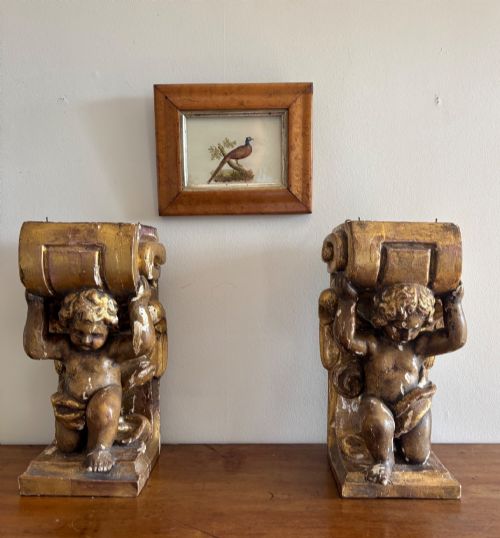


19th Century Baroque Cherub
These 19th century baroque cherub pieces bring theatrical drama and exuberant carving straight into a room, offering rich historical presence.
19th Century Baroque Cherub
When you search for a 19th century baroque cherub, you are looking at carved figures, architectural panels, and furnishings from the 1850s to the 1880s that revive earlier Italian and French decorative schemes. The pieces on this page span wall brackets, console tables, and fire dogs, reflecting a Victorian appetite for Continental theatricality.
You will most frequently meet carved giltwood wall brackets and figures originating from Italian workshops, alongside French ormolu chenets. These objects use winged putti and angelic forms to support heavy marble tops or frame mirrors with considerable sculptural weight.
How they were made
Carvers shaped solid walnut or soft woods before applying layers of gesso and gold leaf to create the bright reflective surfaces characteristic of giltwood. Ormolu items involved cast bronze that was mercury gilt, providing a dense metallic finish for fireplace accessories.
Makers also employed polychrome paint on wooden sculptures and panels to render realistic flesh tones and drapery. Detail was achieved through deep chisel work, allowing the exuberant curves of the Baroque Revival style to catch the light.
Several cherubs appear tasked with holding up heavy marble console tables, looking remarkably cheerful about the sudden architectural weight.
What varies in quality
The distinction between ordinary and exceptional work rests on the depth of the carving and the vitality of the figures. Superior pieces show confident undercut work where the wings and limbs of the cherubs break away completely from the backing timber.
Surface preparation dictates long-term visual success, with finer examples retaining crisp gesso application beneath intact gold leaf rather than flat, heavy repaint. Signed or documented workshop pieces, such as those from known Florentine makers, command greater attention for their structural ambition.
Angiolo Barbetti Firenze
The 19th Century Baroque Cherub Glossary
- Putto
- A plump, naked male child figure often depicted with wings in classical and baroque art. They populate wall brackets and paintings alike.
- Giltwood
- Timber that has been coated with gold leaf over a prepared gesso ground. This technique creates a durable, luminous surface.
- Ormolu
- Finely cast and mercury-gilded bronze used for decorative mounts and fireplace accessories. The method produces a rich golden lustre.
- Chenet
- A metal support or fire dog placed in a hearth to hold logs. French examples often incorporate figural cherubs.
- Gesso
- A plaster mix applied to wood surfaces to provide a smooth base for gilding. It allows for sharp, crisp decorative details.
19th Century Baroque Cherub: Frequently Asked Questions
What is a 19th century baroque cherub?
These items are carved wooden figures, wall brackets, and decorative furnishings created during the eighteen-fifties through to the eighteen-eighties in revivalist styles.
They draw directly from seventeenth-century Italian and French design traditions to bring dramatic sculptural energy into domestic interiors.
Where were these cherub items placed?
Wall brackets and consoles were mounted in reception rooms to display precious objects or support heavy marble slabs.
Fire dogs sat within hearths, while painted panels and framed mirrors integrated directly into architectural wall schemes.
How do I care for giltwood?
Giltwood requires a stable indoor environment away from direct sunlight and excessive moisture to protect the fragile gold leaf and gesso layers.
Dusting should be done very gently with a dry, soft brush rather than a cloth that might catch on raised details.
How do I distinguish Italian and French pieces?
Italian items on this page lean heavily towards carved giltwood wall brackets, altarpiece fragments, and walnut panels with deep organic relief.
French works more commonly feature cast ormolu metalwork in chenets, focusing on refined metallic definition rather than timber carving.