


Italian Baroque Candle Stand
An Italian baroque candle stand brings grand proportion and dramatic carved detail into a room, channelling centuries of ecclesiastical and domestic lighting tradition.
Italian Baroque Candle Stand
When you search for an Italian baroque candle stand, you encounter substantial vertical pieces designed to elevate light, ranging from altar sticks to tall torcheres. These objects embody the theatrical spirit of the seventeenth and eighteenth centuries, built to command attention in large spaces.
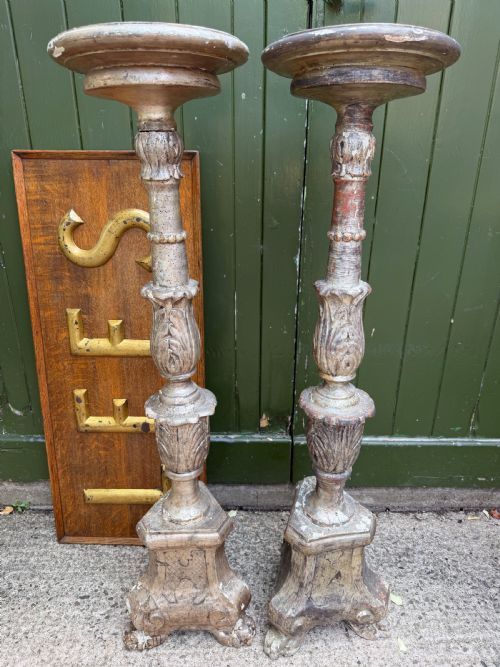
The versions most commonly met on this page span the seventeenth, eighteenth, and nineteenth centuries, often showing later revivals of the style. They appear primarily as carved wooden pedestals, torcheres, and candlesticks, frequently retaining traces of their original surface treatments.
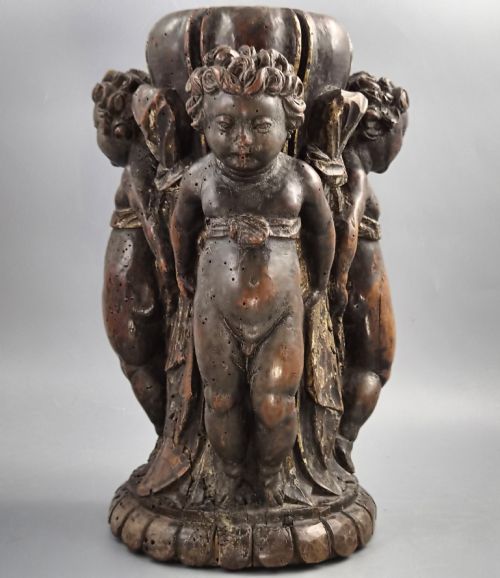
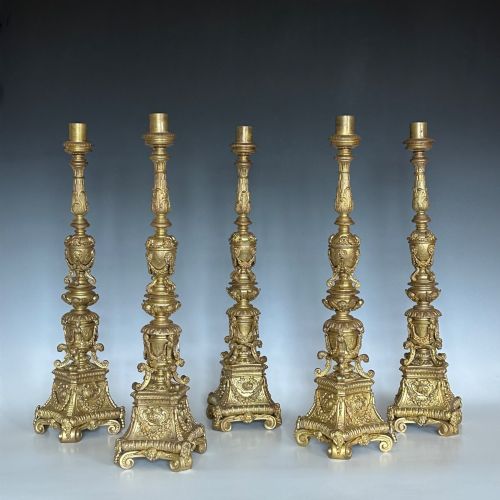
Forms include columnar shafts, tripod bases supported by figures such as putti, and fluted standards designed for heavy candles or standard lamp conversions. Their origins trace to workshops across Italy, including Venetian centres known for rich decorative schemes.
How they were made
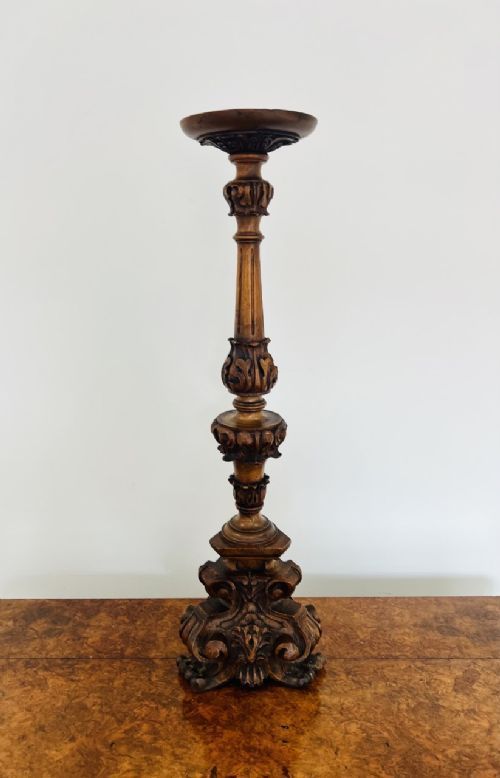
Makers shaped these stands from dense timbers such as walnut, pine, and unspecified carved woods, utilising heavy joinery to support tall, slender profiles. Carvers worked directly into the material to produce deep relief ornamentation, scrolls, and figurative elements.
Surfaces received elaborate finishes, including gesso priming, silver leaf, and gold leaf gilding, alongside polychrome paint and decorative silvering. These coatings caught the flicker of candlelight, amplifying the visual warmth and drama of the piece.
Listings here feature items spanning from the seventeenth century through to the Victorian era and the early twentieth century.
What varies in quality
Depth and crispness of the hand-carved detail separate ordinary items from exceptional examples, particularly in figurative work like putti or acanthus scrollwork. The integration of the base with the central shaft determines the structural stability of taller torcheres.
The survival and application of original surface layers - whether giltwood, silver leaf, or polychrome paint - dictate the visual presence of the object over time. Subtle variations in proportions and the weight of the timber reflect the ambition of the original workshop.
The Italian Baroque Candle Stand Glossary
- Torchere
- A tall stand designed to support a light source or candle. These pieces often feature elaborate carved shafts and elevated platforms.
- Giltwood
- Wood coated with a thin layer of gold leaf over a prepared gesso ground. This technique provides a luminous surface that reflects light.
- Gesso
- A plaster-like mixture applied to wooden bases to create a smooth surface for gilding or painting. It allows for sharp, detailed carving effects.
- Putti
- Representations of chubby male infants, frequently winged, used as decorative supports in baroque sculpture and furniture. They add dynamic movement to the base.
- Pricket stick
- A type of candlestick featuring a sharp metal spike at the top to secure a large candle. These are commonly associated with altar pieces.
Italian Baroque Candle Stand: Frequently Asked Questions
How were these stands used historically?
These tall stands provided ambient illumination in grand ecclesiastical spaces, palazzos, and wealthy homes during periods when artificial light was scarce and expensive.
Positioned on floors or altars, they elevated candles to project light further across large, high-ceilinged rooms during ceremonies and evening gatherings.
Are these stands suitable for modern electrical wiring?
Many surviving examples have been adapted over time to function as standard lamps, accommodating electrical fittings without losing their decorative function.
When converted thoughtfully, they integrate into contemporary living spaces while retaining their original historic silhouettes and carved surfaces.
How do I distinguish seventeenth-century pieces from nineteenth-century revivals?
Examination of the timber tool marks, the composition of the underlying gesso, and the natural wear patterns of the gilding helps determine age.
Earlier pieces show hand-wrought construction and organic ageing in the materials, whereas revival items often display more uniform manufacturing techniques.
What is the difference between a torchere and a candlestick?
Torcheres are freestanding vertical stands designed to sit directly on the floor, holding candles or lamps at a considerable height.
Candlesticks are generally smaller, more compact objects intended to rest on tables, altars, or other elevated furniture surfaces.
How should I care for antique giltwood surfaces?
Giltwood and silvered surfaces require gentle dusting with a soft, dry brush and protection from direct sunlight and excessive moisture.
Harsh chemical cleaners strip the delicate gold leaf and gesso layers, so surfaces should be kept in stable indoor environmental conditions.