

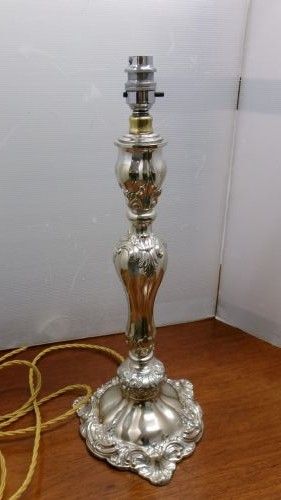


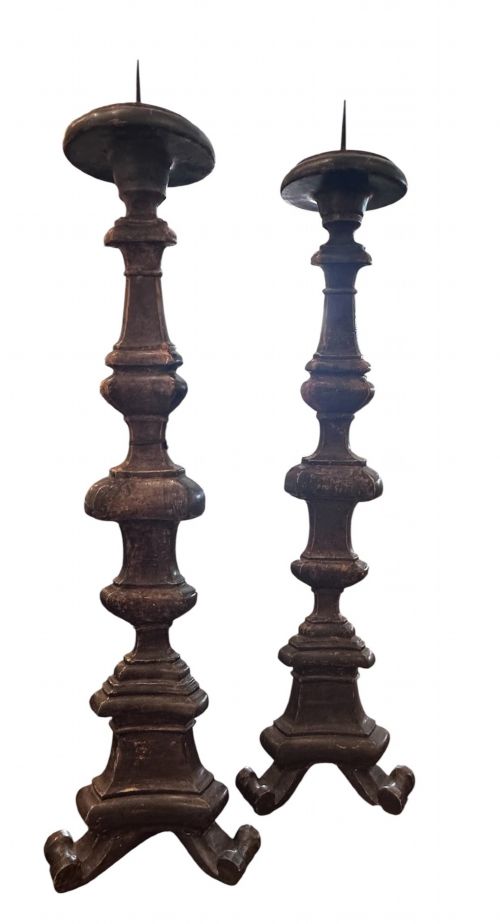
Carved Silver Candlesticks
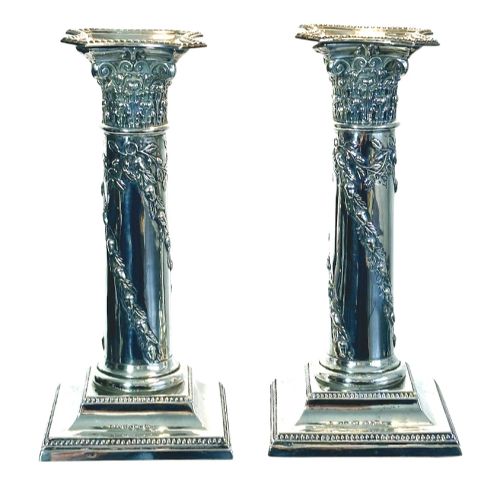
These carved silver candlesticks combine rich wooden carving with gleaming metallic leaf, bringing dramatic lighting and sculptural presence to any surface.
Carved Silver Candlesticks
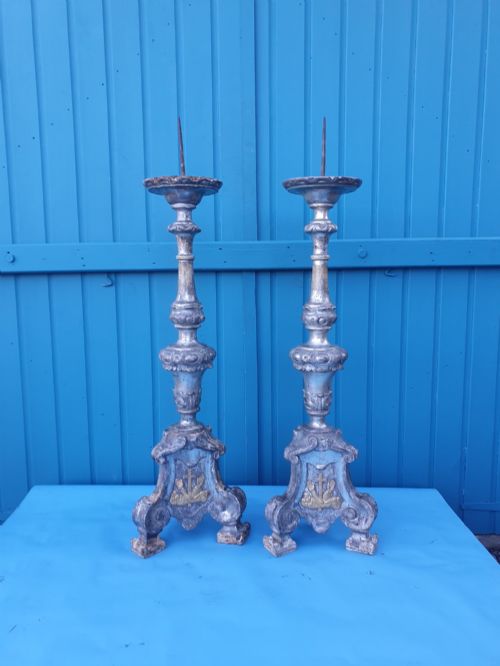
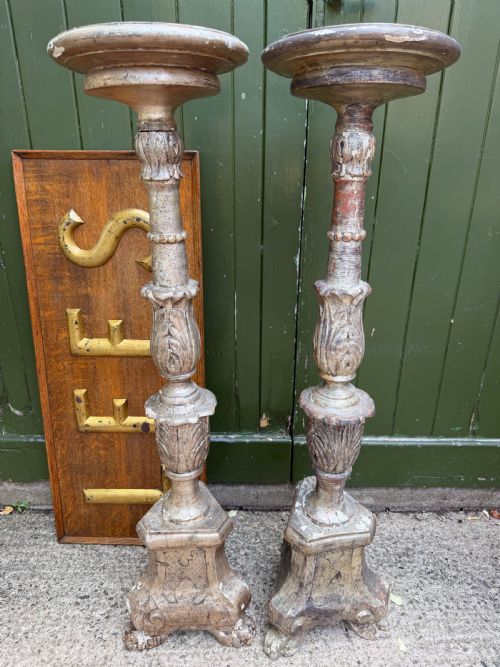
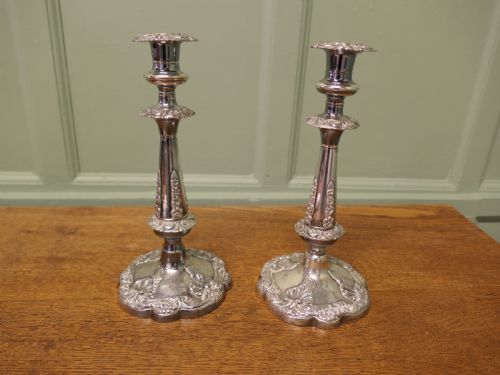
Carved silver candlesticks encompass wooden lighting supports finished with metallic surfaces, taking forms from traditional taper sticks to tall altar-style torcheres and table lamps.
Most examples encountered here originate from the eighteenth and nineteenth centuries, spanning Georgian, Victorian, and Edwardian periods with notable Italian and French regional variations.
Makers utilised carved wood, gesso, and solid metals alongside silver plating and silver leaf to achieve the characteristic reflective sheen across diverse revival styles.
How they were made
Artisans carved structural elements from timber such as walnut and ebony before applying layers of gesso to prepare surfaces for delicate finishing.
Workers then applied silver leaf or utilised silver plating techniques over base metals like bronze and brass to create enduring metallic radiance.
Carved Silver Candlesticks Retail Price Guide 2026
Typical asking prices for carved silver candlesticks among the pieces listed under this phrase on Sellingantiques today, from the lower quarter to the upper quarter. They describe what is for sale here now, not the wider market.
Several tall altar sticks spent their early years illuminating dimly lit Italian chapels before finding their way into modern drawing rooms.
What varies in quality
The refinement of the initial wood carving determines the overall sculptural depth, distinguishing fluid floral motifs and architectural turnings from softer, less defined execution.
The integrity of the silver leaf or plating layer governs how light reflects across the contours, with even distribution and subtle burnishing marking superior workmanship.
Ferdinand Barbedienne
The Carved Silver Candlesticks Glossary
- Silver leaf
- Extremely thin sheets of silver applied to prepared wooden or gesso surfaces. This technique provides the luminous appearance found on many antique altar-type sticks.
- Gesso
- A plaster mixture applied to carved wood to create a smooth base for gilding or silvering. It allows artisans to crisp up fine decorative details.
- Torchere
- A tall decorative stand designed to hold a light source. These elevated pieces often feature elaborate wooden turning and substantial height.
- Pricket
- A sharp spike on a candlestick designed to secure a candle rather than a socket. This traditional form appears frequently on Continental altar pieces.
- Old Sheffield plate
- An early fused plating method sandwiching a layer of silver between copper. It yields a rich warmth distinct from later electroplating.
Carved Silver Candlesticks: Frequently Asked Questions
How do I date an antique pair?
Examine the underlying wood construction, tool marks, and the method of silver application, comparing them against known stylistic periods like the Georgian or Victorian eras.
Changes in metal composition and plating techniques also offer reliable clues to the decade of manufacture.
Where were these tall torcheres used?
Large torcheres and altar-style sticks originally illuminated grand ecclesiastical spaces, private chapels, and formal reception rooms in Italian and French interiors.
Their substantial height allowed them to stand directly on the floor or upon large tables to project light effectively.
Are wooden silvered sticks fragile?
The underlying carved wood and gesso layers require careful handling to prevent moisture damage or surface abrasion to the delicate metallic leaf.
Keeping them away from direct heat sources helps preserve the stability of the timber and the adherence of the silvering.
What is the difference between prickets and sockets?
Prickets utilise a vertical metal spike that pierces the base of the candle to hold it securely in place, commonly seen on altar sticks.
Sockets feature a cylindrical cup that encloses the lower portion of the candle, a configuration that became standard in later domestic lighting.