



Islamic Inlay Table
These islamic inlay table examples bring intricate geometric craft and rich tactile surfaces into a room, offering both decorative presence and versatile function.
Islamic Inlay Table
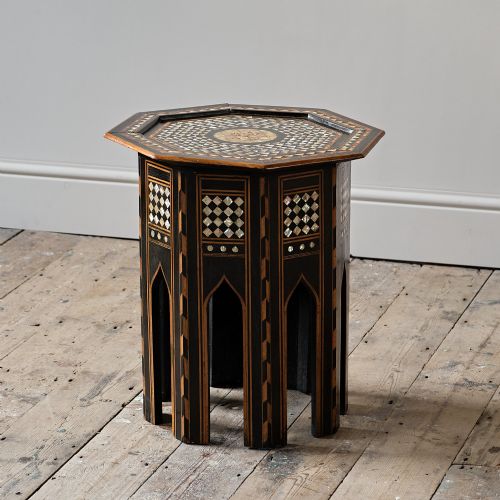
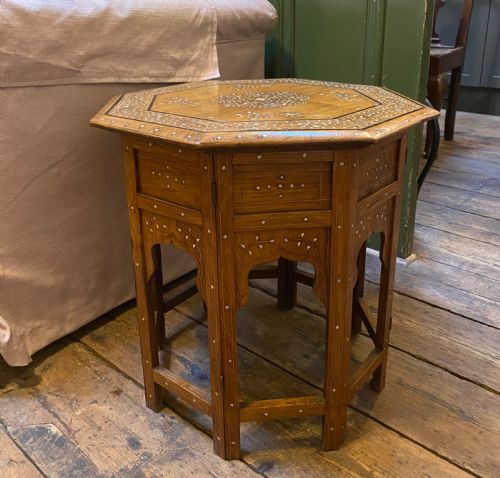
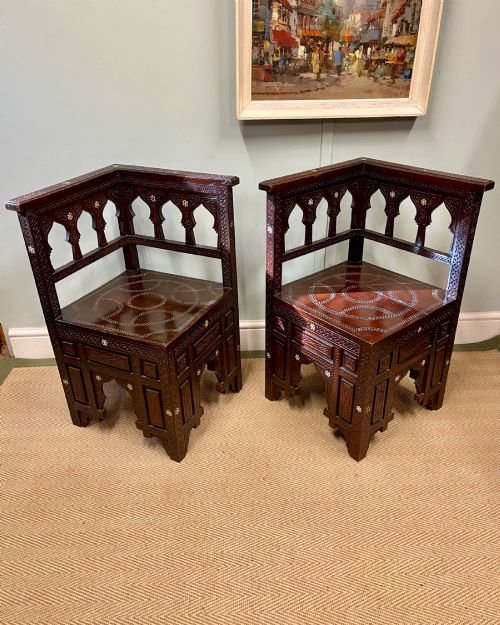
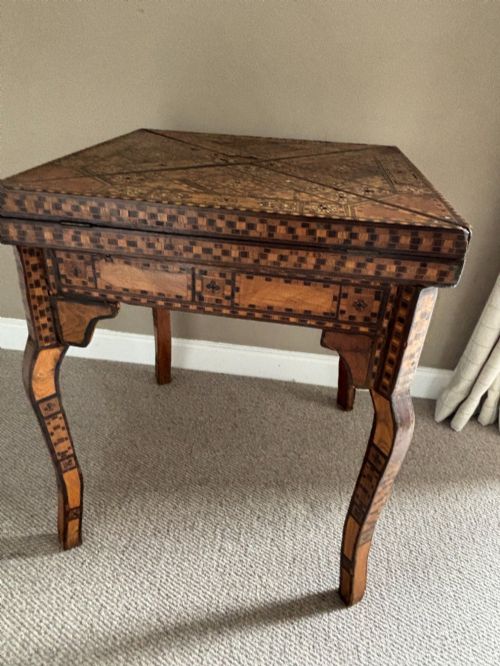
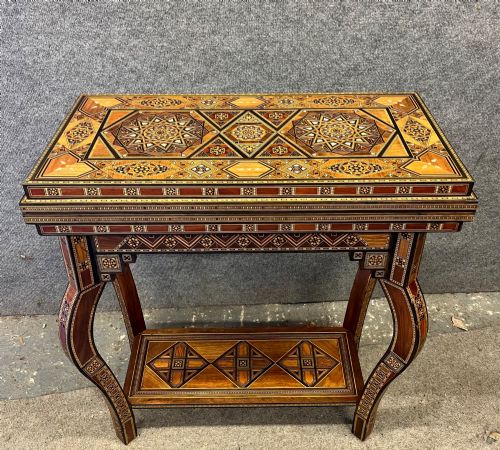
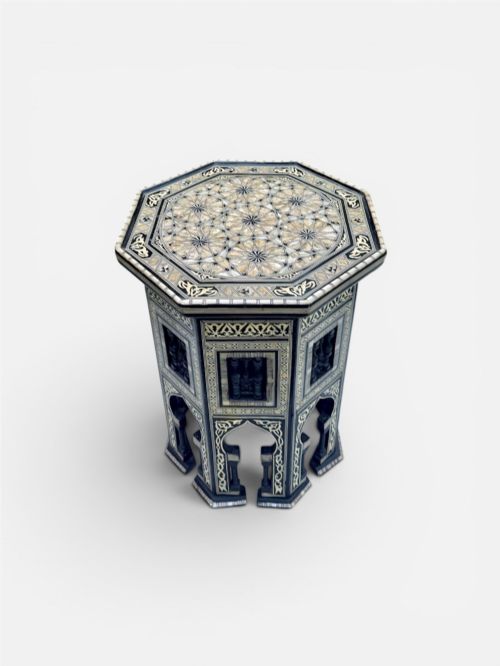
An islamic inlay table unites complex geometric woodwork with contrasting luminous details, forming pieces designed for domestic use as side surfaces, games tables, or occasional stands. The forms range from octagonal side tables and corner tables to folding envelope games tables and larger writing desks.
Most items you encounter belong to the nineteenth and early twentieth centuries, spanning Victorian, Moorish Revival, Mamluk Revival, and Ottoman styles. These pieces showcase regional craft traditions from Damascus, Cairo, Syria, and Hoshiarpur, often rendered in hexagonal or octagonal configurations.
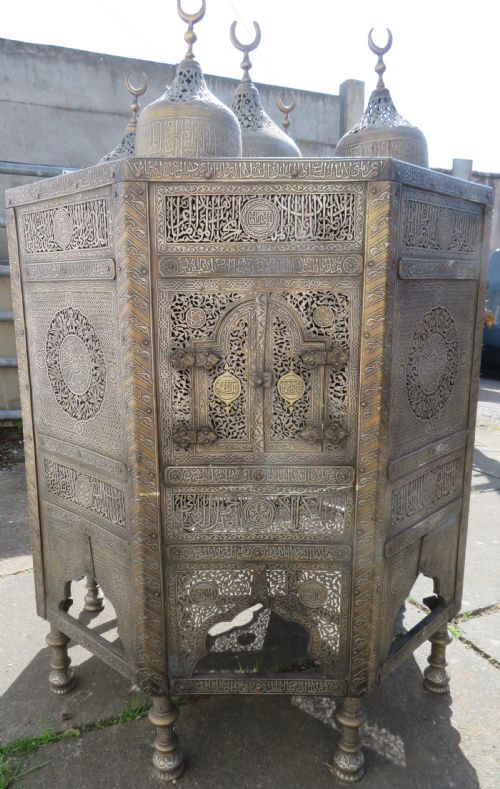
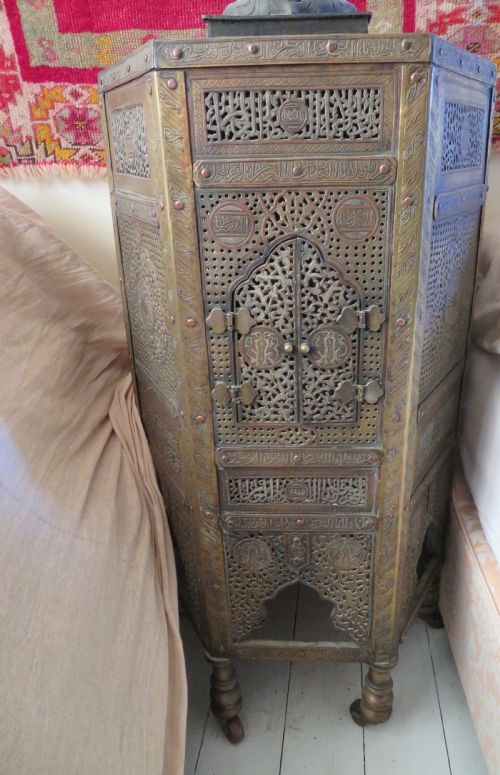
The selection includes specialised forms such as the kursi, utilised as a Quran stand or low occasional table, alongside hardwood chests and tabletop cabinets. Whether carved with openwork or embellished with metal inlay, each object serves as a functional centrepiece rooted in historical revival aesthetics.
How they were made
The foundation structures rely on hardwoods such as walnut, fruitwood, and various dense regional timbers, providing a stable carcass for intricate surface work. Carpenters shaped these woods into folding bases, octagonal frames, and multi-sided tabletops using traditional joinery methods.
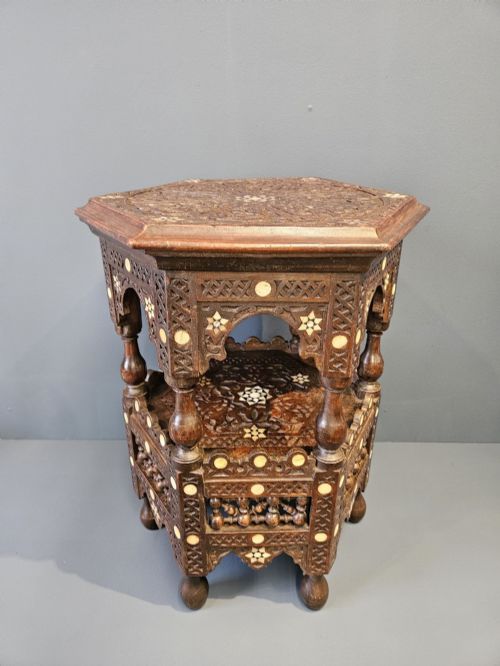
Surfaces receive elaborate ornamentation through the precise insertion of mother-of-pearl, bone, and contrasting metal wires including brass, copper, and white-metal. Artisans pressed these materials into hand-carved recesses to create geometric stars, interlacing strapwork, and floral motifs.
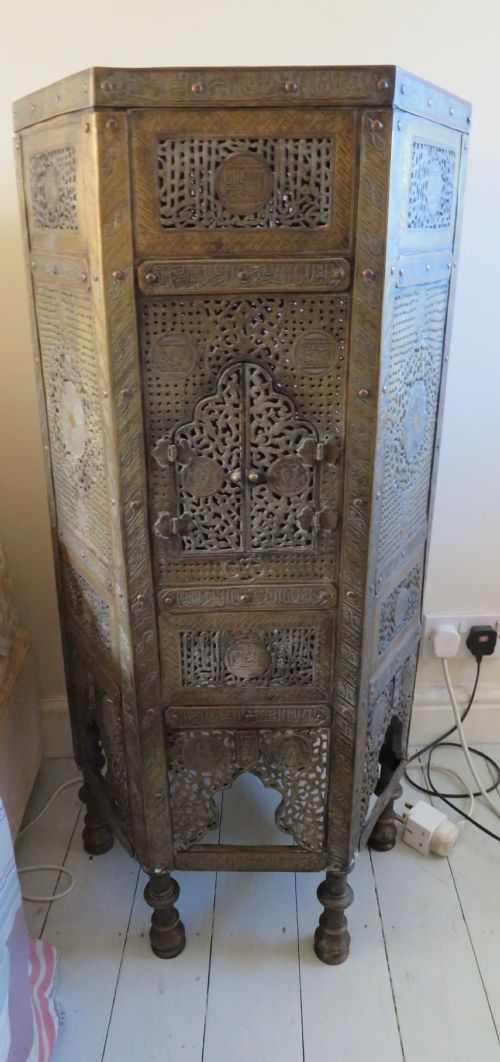
Metalwork pieces known as cairoware involve hammered brass bases inlaid with silver and gold tones, sometimes combined with openwork piercing. In wooden examples, individual tesserae of bone and pearl are meticulously fitted together to cover the entire structure.
Islamic Inlay Table Retail Price Guide 2026
Typical asking prices for islamic inlay table among the pieces listed under this phrase on Sellingantiques today, from the lower quarter to the upper quarter. They describe what is for sale here now, not the wider market.
Listings feature woods such as walnut, fruitwood, and unspecified hardwoods, combined with mother-of-pearl, bone, brass, and copper.
What varies in quality
Quality rests primarily on the density and precision of the inlay work, where superior examples feature tightly fitted mother-of-pearl and bone without excessive filler. The intricacy of the underlying wood carving and the complexity of the geometric patterns also dictate the standard of the piece.
Material selection marks the distinction between standard production and finer workshop output, particularly in the thickness of the shell and the purity of the metal wire used. Well-preserved surfaces retain their original flush finish where components have not shrunk or loosened over decades of environmental change.
Liberty & Co
The Islamic Inlay Table Glossary
- Moorish Revival
- A nineteenth-century architectural and decorative style that reinterpreted Islamic design motifs from Spain and North Africa. It heavily influenced European and British domestic furniture production.
- Cairoware
- Metalwork originating from Cairo, typically consisting of brass or copper vessels and tables inlaid with silver, gold, and white-metal in calligraphic or geometric patterns.
- Kursi
- A traditional low table or stand, frequently hexagonal or octagonal, used in Middle Eastern interiors for seating arrangements or as a support for sacred texts such as the Quran.
- Mother-of-Pearl
- The iridescent inner layer of mollusc shells, harvested and cut into thin geometric tiles for inlaying into wooden furniture surfaces.
- Envelope Games Table
- A table featuring a folding top that rotates and opens diagonally like an envelope to reveal a baize-lined playing surface and interior storage compartments.
Islamic Inlay Table: Frequently Asked Questions
How do I clean an inlaid table?
Dust gently with a dry, soft cloth, avoiding commercial polishes that can seep beneath loose bone or mother-of-pearl tiles. Keep the wood nourished with appropriate natural waxes applied sparingly.
Protect the surface from direct sunlight and excessive humidity to prevent the wood from expanding and causing the delicate inlay tesserae to lift.
Where should I place this table?
These tables function well as compact side tables beside seating or as standalone decorative accents in hallways and drawing rooms. Their detailed geometric tops make them ideal for displaying objects where they can be viewed from above.
Ensure they sit away from direct heat sources such as radiators, which can dry out the older hardwoods and compromise the adhesive holding the bone and shell.
Are these tables sturdy enough for daily use?
Most occasional tables and stands are structurally sound for holding lamps, books, or drinks, provided they are handled with reasonable care. Folding models and games tables require gentle operation of their hinges and rotating tops.
Avoid placing excessive heavy weight on the centres of older octagonal tables, particularly those featuring intricate openwork or delicate inlaid panels.
How do I distinguish regional styles?
Syrian and Damascene pieces frequently employ dense arrangements of bone and mother-of-pearl on walnut frames, often incorporating intricate geometric strapwork. Cairoware items focus on heavy brass or copper bases with contrasting metal wire inlay and pierced openwork.
Pieces associated with Hoshiarpur display distinct carved wooden surfaces with microscopic bone inlay, while Moorish Revival examples draw on broader North African and Spanish architectural motifs.