




Syrian Marquetry Side Table
A syrian marquetry side table brings intricate geometric pattern and contrasting inlay into a room, offering a functional surface steeped in Levantine and Ottoman craftsmanship.
Syrian Marquetry Side Table
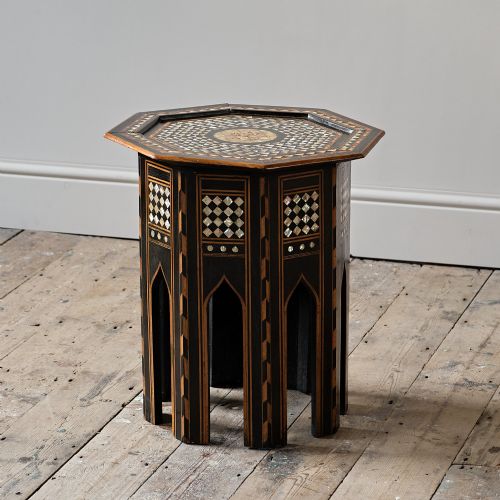
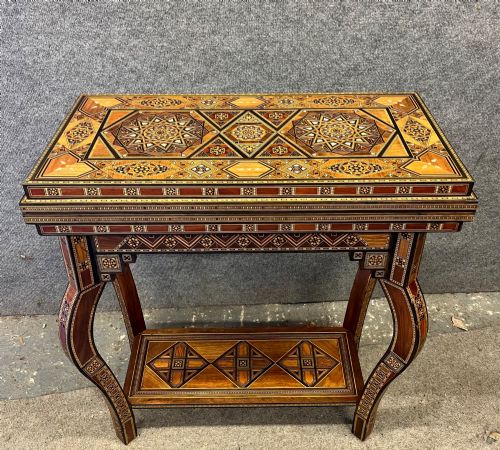
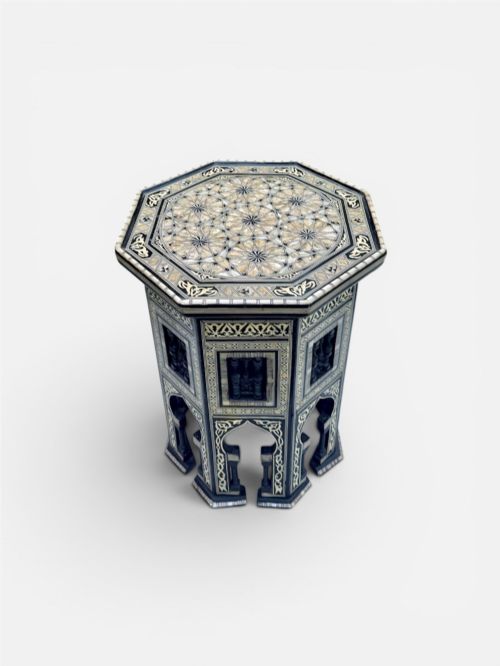
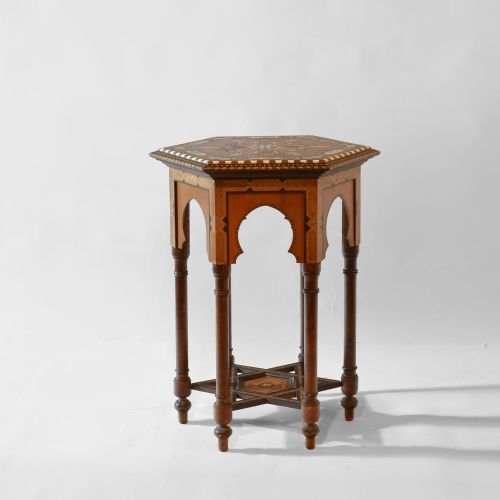
A syrian marquetry side table usually takes an octagonal or hexagonal form, serving as an occasional surface or a multipurpose games table configured for chess, backgammon, and card play. These pieces emerge across the late nineteenth and early twentieth centuries, spanning periods from eighteen eighty through to nineteen thirty.
The aesthetic bridges several overlapping traditions, including Moorish Revival, Syrian Ottoman, and Levantine styles. Buyers most frequently encounter octagonal and hexagonal side tables that utilise a dense mosaic surface pattern rather than simple flat veneers.
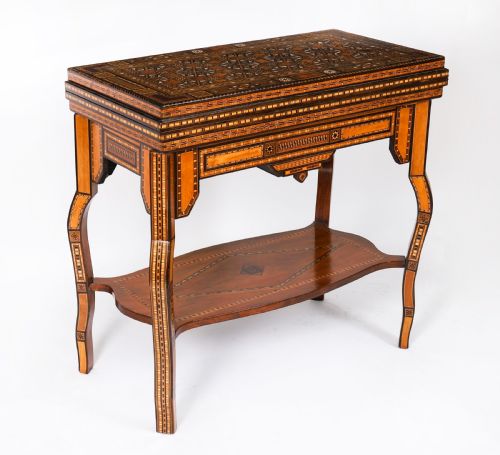
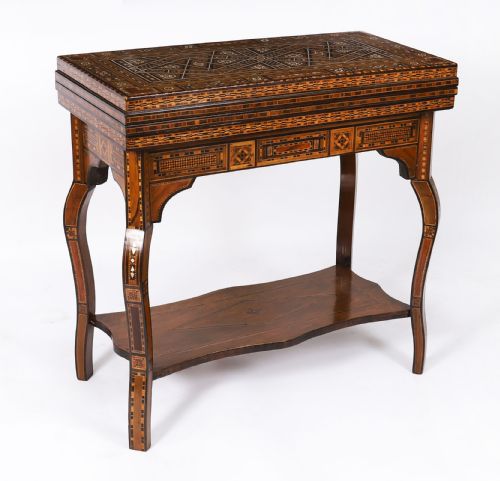
Makers in Damascus and the wider region produced these works for both local Ottoman markets and export to European houses such as Liberty and Co. The construction often incorporates folding bases that support complex geometric table tops.
How they were made
The primary structure relies on foundational woods such as walnut, fruitwood, ebonised wood, and general hardwoods. Artisans build the carcass using traditional joinery before applying the detailed surface decoration.
Inlay work forms the core of the technique, combining precisely cut pieces of bone and mother-of-pearl alongside various contrasting timbers. These organic and wood elements fit tightly together to create intricate star and geometric motifs across the entire top and sides.
Syrian Marquetry Side Table Retail Price Guide 2026
Typical asking prices for syrian marquetry side table among the pieces listed under this phrase on Sellingantiques today, from the lower quarter to the upper quarter. They describe what is for sale here now, not the wider market.
Current listings feature walnut, fruitwood, ebonised wood, bone, and mother-of-pearl across periods spanning eighteen eighty to nineteen thirty.
What varies in quality
The precision and tightness of the geometric tessellation set the standard for finer examples, where bone and mother-of-pearl segments align without excessive filler material. Tables that maintain every individual inlay piece without shrinkage gaps demonstrate superior workshop execution.
The complexity of the form also dictates quality, moving from simple occasional tables to multi-functional games tables equipped with internal boards for chess and backgammon. The depth of the carved woodwork and the variety of contrasting woods further distinguish exceptional regional pieces.
Liberty and Co
The Syrian Marquetry Side Table Glossary
- Marquetry
- The art of applying small pieces of wood, bone, and shell to a structural carcass to form decorative geometric patterns. This technique creates the signature mosaic surfaces seen on Levantine furniture.
- Mother-of-pearl
- The iridescent inner layer of mollusc shells used extensively as thin inlays to catch the light. It provides bright contrast against darker walnut and ebonised wood grounds.
- Octagonal
- A polygon shape with eight sides, forming the most common profile for these inlaid occasional tables. This geometry allows for balanced radial patterns across the top.
- Moorish Revival
- An architectural and decorative style popular in the nineteenth century that reinterpreted Islamic design motifs for Western interiors. It heavily influenced the export trade of Damascus tables.
Syrian Marquetry Side Table: Frequently Asked Questions
What periods do these tables cover?
The listings span from the late nineteenth century through the early twentieth century, encompassing dates like eighteen eighty, eighteen ninety, and nineteen thirty.
Most examples reflect production periods associated with the height of Ottoman and Levantine export crafts.
How were these games tables used?
These folding and stationary tables served as versatile occasional surfaces for receiving guests while concealing integrated boards for chess, backgammon, and card games beneath removable tops.
They functioned as both decorative reception furniture and practical items for parlour entertainment in grand nineteenth-century homes.
What materials make up the inlay?
Craftsmen used natural bone and shimmering mother-of-pearl combined with contrasting fruitwoods and ebonised timber to build up the intricate mosaic surfaces.
These materials were meticulously shaped and laid down onto a solid hardwood or walnut framework.
How do I distinguish regional styles?
Tables span Moorish Revival, Syrian Ottoman, and Levantine traditions, often identified by the specific geometry of the bone and pearl inlay work.
Pieces originating directly from Damascus tend to feature distinct hexagonal or octagonal proportions alongside dense overall patterning.