

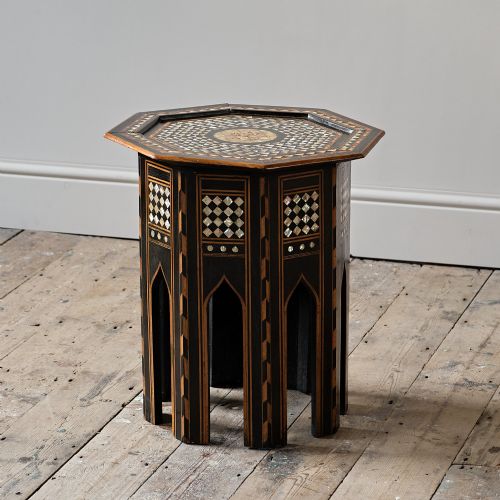
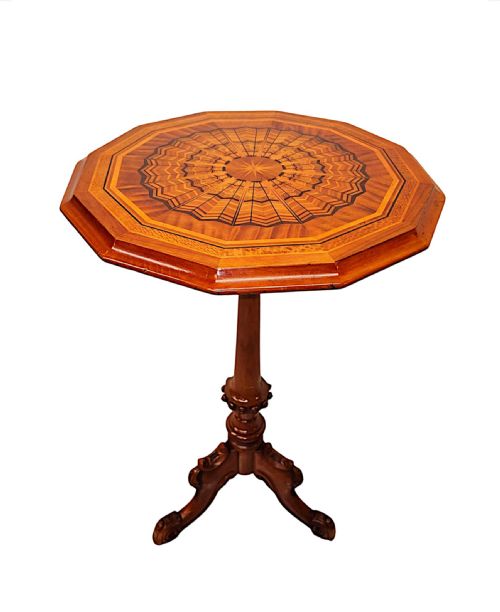
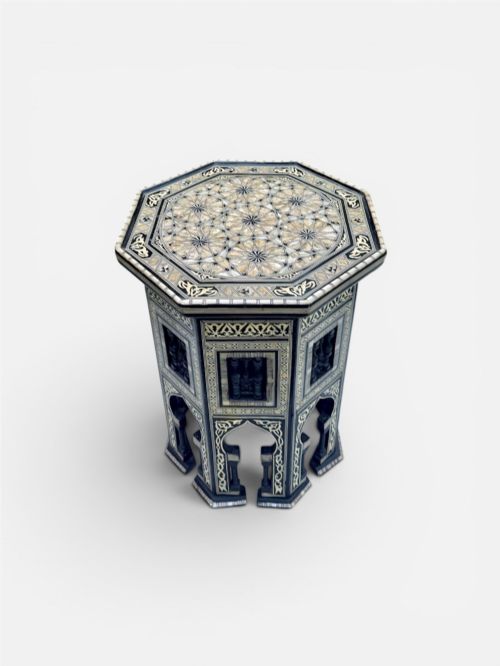


Octagonal Geometric Inlay Table
An octagonal geometric inlay table brings intricate parquetry and exotic materials straight into a room, offering a striking surface for daily use.
Octagonal Geometric Inlay Table
An octagonal geometric inlay table stands as a distinctive form of occasional furniture, typically encountered in nineteenth-century and early twentieth-century examples. These pieces appear in varied styles such as Moorish Revival, Sorrento Ware, Ottoman, and Victorian Colonial, reflecting a broad geographic spread from British colonial workshops to Italian resort towns.
The primary forms on this page include occasional tables, side tables, coffee tables, and hall tables. They utilise distinctive eight-sided tops that showcase complex patterns arranged in wood, bone, and shell.
Origins stretch from European centres like Italy to Middle Eastern workshops and New Zealand colonial cabinetmakers. Buyers encounter tables executed in native timbers, satinwood, mahogany, and walnut, often heavily decorated with parquetry.
Materials and construction
Cabinetmakers built these tables using hardwoods such as walnut, mahogany, birch, and fruitwood as a stable carcass. They applied fine veneers and intricate parquetry to the tops, laying out geometric patterns piece by piece.
Makers integrated contrasting materials including mother-of-pearl, bone, and diverse specimen woods to create sharp visual delineation within the geometric designs. The precise cutting of these small tesserae required steady hands and specialised saws.
Octagonal Geometric Inlay Table Retail Price Guide 2026
Typical asking prices for octagonal geometric inlay table among the pieces listed under this phrase on Sellingantiques today, from the lower quarter to the upper quarter. They describe what is for sale here now, not the wider market.
Materials span walnut, mahogany, birch, oak, fruitwood, mother of pearl, bone, and various native specimen timbers.
What determines quality
Quality rests upon the precision of the geometric layout and the tightness of the joints between individual inlay pieces. Superior examples maintain exact alignment across the eight sides without noticeable gaps or filler in the timber joints.
The choice of materials dictates the upper tier of the range, where precious specimen woods, intact mother-of-pearl, and delicate bone work remain crisp and secure. Tables showing thoughtful grain selection and balanced composition outshine simpler, coarser constructions.
Gillows·Anton Seuffer
The Octagonal Geometric Inlay Table Glossary
- Parquetry
- Geometric mosaic of wood pieces used to decorate a surface. This technique forms the primary visual interest on the top of an octagonal geometric inlay table.
- Specimen wood
- Timber selected for its specific grain, colour, or natural properties rather than structural strength. Makers gathered various native woods to create contrasting patterns.
- Occasional table
- A small, light table designed for temporary or specific uses around a room. These pieces move easily to hold lamps, books, or decorative items.
- Moorish Revival
- An architectural and decorative style drawing inspiration from Islamic design elements. It frequently incorporates complex star patterns and inlaid shell.
Octagonal Geometric Inlay Table: Frequently Asked Questions
What is an octagonal geometric inlay table?
An octagonal geometric inlay table is a small piece of furniture featuring an eight-sided top decorated with precise patterns of wood, bone, or shell.
These tables were produced across the nineteenth and early twentieth centuries in various regional styles, including Italian Sorrento work and Middle Eastern designs.
How were these tables used originally?
These tables served as functional occasional pieces in Victorian and Edwardian parlours and drawing rooms. They held lamps, small ornaments, or reading materials.
Their compact size allowed them to sit beside chairs or against walls in hallways and sitting rooms.
How do I care for inlaid wood surfaces?
Keep inlaid tables away from direct sunlight and strong heat sources to prevent the wood and veneer from drying out and cracking. Natural oils or wax help maintain the lustre of the timber.
Use soft cloths for dusting and avoid placing damp items directly onto the vulnerable parquetry surface.
How can I tell the period of a table?
Dating relies on examining the underlying construction timber, the style of the inlay work, and the physical wear on the structure. Nineteenth-century examples often display hand-cut elements and distinct regional construction methods.
Comparing the secondary woods underneath helps confirm the era of manufacture.