


Iron Mounted Chest
An iron mounted chest brings heavy timber and robust metalwork together for secure storage, offering a tangible connection to centuries of practical craftsmanship.
Iron Mounted Chest
An iron mounted chest serves as a robust container for valuables, documents, or household goods, spanning several centuries and various geographical origins. When searching for an iron mounted chest, buyers encounter domestic strong boxes, travel caskets, and larger storage trunks built from sturdy timbers.
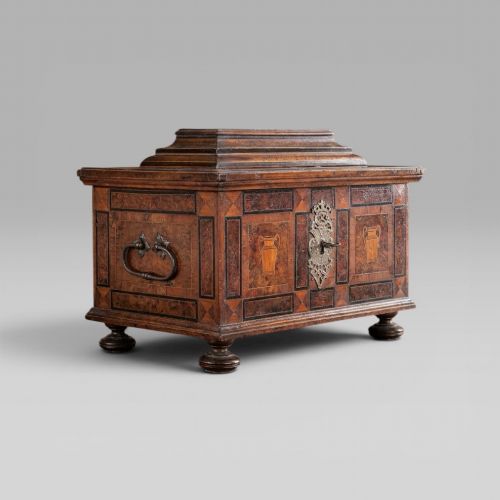
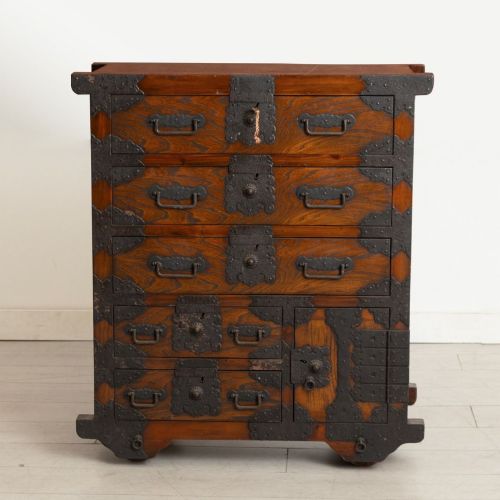
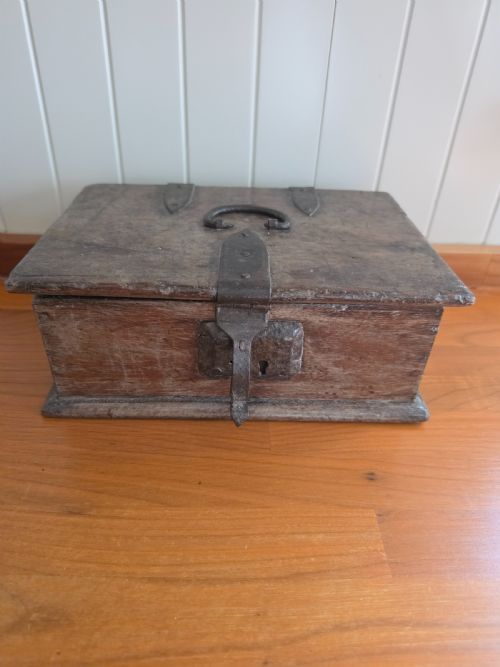
The selections on this page range from sixteenth-century travelling strong boxes to nineteenth-century oak and iron banded silver chests. Continental examples, such as Spanish walnut boxes and German marquetry coffre forts, sit alongside Scandinavian folk art pine boxes and Japanese tansu cabinets.
Most pieces date from the seventeenth, eighteenth, and nineteenth centuries, utilising woods like oak, pine, walnut, and zelkova. Form follows function closely, resulting in dome-topped caskets, flat-lidded trunks, and fitted cabinets equipped with heavy metal hardware.
What varies in quality
The standard of a piece rests upon the integrity of its timber frame and the skill involved in forging its iron mounts. Heavier, more complex metalwork applied by hand indicates a higher grade of security and craftsmanship.
Survival of original surface finishes, whether early paint, lacquer, or patinated walnut and oak, distinguishes superior examples from those stripped or heavily restored. The sophistication of the locking mechanism and internal compartment layout also separates standard utility boxes from high-status strong boxes.
Iron Mounted Chest Retail Price Guide 2026
Typical asking prices for iron mounted chest among the pieces listed under this phrase on Sellingantiques today, from the lower quarter to the upper quarter. They describe what is for sale here now, not the wider market.
Regional styles represented include Scandinavian folk art, traditional Japanese tansu, German marquetry, and Spanish walnut cabinetwork.
The Iron Mounted Chest Glossary
- Coffre fort
- A strong box or chest designed specifically for securing money and valuables, typically featuring heavy iron reinforcement and complex locking mechanisms.
- Tansu
- A traditional Japanese mobile storage cabinet or chest, often constructed from woods such as zelkova, kiri, or cedar with iron hardware.
- Strong box
- A secure container built from thick timber and reinforced with iron straps to protect precious contents during transport or stationary use.
- Marquetry
- The art and craft of applying pieces of veneer to a structure to form decorative patterns, seen on continental European boxes.
- Dome top
- A curved lid construction on a chest or box, providing extra interior height and shedding water effectively on travel trunks.
Iron Mounted Chest: Frequently Asked Questions
What is an iron mounted chest?
An iron mounted chest is a wooden storage box or trunk reinforced with forged iron straps, brackets, and heavy locks for security during travel or home storage.
These pieces range from small sixteenth-century travelling strong boxes to large nineteenth-century silver chests and Japanese tansu cabinets.
How were iron mounted chests used?
They were utilised to store and transport high-value items such as silver, documents, currency, and textiles safely across long distances or within secure rooms.
Many functioned as stationary strong boxes in country houses or administrative offices, while others accompanied travellers as durable luggage.
How do I live with an iron mounted chest?
An iron mounted chest functions well as a coffee table, an end-of-bed blanket box, or a standalone statement piece in a hallway or living space.
The robust combination of dark timber and patinated iron anchors a room visually while providing concealed storage for modern household items.
How do I tell periods apart?
Periods are identified through construction methods, timber choices, and stylistic details such as Gothic carvings on early pieces or distinct regional folk art painting on later pine boxes.
Sixteenth and seventeenth-century examples often feature heavy hand-forged ironwork on oak or walnut, whereas nineteenth-century pieces may incorporate industrial rolled iron and diverse woods like cedar or elm.