
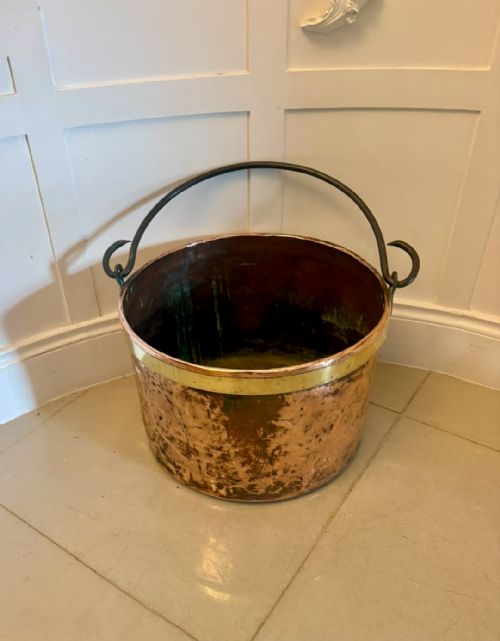
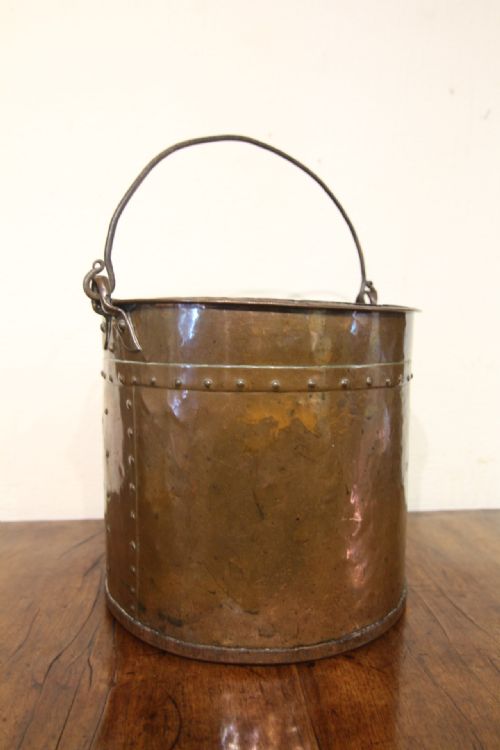


Iron Handled Copper Pot
These iron handled copper pot examples bring warmth and utility to a room, valued for their heavy gauge metal and honest period construction.
Iron Handled Copper Pot
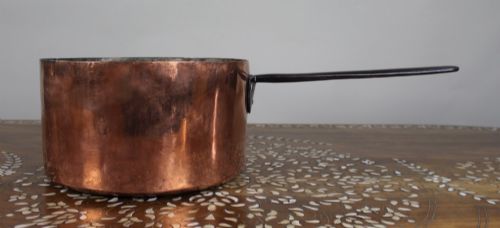
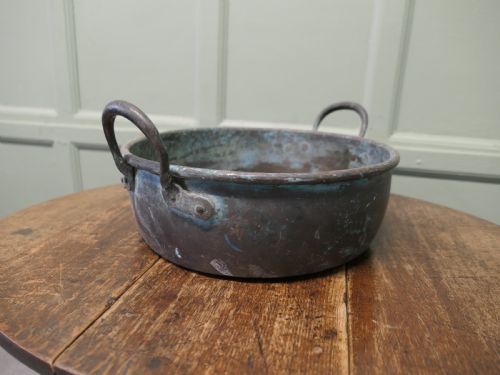
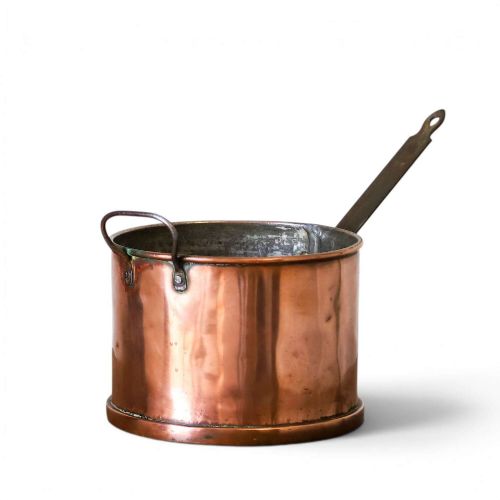
When you search for an iron handled copper pot, you encounter domestic vessels and fireside containers originating from the Georgian and Victorian eras. These utilitarian objects span several centuries, with pieces dating from eighteen hundred through to the late nineteenth century appearing across French country and rustic farmhouse styles.
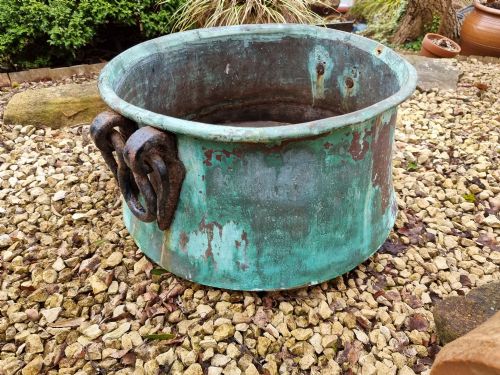
The forms on this page include heavy preserving pans, lidded saucepans, cauldrons, and large log bins or fireside buckets. You are most likely to meet substantial Georgian cooking vessels and nineteenth century French sets, alongside garden planters and milk pans.
These items served practical roles in kitchens and hearths before finding new life as decorative display pieces in modern homes. Their enduring appeal lies in the combination of beaten copper bodies and sturdy iron hardware.
Factors of quality
Weight and gauge thickness separate standard kitchenware from superior examples, with heavier pieces retaining a more substantial feel and even metal distribution. The crispness of hand-beating marks and the neatness of riveting show the skill applied by the maker.
Surface preservation also distinguishes better specimens, where natural verdigris finishes remain undisturbed and patinated rather than aggressively cleaned. Maker marks or stamps add distinction to certain pots, indicating workshop origin and period authenticity.
Listings span the Georgian and Victorian eras, incorporating materials such as copper, wrought iron, cast iron, tin, and brass across various forms.
Hodges and Sons·Liptons·Griffiths Patent
The Iron Handled Copper Pot Glossary
- Gauge
- The thickness of the sheet metal used to form the vessel. Heavier gauges indicate professional culinary or industrial grade equipment designed for intense heat.
- Verdigris
- The green patina that forms naturally on copper surfaces over time through oxidation. It adds depth of colour and serves as a marker of age.
- Cauldron
- A large round pot with a large opening, usually featuring a swing handle for hanging over an open fire. These deep vessels were essential for communal cooking and boiling.
- Preserving pan
- A wide, open vessel designed for fruit jams and sugar boiling, typically featuring a flat bottom and a sturdy handle for tipping. Their shallow sides encourage rapid evaporation.
Iron Handled Copper Pot: Frequently Asked Questions
How do I clean an old copper pot?
Maintenance depends on whether you plan to use the vessel for cooking or display. Many collectors prefer to leave the natural dark patina and verdigris untouched.
If you choose to brighten the metal, use a mild cream cleaner designed for copper and rub gently. Avoid harsh abrasives that remove the historic character of hand-beaten surfaces.
Can I cook with these pots today?
Some heavy gauge saucepans remain structurally sound for modern use if their interior tin lining is intact. You should check the lining condition before exposing the metal to food.
Many antique vessels are best reserved for decorative display, log storage, or as planters due to centuries of wear and altered interiors.
How do I tell Georgian from Victorian pieces?
Georgian examples generally date around eighteen hundred and often display simpler, heavier construction suited to open hearth cooking. Their handles and rivets show distinct hand-forged traits.
Victorian pieces from the mid nineteenth century often incorporate stamped maker details, patent inscriptions, or more refined Victorian lidded saucepan forms.
What were log bins originally used for?
Large copper buckets and cauldrons served near the hearth to hold fuel logs and coal for the fire. Their robust iron handles made it easy to carry heavy loads of wood across flagstone floors.
Today, these same deep containers find a second life beside fireplaces or as large indoor plant holders.