

Iron Bound Wooden Coffer
An iron bound wooden coffer is a robust storage piece built for security and travel, combining heavy metalwork with durable timber.
Iron Bound Wooden Coffer
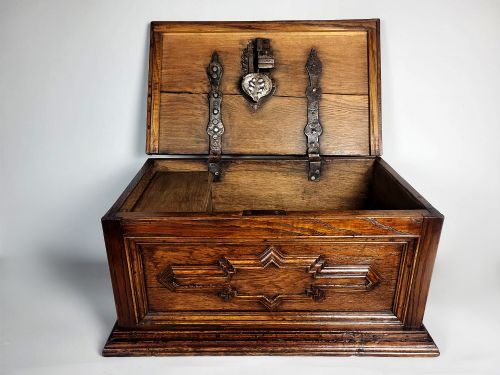
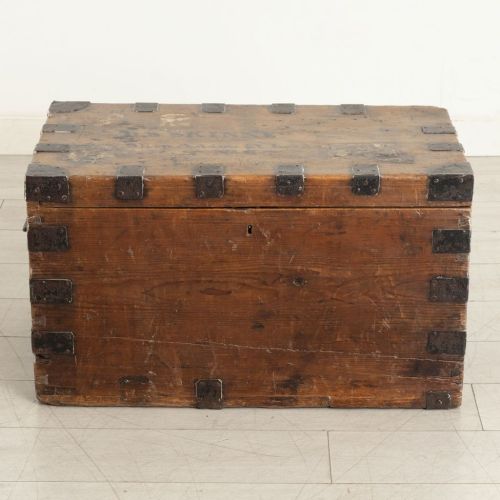
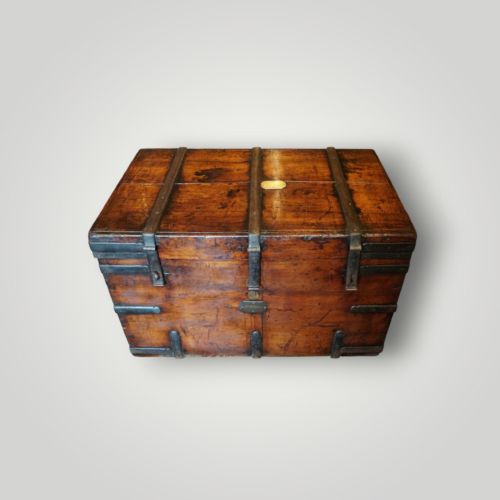
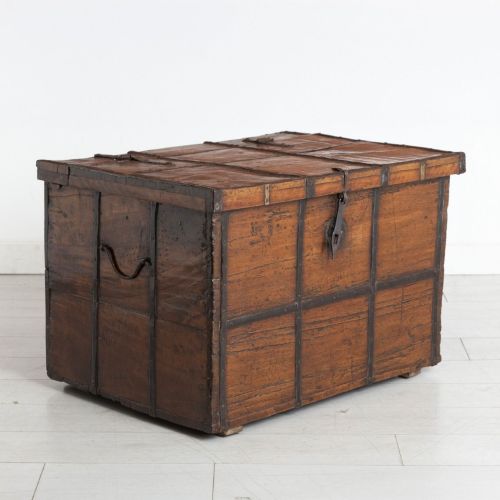
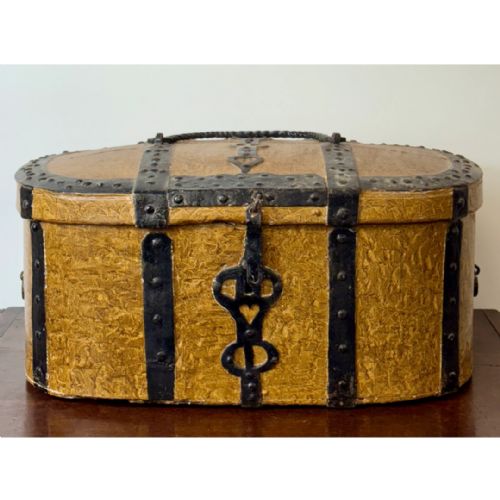
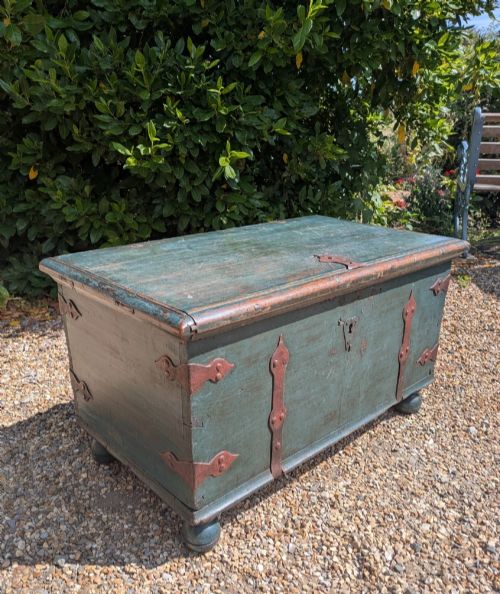
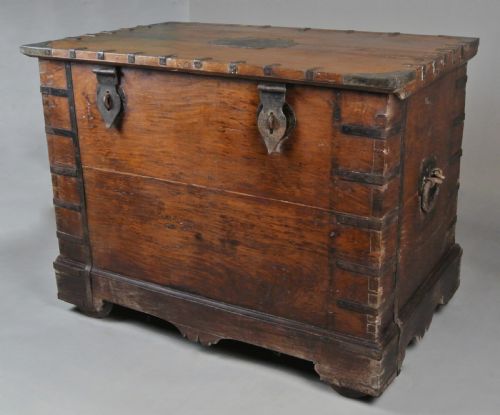
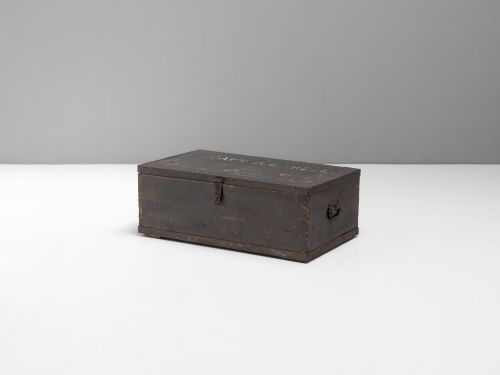
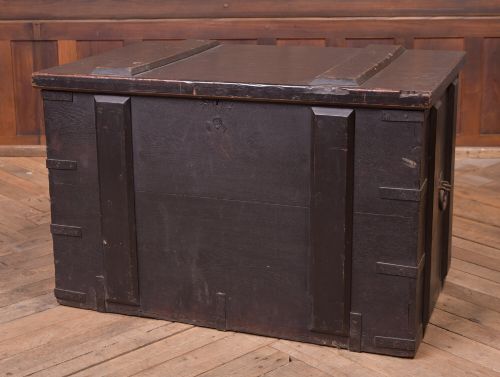
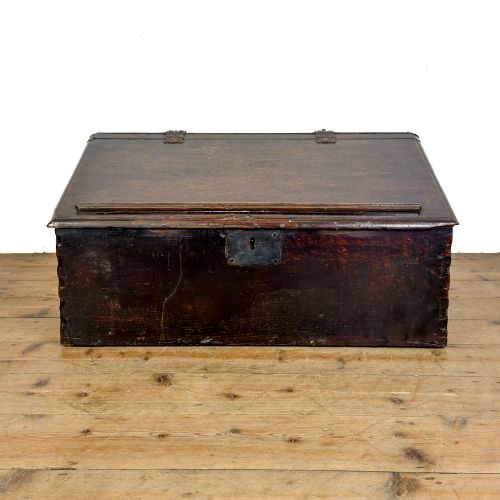
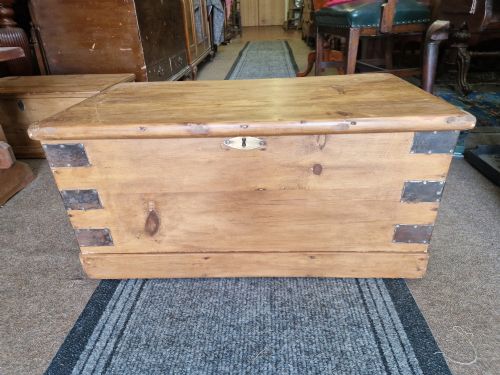
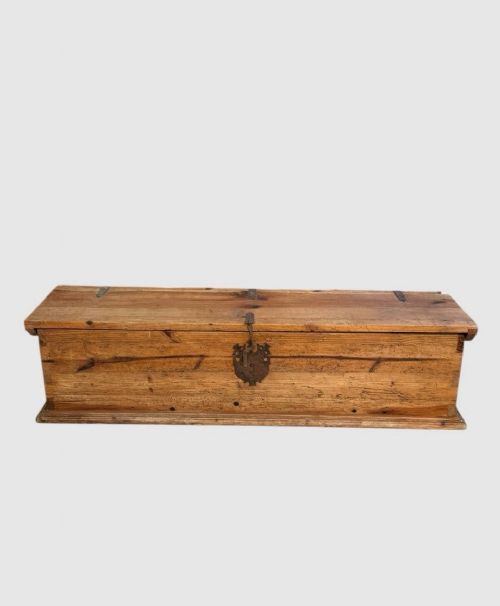
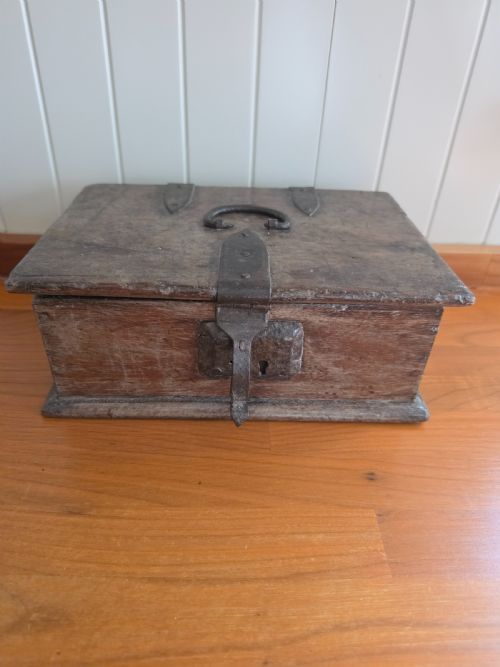
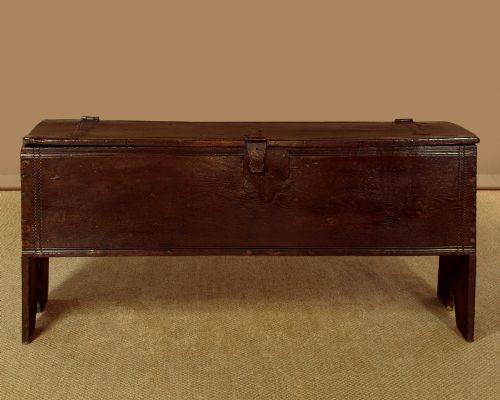
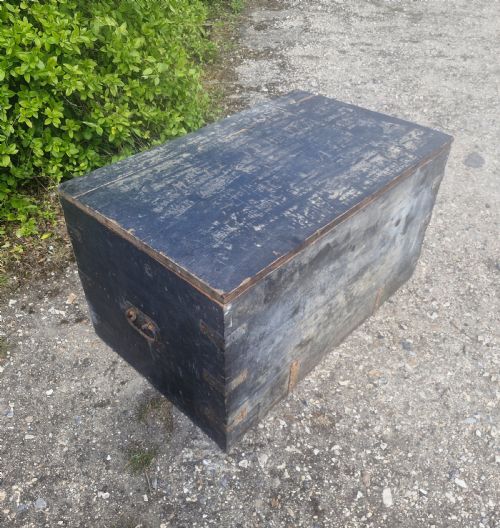
An iron bound wooden coffer is a heavy-duty container designed to secure valuables, documents, or personal belongings during storage and transport. When you search this phrase, you encounter forms ranging from early oak strongboxes to painted pine travelling trunks and dowry chests.
The pieces listed here span several centuries, with a strong representation of nineteenth-century Scandinavian painted examples and earlier oak pieces from the seventeenth and eighteenth centuries. You are most likely to meet pine chests reinforced with strapwork or sturdy travelling trunks intended for military or domestic journeys.
These items serve practical storage needs while bringing rustic character and historical weight to an interior. They appear in diverse styles such as folk art, campaign, and rustic farmhouse.
How they were made
Makers constructed these chests using primary timbers such as oak, pine, elm, teak, and mahogany, selected for their structural strength. Timber panels were joined using traditional carpentry methods before iron reinforcement was applied.
Wrought iron and steel strapwork, hinges, and corner brackets were fastened to the wood to provide rigid protection against impact and forced entry. Hand-forged hardware and complex internal locks secure the lids, while some examples feature applied paint or hide coverings.
One remarkably travelled trunk belonged to a Waterloo Commissary General, while others carried the personal belongings of nineteenth-century soldiers during the Boer War.
What varies in quality
The calibre of an iron bound wooden coffer rests in the integrity of its original construction and the sophistication of its locking mechanism. Pieces retaining untouched surfaces, original paintwork, and complex contemporary steel locks hold greater historical interest.
Quality also shows in the weight and hand-forged precision of the iron strapwork relative to the timber body. Heavier, uncompromised examples built for military campaign or long-distance travel demonstrate superior endurance.
The Iron Bound Wooden Coffer Glossary
- Coffer
- A large wooden chest, often reinforced with metal bands, used for storing valuables or travel. They typically feature heavy lids and robust locking mechanisms.
- Strapwork
- Flat strips of iron or steel fastened across the exterior of a chest to reinforce the wooden structure. This metalwork provides both structural strength and decorative pattern.
- Campaign chest
- A portable piece of furniture designed to break down or withstand frequent transport by military officers. These items often include brass or iron corner mounts and recessed handles.
- Strongbox
- A secure metal-reinforced wooden box intended for money or important documents. They frequently incorporate complex internal locking systems.
- Dowry chest
- A large storage box prepared for a bride's household linen and possessions. Scandinavian examples often display hand-painted folk art.
Iron Bound Wooden Coffer: Frequently Asked Questions
What were iron bound wooden coffers used for?
These pieces served primarily to secure valuables, money, legal documents, and personal clothing during transport or long-term safekeeping. Their robust construction protected contents from theft, moisture, and rough handling.
Over time, owners utilised them in domestic settings for blankets, dowry items, and household storage. Military officers deployed specific variations for campaign travel.
How do I live with an iron bound wooden coffer?
An iron bound wooden coffer functions well as a coffee table, end-of-bed blanket box, or standalone hallway storage piece. Its neutral wood tones and dark metalwork anchor a room visually.
Keep these pieces away from direct heat sources to prevent the timber from splitting or the historic paintwork from drying out. Periodic dusting preserves the surface finish.
How can I tell the period of a chest?
Dating relies on examining the timber species, construction joints, and the style of the ironwork. Early pieces from the seventeenth century often utilise solid oak and hand-cut dovetails or pegged joints.
Nineteenth-century examples frequently feature pine or exotic woods like teak, alongside machine-rolled iron or specific painted folk art motifs. Lock mechanisms also offer clues to the era of manufacture.
What is the difference between a coffer and a trunk?
A coffer traditionally denotes a heavily reinforced stationary storage chest, often associated with valuables or ecclesiastical use. They frequently feature flat tops and deep interior wells.
A trunk generally implies a piece built specifically for travel, possessing handles and sometimes a domed lid to shed water. In practice, historical terminology often overlaps between the two forms.