
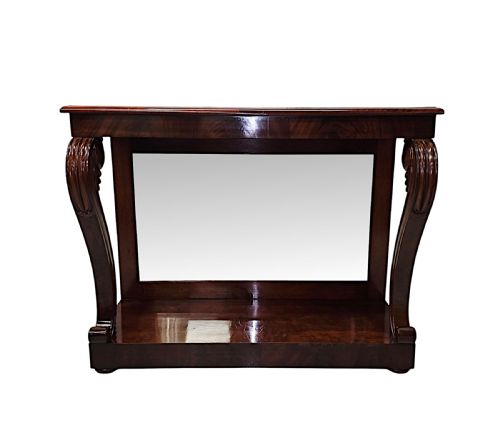
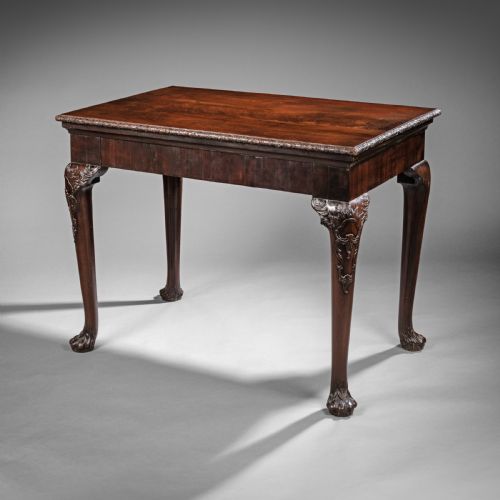

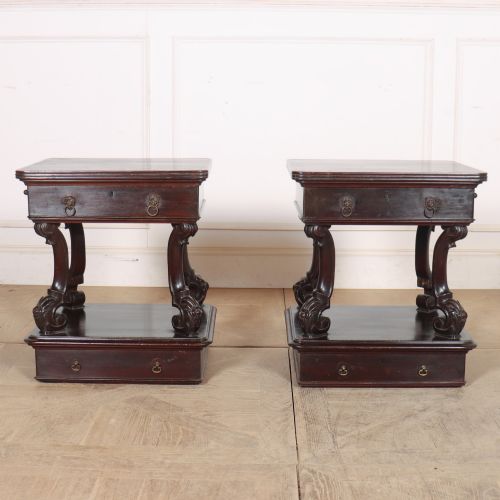


Irish Mahogany Side Table
An irish mahogany side table carries a dense architectural weight and a distinct carved flourish that sets it apart from English pieces of the same decades.
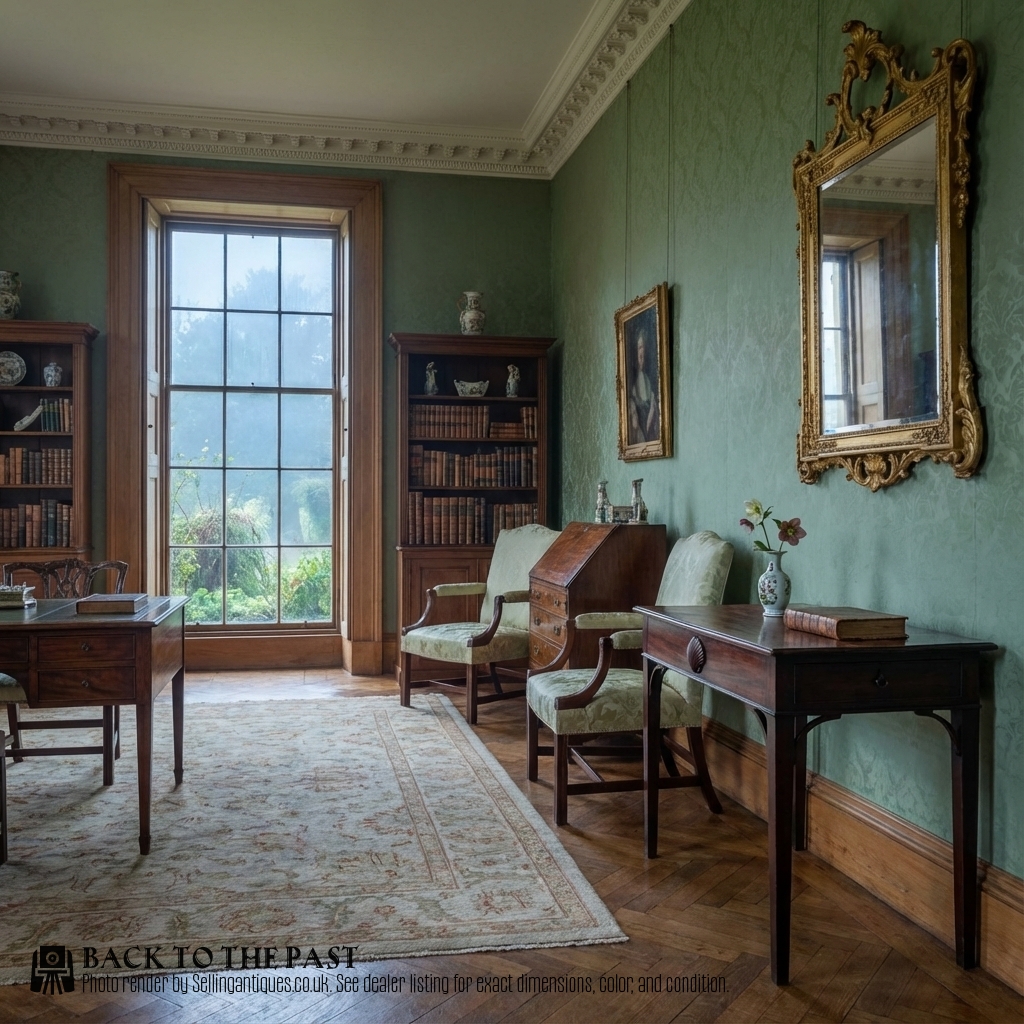
Irish Mahogany Side Table
An irish mahogany side table appears across several centuries of domestic use, most commonly taking the form of a serving, console, or card table from the Georgian and nineteenth-century periods. These pieces serve functional roles in halls, dining rooms, and drawing rooms while displaying substantial timber dimensions and robust structural frames.
The selections on this page span straightforward side tables alongside variants such as silver tables, triple top card tables, and occasional furniture. Buyers encounter forms ranging from simple eighteenth-century formats to elaborate Irish Chippendale and Regency interpretations with distinct regional carving characteristics.
How they were made
Cabinetmakers constructed these pieces using dense mahogany, frequently supported by secondary timbers and detailed with brass hardware, boxwood stringing, glass inserts, or marble tops. Workshops employed heavy carving directly into the thick mahogany framing rather than relying entirely on applied veneer.
Techniques combined mortise and tenon joinery with intricate hand-carved motifs like masks, shells, and foliate patterns. Inlaid surfaces utilised contrasting woods such as satinwood and ebony, while snap-top and foldover mechanisms relied on precise wooden hinges and pivoting supports.
The listings show a concentration of eighteenth-century George II designs alongside nineteenth-century Irish Chippendale and Regency interpretations utilising solid mahogany and marble.
What varies in quality
Quality rests upon the depth and crispness of the timber carving, where strong provincial workshops achieved deep, sculptural relief rather than shallow surface scoring. The density and figure of the mahogany itself dictate the baseline visual weight of the piece.
Proportion and structural integrity distinguish superior examples, as well-balanced legs and thick original timber slabs prevent the top from warping. Maker attributions, stamped signatures, or documented cabinetmaker provenance elevate certain tables above standard workshop production.
Gillingtons of Dublin·Hicks of Dublin·Robert Strahan and Co
The Irish Mahogany Side Table Glossary
- Console table
- A table designed to stand against a wall, frequently secured to the wall surface or supported by heavy front legs. These items served formal display functions in reception rooms.
- Silver table
- A specialised rectangular table with a raised edge or gallery designed to hold tea services and silver pieces safely. They date primarily to the eighteenth century.
- Snap top table
- A table featuring a hinged mechanism that allows the wooden top to tilt into a vertical position when not in use. This design saved floor space in smaller domestic rooms.
- Triple top table
- A multifunctional table containing folding sections that expand to reveal surfaces for card playing, tea, or writing. They represent complex eighteenth-century cabinetmaking.
- Satinwood
- A pale, lustrous exotic timber utilised for contrasting stringing and decorative inlay work on mahogany surfaces. It creates bright geometric borders.
- Dumbwaiter
- A tiered revolving serving stand featuring graduating circular trays on a central column. They assisted with dining room service without requiring domestic servants.
Irish Mahogany Side Table: Frequently Asked Questions
How do I spot an Irish piece?
Irish tables usually display heavier proportions, deeper relief carving on the knees or apron, and distinctive local motifs like masks or shells.
The timber selection often runs to denser Cuban mahogany, and the structural framing beneath frequently utilises regional joining habits distinct from London workshops.
Where were these tables placed?
These tables stood primarily in formal entrance halls, dining rooms, and drawing rooms against interior walls.
Console and serving variations anchored large wall spaces, while card and silver tables moved closer to seating areas when guests gathered.
How do I care for mahogany?
Protect the timber by maintaining stable room humidity and keeping tables away from direct heat sources and strong sunlight.
Apply traditional wax sparingly and buff gently with a soft cloth to preserve the natural lustre of the aged wood without building heavy chemical residue.
What is a silver table?
A silver table is a formal display surface featuring a raised gallery around the perimeter to keep tea wares and silver objects secure.
These pieces functioned as social focal points in fashionable eighteenth-century drawing rooms during afternoon gatherings.
Are marble tops original?
Many serving and console tables featured inset marble slabs to accommodate wet serving dishes and hot plates safely.
Inspect the seating rebate beneath the top to ensure the stone sits flush within the original mahogany frame without later alterations.