


Irish Chippendale Table
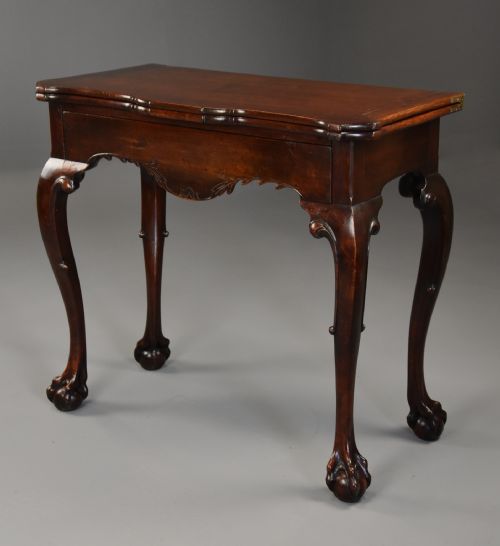
An irish chippendale table brings monumental carved detail and rich timber to a room, offering the bold cabriole legs and claw-and-ball feet that define the height of eighteenth-century cabinet-making.
Irish Chippendale Table
When you search for an irish chippendale table, you are looking at substantial Georgian furniture built from dense hardwoods, spanning tea tables, card tables, side tables, and console tables. These pieces emerge predominantly from the eighteenth century, encompassing George II and George III periods alongside later nineteenth-century revivals.
The version you are most likely to meet on this page is a mahogany card table or side table, often displaying robust proportions and deep relief carving. Walnut variants also appear, alongside specialised forms such as silver tables, drop-leaf dining tables, and kneehole desks.
Irish cabinet-makers of the period infused standard English Chippendale motifs with local vigour, resulting in distinct surface ornament and heavier structural frames. Pieces styled in the manner of notable makers like Hicks of Dublin demonstrate this regional ambition through confident carving.
Materials and construction
Construction relies heavily on solid mahogany and black walnut, selected for deep grain and stability, joined with traditional cabinet-making methods. Secondary timbers provide internal framing for card tables and drop-leaf mechanisms.
Carving forms the primary decorative technique, executed directly into the solid timber of the frieze and legs rather than applied as separate mouldings. Brass hardware, including hinges and swing-leg mountings, supports the functional transformation of multi-top tables.
Irish Chippendale Table Retail Price Guide 2026
Typical asking prices for irish chippendale table among the pieces listed under this phrase on Sellingantiques today, from the lower quarter to the upper quarter. They describe what is for sale here now, not the wider market.
Some card tables conceal secret compartments beneath their folding tops, originally intended for hiding losing stakes from watchful eyes.
Judging quality and character
The distinction between ordinary and exceptional examples rests upon the depth, sharpness, and ambition of the carving. Crisp execution on the knees of cabriole legs and along the apron separates master workshops from standard production.
Timber selection and surface preservation dictate the visual presence of the piece, with undisturbed grain patination holding greater authority than overly polished surfaces. The integration of structural elements, such as triple-top mechanisms or complex rule joints on drop-leaf tables, reveals the original maker's capability.
Hicks of Dublin
The Irish Chippendale Table Glossary
- Cabriole leg
- A furniture leg that curves out and then in, mimicking animal limbs, commonly terminating in a claw-and-ball foot on these tables.
- Card table
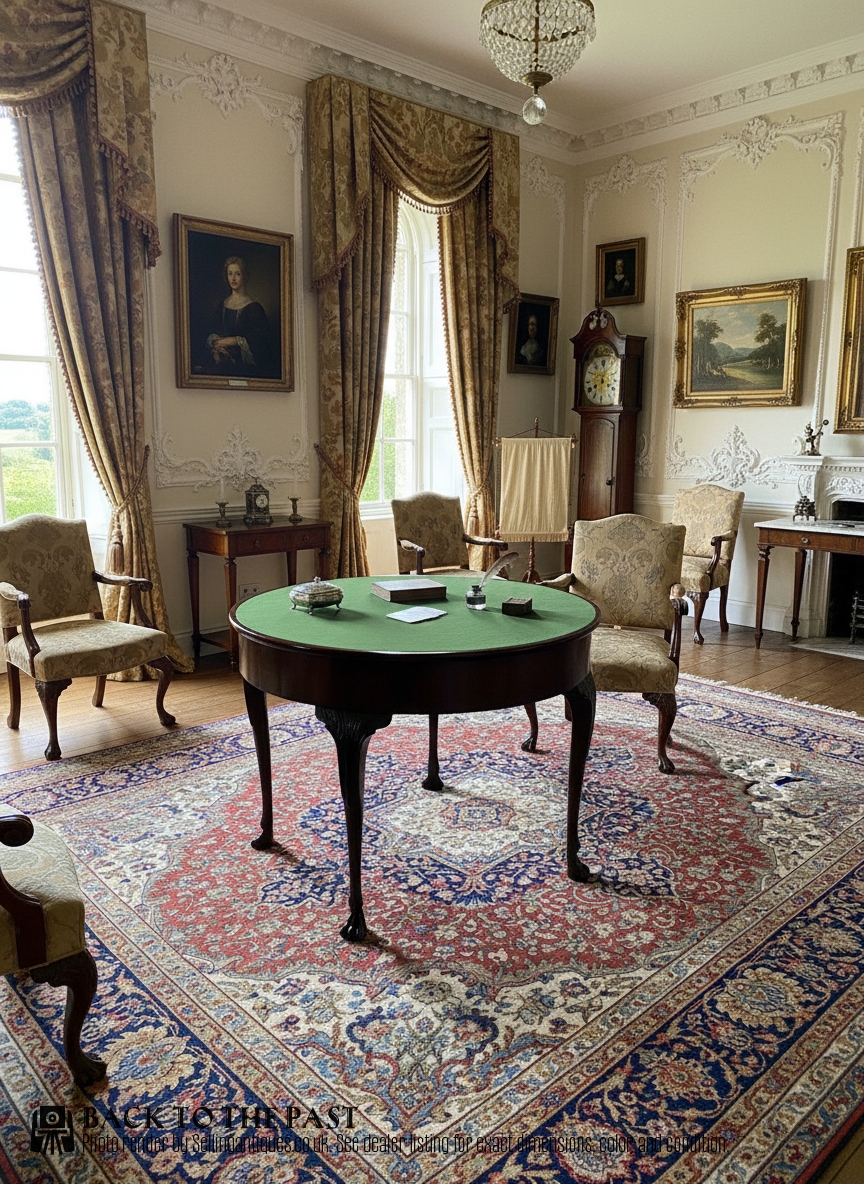
- A folding or pivoting table designed for gaming, frequently featuring recessed corners for candlesticks and a baize-lined surface.
- Silver table
- A specialised rectangular table with a raised gallery rim around the top edge, originally used for serving tea or displaying silver.
- Frieze
- The horizontal band running directly beneath the tabletop, often carved with scrolling foliage, key fret patterns, or masks.
- Patina
- The deep, lustrous surface sheen developed by aged wood through decades of handling, exposure to light, and waxing.
Irish Chippendale Table: Frequently Asked Questions
How do I spot an Irish table?
Irish tables generally display heavier proportions, bolder relief carving on the knees, and more assertive claw-and-ball feet than their English counterparts.
Makers working in Dublin also tended to utilise dense cuts of mahogany and walnut, frequently incorporating distinct regional flourishes into the frieze design.
Where should I place a side table?
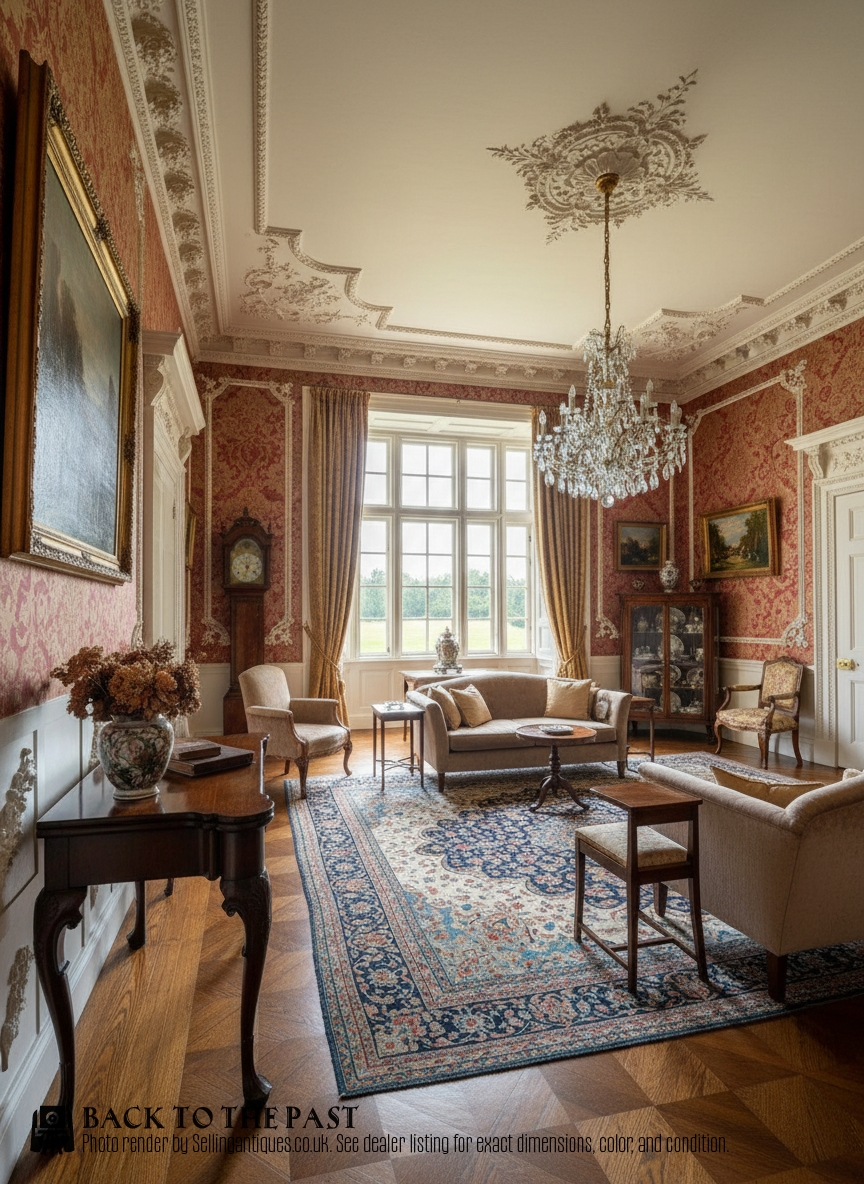
A side table or console table sits best against a principal wall in a dining room, hallway, or drawing room, where its carved apron can be fully appreciated.
Because these pieces were designed to be viewed primarily from the front and sides, keeping the back against a wall maintains historical context.
How do I care for antique mahogany?
Maintain antique mahogany by keeping it away from direct heat sources and sudden humidity changes that can cause the solid timber to split.
Apply a traditional beeswax polish sparingly and buff with a soft cloth to preserve the natural patina without building up a heavy, cloudy film.