




Dish Top Tea Table
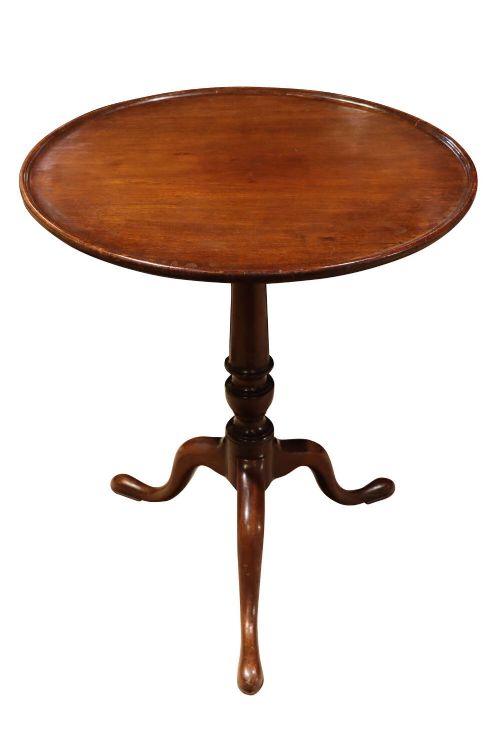
A dish top tea table offers a raised circular rim designed to keep porcelain secure, combining elegant Georgian proportions with practical utility.
Dish Top Tea Table
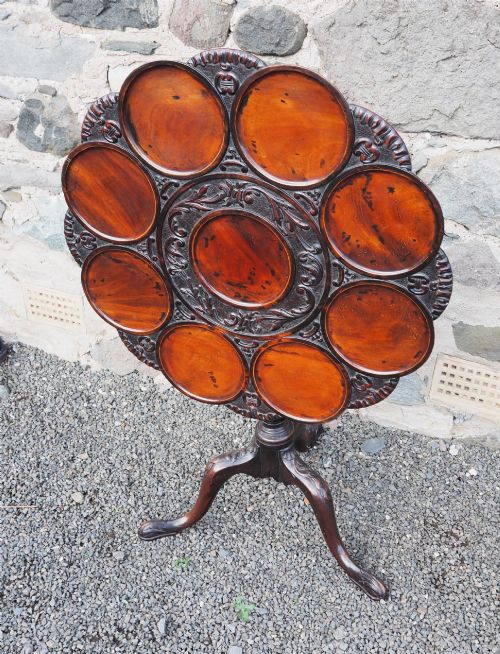
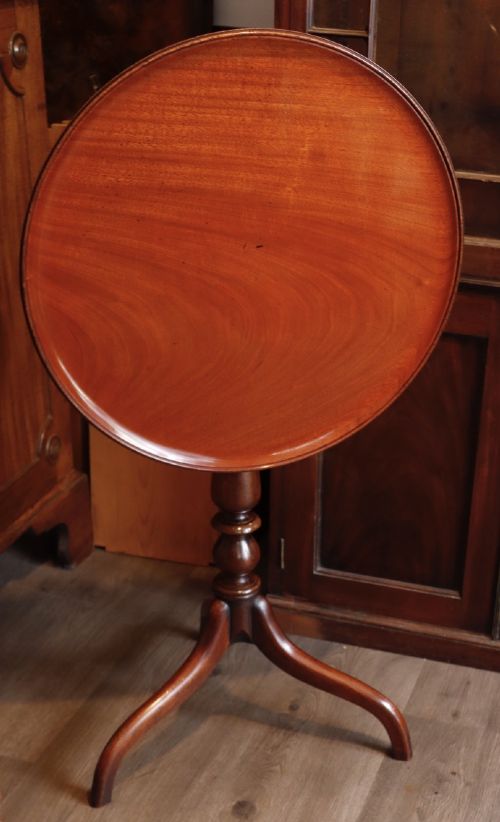
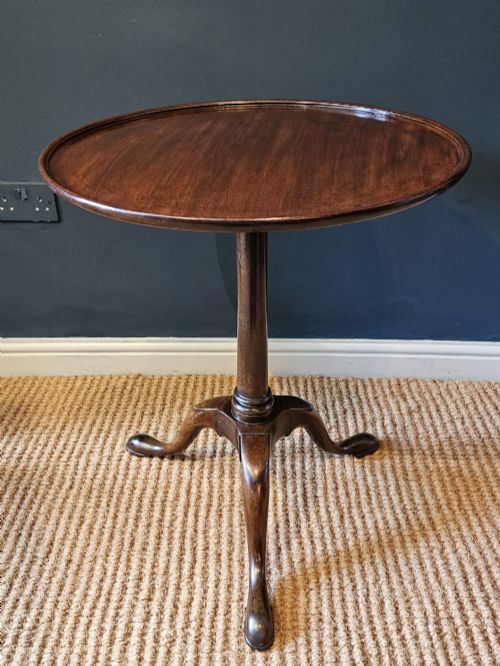
A dish top tea table is a compact pedestal form designed to hold porcelain tea service securely during the eighteenth century and subsequent revival periods. These pieces appear in Georgian, Regency, and Victorian iterations, frequently resting on a central tripod base with cabriole legs.
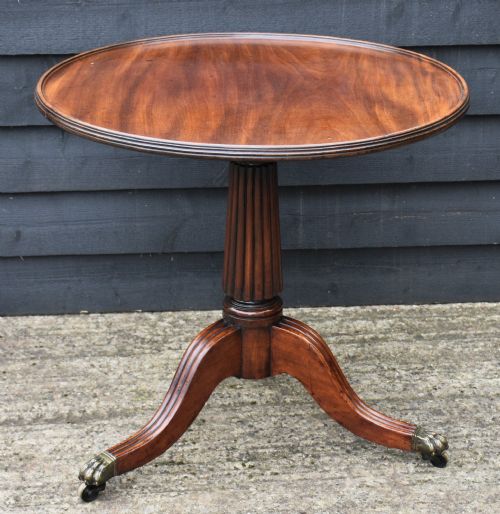
The profile is characterised by a circular top with a raised, turned rim carved directly from the solid timber or applied. Buyers encounter occasional tables, tilt-top variants, and snap-top versions that fold for storage against a wall when not in use.
How they were made
Cabinet makers utilised dense hardwoods such as mahogany, red walnut, and figured walnut, turning the slender central pillars on a lathe. The distinctive raised rim was painstakingly carved down from a thick timber blank, leaving the central surface slightly recessed.
Many examples incorporate a birdcage mechanism or a snap-top hinge constructed from brass and wood, allowing the surface to tilt or rotate. Tripod bases terminate in pad feet, snake feet, or carved trifid configurations that provide stable support on uneven floors.
Some tables include a clever revolving birdcage mechanism that lets you spin the top like a compass while chatting.
What varies in quality
Quality rests upon the selection of timber figures, such as highly figured mahogany or burr wood, and the crispness of the carved tripod legs and knees. Finer examples display meticulous attention to the turning of the pillar and the proportion of the birdcage mechanism.
The integrity of the dish-top rim itself distinguishes superior craftsmanship, as hand-carved edges from a single solid board require immense skill compared to applied mouldings. The seamless operation of the tilt mechanism also separates standard production from exceptional cabinet work.
The Dish Top Tea Table Glossary
- Dish top
- A table surface featuring a raised, concave rim turned from the solid wood to prevent items from sliding off. This characteristic edge defines the primary function of the tea table.
- Snap top
- A tabletop mounted on a catch mechanism that allows the surface to tilt vertically when not in use. This clever engineering saved valuable floor space in period drawing rooms.
- Tripod base
- A support structure consisting of three curved legs radiating from a central turned column. It provides excellent stability on historic floorboards.
- Birdcage
- A small wooden revolving frame beneath the tabletop that allows the surface to both tilt and rotate. It represents a sophisticated piece of internal joinery.
- Tilt top
- A hinged surface mechanism enabling the table to be stored flat against a wall. This term often overlaps with snap top in historical listings.
Dish Top Tea Table: Frequently Asked Questions
What is a dish top tea table?
A dish top tea table is a small occasional table featuring a raised rim carved into the solid timber top. This circular moulding originally prevented cups and saucers from sliding off during social gatherings.
Most examples date from the Georgian and Regency periods, standing on a central column supported by three legs. They were easily moved around the room as needed.
How did people use them?
These tables served primarily for the formal serving of tea in affluent households. The raised edge kept porcelain secure while guests partook in the beverage.
When tea was finished, the top could often be tilted vertically using a catch or birdcage mechanism. The table was then pushed against the wall to free up space in the parlour.
How do I tell periods apart?
Early Georgian versions often feature finely carved cabriole legs ending in pad or claw-and-ball feet alongside solid mahogany or walnut construction. Regency iterations introduce simpler reeded columns and sabre legs.
Victorian and later revival pieces borrow these earlier forms but frequently utilise machine-turned components and different finishing techniques. Examining the underside reveals the joinery methods specific to each era.
How do I live with one today?
A dish top tea table functions well as an occasional surface beside a chair or sofa. Its compact footprint makes it suitable for smaller rooms where space is at a premium.
Keep wood surfaces away from direct heat sources and strong sunlight to protect the polish. Regular dusting with a soft cloth maintains the natural lustre of the mahogany or walnut.