


Irish Drop Leaf Table
An irish drop leaf table is a clever folding timber piece built for flexible dining and socialising.
Irish Drop Leaf Table
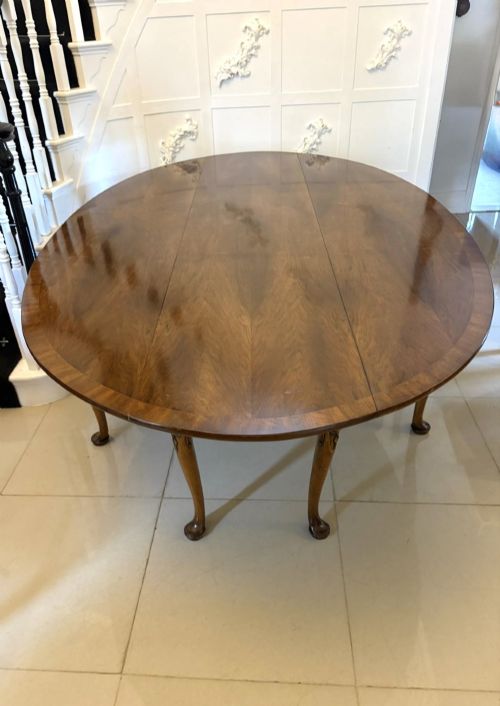
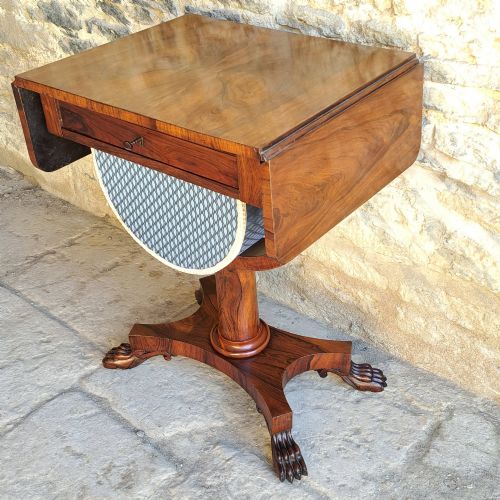
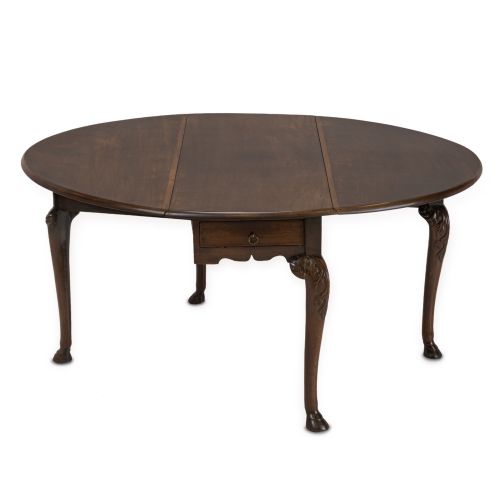
An irish drop leaf table brings centuries of flexible dining space into a room, folding down neatly against a wall when floor space matters. You meet these primarily as large mahogany dining pieces from the eighteenth century, alongside smaller work and sewing tables.
The material selection ranges from solid mahogany and rosewood to burr yew and oak, reflecting the tastes of Georgian and Regency makers. These tables serve daily meals or fold out for larger gatherings without dominating the room permanently.
Makers shaped these surfaces into ovals and rectangles supported by clever pivoting legs or gate-leg frames. The form prioritises adaptability, allowing owners to drop one or both leaves depending on the company present.
Materials and construction
Workshops relied heavily on dense timbers like mahogany, walnut, and rosewood, often enhanced with intricate crossbanding and rich veneer work. Solid oak and burr yew also appear, showing the diverse woods available to cabinetmakers.
Carved cabriole legs terminating in hoof feet provide sturdy support on mid-eighteenth-century examples, whilst later Regency pieces lean towards refined column supports and brass accents. Hinges and pivoting mechanisms allow the hinged flaps to drop smoothly when not in use.
Wake tables earned their name because their enormous size accommodated entire parishes gathered for post-funeral feasts.
Qualities of craftsmanship
The value of timber figuring and the sharpness of carved details like cabriole legs separate standard items from exceptional ones. Premium examples display carefully matched grain across the flaps and top, showing the maker's eye for symmetry.
Structural integrity in the hinge mechanisms and the alignment of the drop leaves when open indicate superior workshop execution. Maker stamps or attributions to prominent Dublin firms add historical weight to the physical construction.
Gillington of Dublin·Mack, Williams and Gibton
The Irish Drop Leaf Table Glossary
- Drop leaf
- A table with a fixed central section and hinged flaps that fold down to save space.
- Cabriole leg
- A furniture leg that curves out and then in, resembling an animal's leg.
- Crossbanding
- A strip of veneer running border-like around the edge of a tabletop, with the grain running perpendicular to the main surface.
- Gate-leg table
- A table with hinged legs that swing out like a gate to support the drop leaves.
- Veneer
- A thin layer of finely figured wood applied to a secondary timber base for decorative effect.
Irish Drop Leaf Table: Frequently Asked Questions
How do I seat guests comfortably around a drop leaf table?
Raise one or both leaves depending on the number of diners, ensuring the pivoting legs are securely locked into position beneath the flaps. The clever folding design allows you to adjust the footprint of the furniture to suit the room.
Position chairs carefully to avoid placing weight directly on unsupported outer edges of the extended flaps. This keeps the table stable throughout the meal.
Can I use an irish drop leaf table every day?
These pieces were built for functional daily dining and socialising, using durable timbers like mahogany and oak that withstand regular use. Treat the polished surface with care by using coasters and placemats.
Fold the leaves down when you need extra floor space, or leave them up for ongoing use as a primary dining surface. The timber adapts well to active domestic environments.
How do I tell an 18th-century table from a later piece?
Examine the timber species, leg profiles, and structural joinery to identify the period. Eighteenth-century examples frequently feature carved cabriole legs with hoof feet and solid mahogany construction.
Nineteenth-century Regency versions often introduce rosewood, burr yew, or brass details, whilst later revival pieces display different secondary woods and modern hardware. Comparing the underside construction reveals how the leaves were hinged.
What is the difference between a dining table and a work table?
Dining versions offer large rectangular or oval surfaces designed to accommodate multiple people for meals, often featuring gate-leg or wake configurations. Work tables are smaller pieces built for sewing and writing, equipped with drawers or fabric bags.
Both utilise folding leaves, but their scale and internal fittings serve entirely different daily activities. Work tables suit intimate corners, whereas dining variants anchor the centre of a room.