
Large Extension Table
A large extension table provides the flexibility to seat a crowded room for dinner and return to a manageable footprint afterwards.
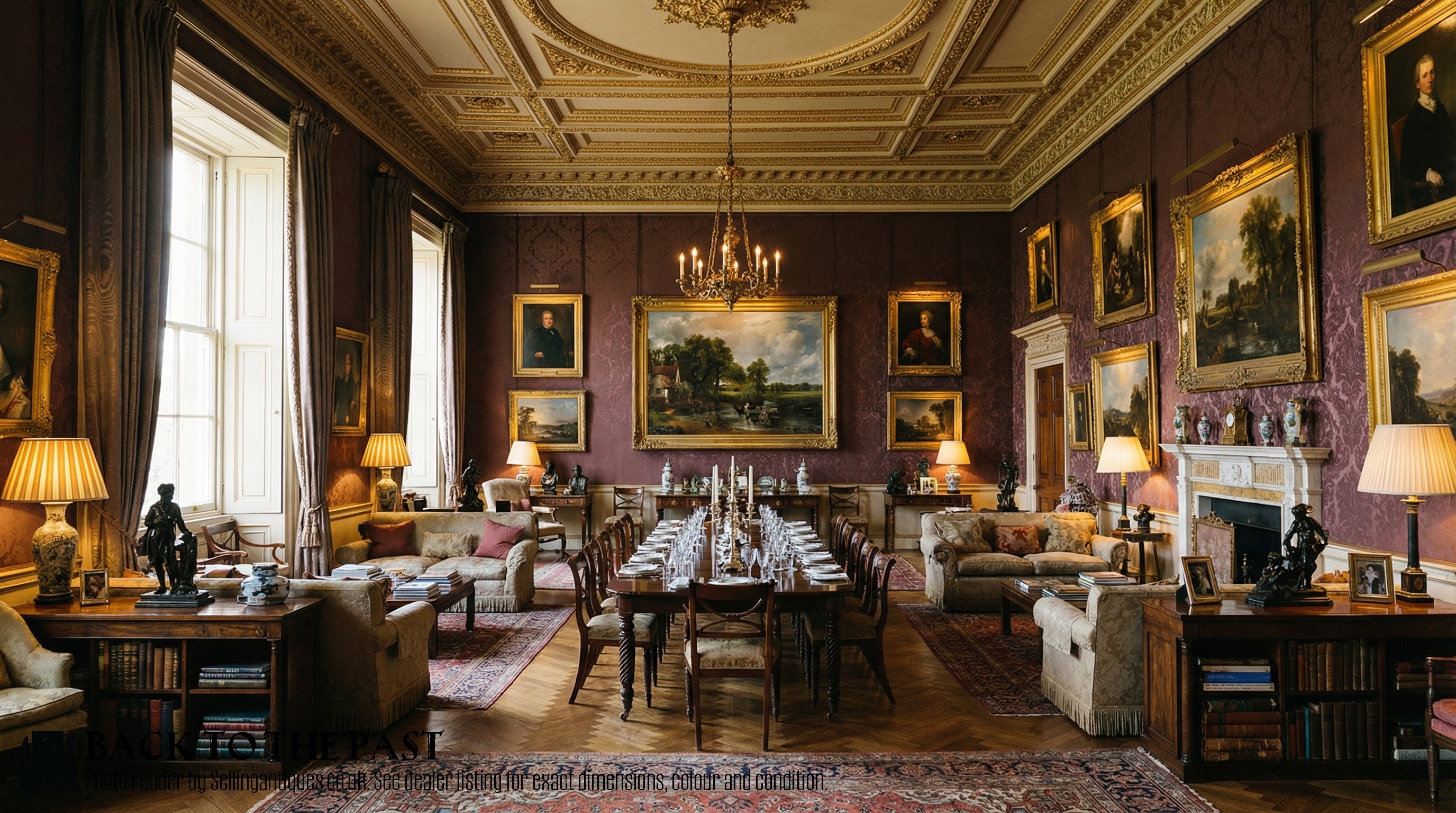
Large Extension Table
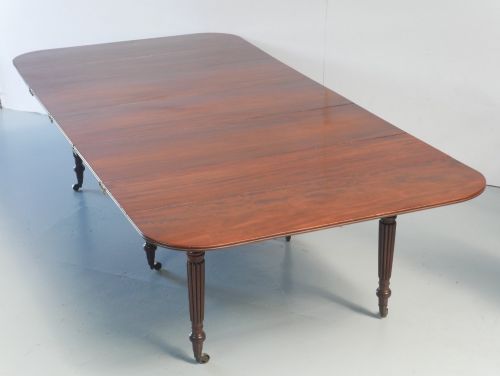
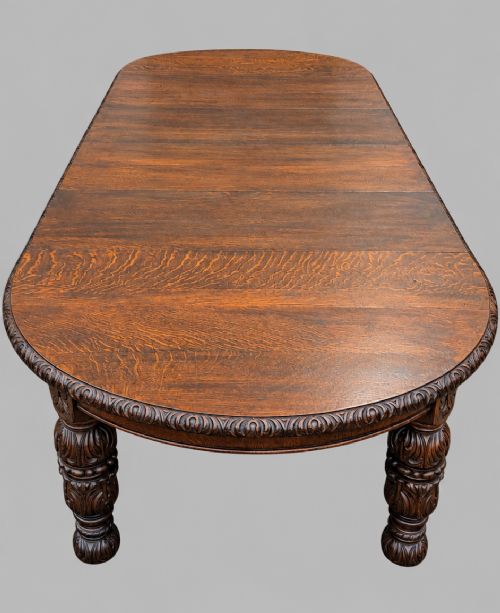
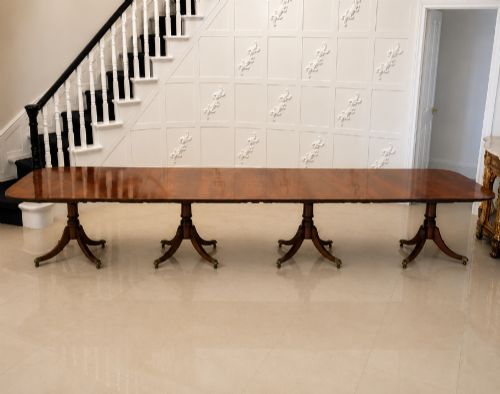
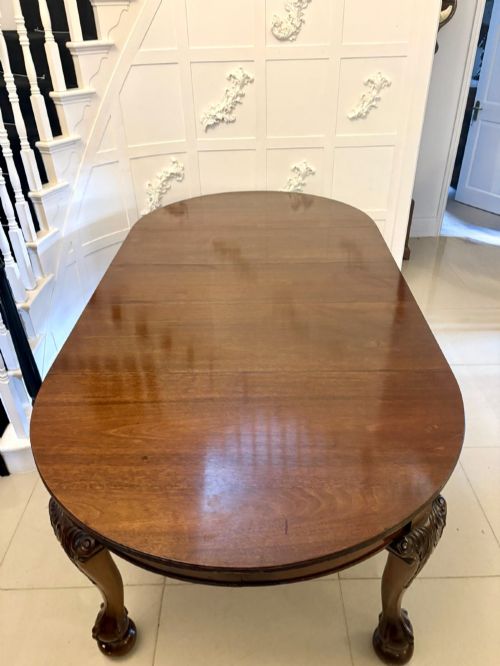
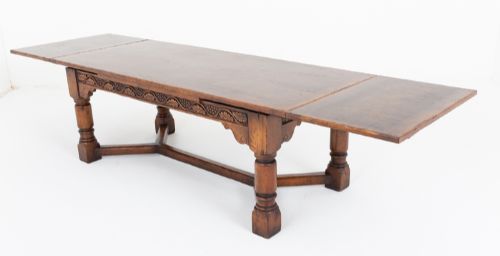
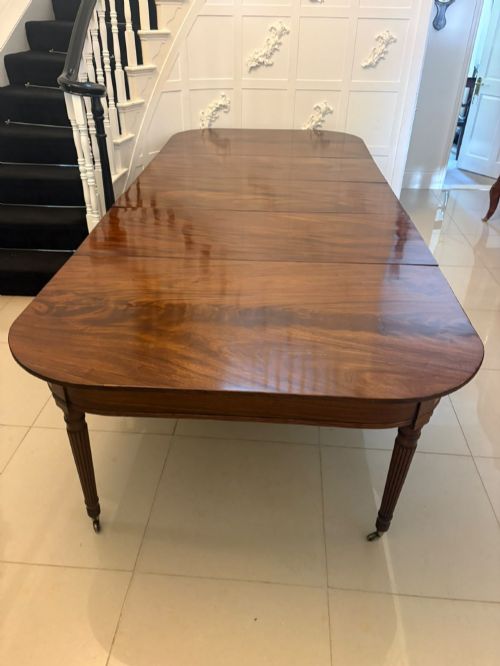
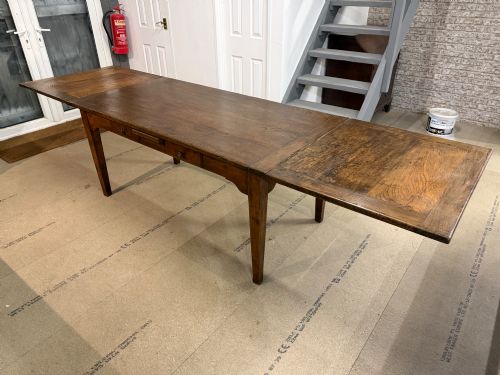
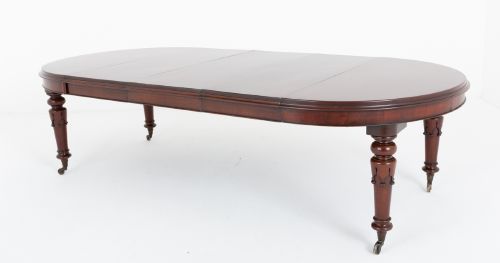
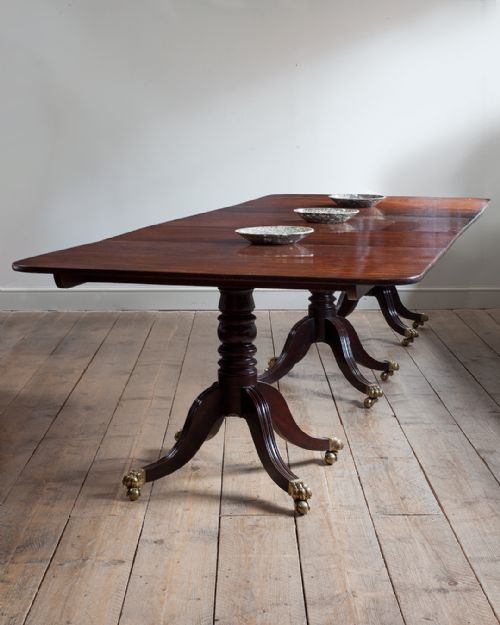
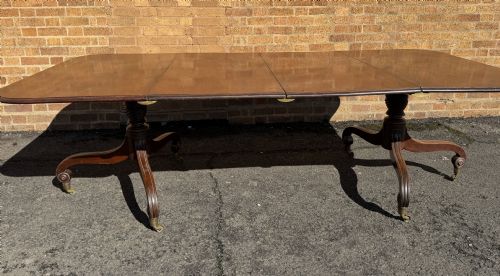
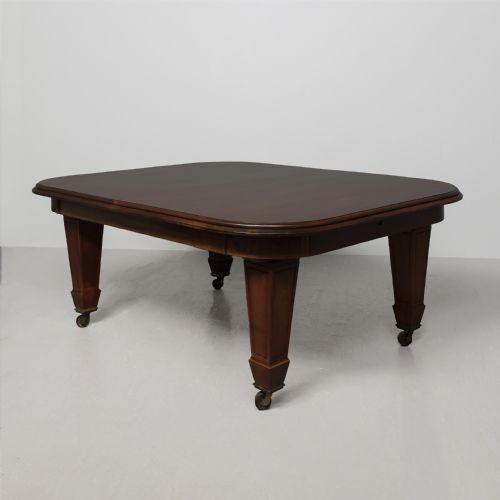
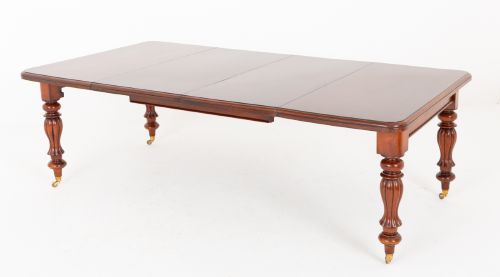
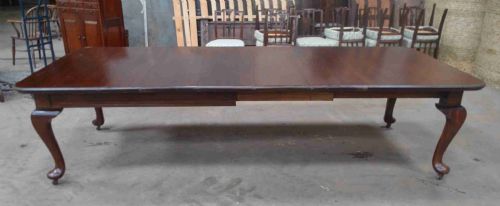
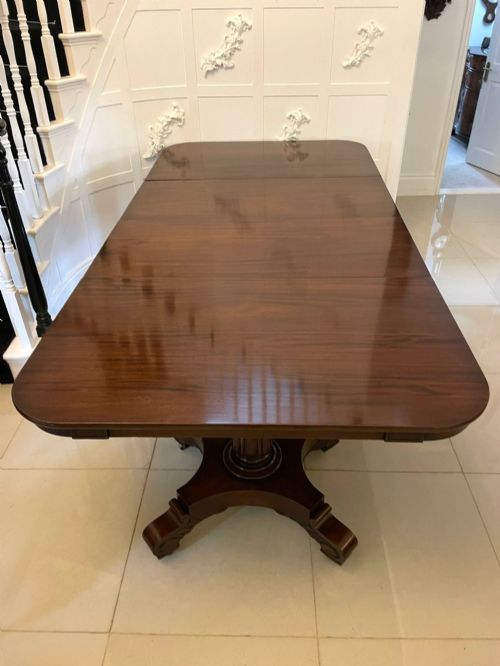
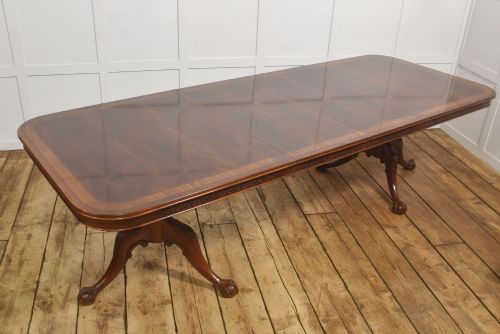
When you search for a large extension table, you are looking at substantial dining furniture designed to accommodate many guests through the addition of removable leaves or internal mechanisms. These pieces range from grand multi-pedestal dining tables to sturdy oak draw-leaf designs.
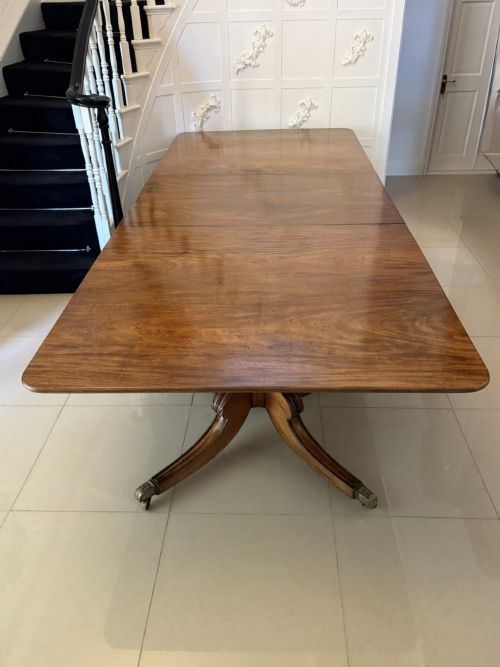
Mahogany and oak dominate the selection, spanning periods from the Georgian era through the Victorian period and into twentieth-century revivals. The most common examples on this page are mahogany dining tables featuring pedestal bases and wind-out mechanisms alongside rustic oak farmhouse refectory tables.
How they were made
Cabinet makers utilised dense hardwoods such as mahogany and oak, often selecting figured timber veneers for prominent top surfaces. These woods provided the necessary structural integrity to span long distances without sagging under heavy loads.
Mechanical ingenuity defined the larger examples, incorporating brass wind-out screws, internal runners, and pedestal or pillar bases that could shift apart to receive extra leaves. Draw-leaf mechanisms allowed end sections to slide smoothly beneath the main surface when not in use.
Listings feature mahogany and oak predominantly, spanning Georgian, Victorian, and early twentieth-century revival periods.
What varies in quality
The sophistication of the mechanism largely dictates the grade of the piece, with smooth-operating brass wind-out systems representing superior workshop standards. Tables that retain their original number of matching leaves command greater regard among collectors.
Timber selection and carving detail set apart the finer examples, particularly where figured mahogany or solid oak displays crisp execution on pedestals and friezes. The harmony between the base stability and the expanded top determines the overall calibre of the construction.
Gillows
The Large Extension Table Glossary
- Wind-out table
- A dining table that expands using a concealed internal screw mechanism operated by a crank handle. This system separates the top halves evenly to allow the insertion of additional leaves.
- Draw-leaf
- A table construction where supplementary leaves are stored directly beneath the main surface. Pulling the ends outwards causes the main top to rise slightly before the leaves drop into place.
- Pedestal base
- A central column support resting on splayed legs, often used in multiples for long tables to maintain legroom. This design distributes weight effectively while supporting heavy timber tops.
- Frieze
- The horizontal band of woodwork situated immediately beneath the top edge of the table. Cabinet makers frequently decorated this area with carvings or mouldings appropriate to the period style.
- Figured mahogany
- Timber cut from specific sections of the tree to reveal distinctive grain patterns such as flame or fiddleback. Artisans reserved these choice boards for the most visible surfaces of formal dining furniture.
Large Extension Table: Frequently Asked Questions
How do wind-out extension tables operate?
A concealed metal screw mechanism sits within the frame of the table, connected to a socket accessible beneath the rim or edge. Inserting a winding handle and turning it rotates the screw, drawing the table halves apart smoothly.
Once the gap is wide enough, the leaves drop into the centre and the handle is reversed to lock the sections tightly together against the timber.
How can I tell a Victorian table from a Georgian one?
Georgian tables often display refined proportions with slender pillar supports and lighter mahogany scantlings. The joinery reflects eighteenth-century hand-working methods.
Victorian examples tend towards grander proportions, heavier timber sections, and more robust pedestals or carved legs designed for larger dining rooms and heavier domestic use.
What is a pedestal dining table?
A pedestal dining table rests on one or more central columns rather than traditional corner legs. Multiple pedestals are often placed in a row to support very long tops.
This design prevents table legs from obstructing diners' chairs, making it easier to seat guests comfortably around the entire perimeter of the extended surface.
Are original leaves important?
Original leaves share the exact timber grain, colour ageing, and thickness of the main table top. They ensure a seamless visual match when the furniture is fully extended.
Replacement leaves can function well mechanically, but matching older patination and timber species requires expert cabinet work to avoid noticeable colour differences.