



18th Century Wake Table
An 18th century wake table is a substantial dining piece built for large gatherings, prized for its generous oval drop leaves and historic presence.
18th Century Wake Table
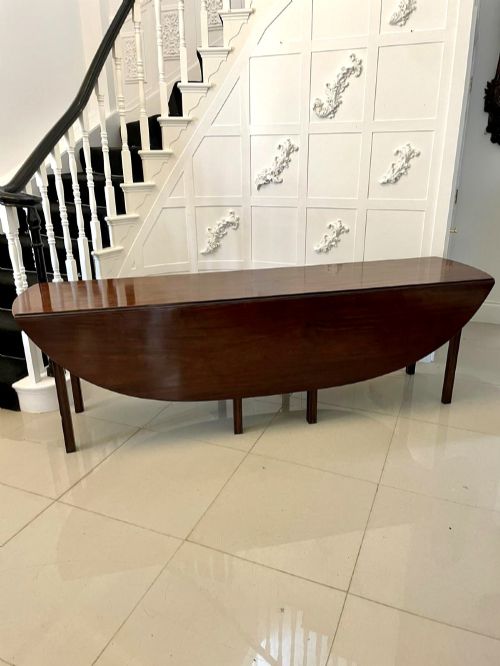
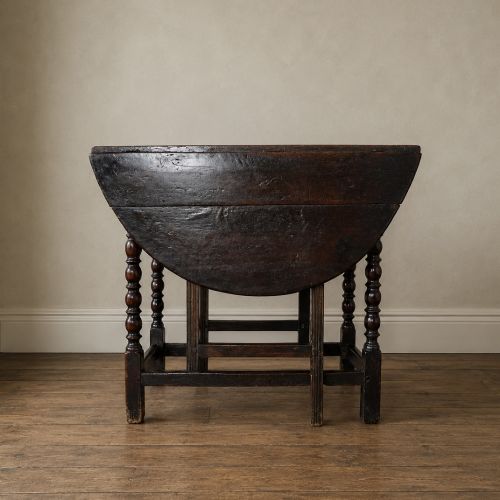
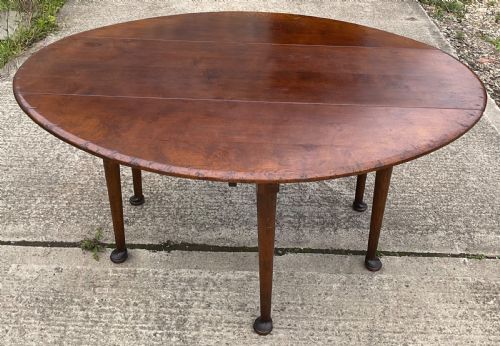
An 18th century wake table is a large, extending dining table designed to seat numerous guests by means of wide drop leaves supported on swinging gatelegs. These substantial pieces originate primarily from the Georgian period, including specific reigns such as George II and George III, alongside earlier Queen Anne examples.
The dominant forms seen on this page are oval drop-leaf dining tables and robust gateleg configurations. Makers built them for communal dining and hospitality in large country houses and sizeable rural properties.
The versions most commonly met combine sturdy oak or rich mahogany frames with deep leaves that transform a compact footprint into a sprawling surface. Regional variations, such as Irish craftsmanship, appear alongside classic English country styles.
How they were made
Cabinetmakers constructed these tables using dense timbers like mahogany and oak, often reinforced with secondary woods such as pine. They relied on traditional joinery to support the heavy hinged leaves.
Gateleg mechanisms and swinging wooden or iron supports distribute the weight of the extended flaps. Brass fittings and pad feet frequently finish the lower portions of Georgian examples.
18th Century Wake Table Retail Price Guide 2026
Typical asking prices for 18th century wake table among the pieces listed under this phrase on Sellingantiques today, from the lower quarter to the upper quarter. They describe what is for sale here now, not the wider market.
Some tables were built long enough to host parish wakes, earning a rather morbid name for a very hospitable piece of furniture.
What varies in quality
The caliber of an 18th century wake table rests primarily in the choice of timber and the stability of its gateleg mechanism. Mahogany examples with rich, untouched surfaces sit at the upper end of the range, showing deep patination and careful figuring.
Structural harmony also dictates value, where tables possessing robust six-leg or eight-leg frameworks maintain rigidity when fully extended. Finer pieces display refined turning on the legs and neatly fitted rule joints on the drop leaves.
The 18th Century Wake Table Glossary
- Gateleg table
- A table with hinged leaves supported by legs that swing outward like gates. This clever design allows the surface to expand significantly from a narrow centre.
- Drop leaf table
- A table featuring a fixed central section and movable flaps on either side. These flaps drop down when not in use to save space.
- Pad foot
- A rounded foot resting flat on the floor at the base of a cabriole or straight leg. It distributes weight evenly and characterises many mid-Georgian designs.
- Rule joint
- A moulded joint connecting a table top to its drop leaf. It conceals the hinges and creates a neat line whether the leaf is raised or lowered.
18th Century Wake Table: Frequently Asked Questions
How many people do these tables seat?
An 18th century wake table typically accommodates large groups, with substantial models seating up to ten diners comfortably when fully extended.
The wide oval surface and expansive drop leaves were specifically engineered for communal feasts and large gatherings.
Where were wake tables used?
These tables belonged in the principal dining rooms of large country houses, rural estates, and prosperous households. Their size suited them for hospitality and parish wakes.
Today, they function well in large modern dining spaces or open-plan rooms that require a dramatic historical centrepiece.
How do I care for a mahogany wake table?
Maintain the timber by keeping the table away from direct heat sources and sudden humidity changes. Regular waxing preserves the natural patina of the wood.
Use coasters and felt pads beneath hot dishes to protect the antique polish from moisture and heat rings.
What is the difference between oak and mahogany models?
Oak examples generally date to the earlier part of the period, often featuring simpler gateleg constructions and rustic English country characteristics. They offer a heavy, robust appearance.
Mahogany versions tend to align with mid to late Georgian styles, showcasing finer grain patterns, turned legs with pad feet, and a more formal aesthetic.