
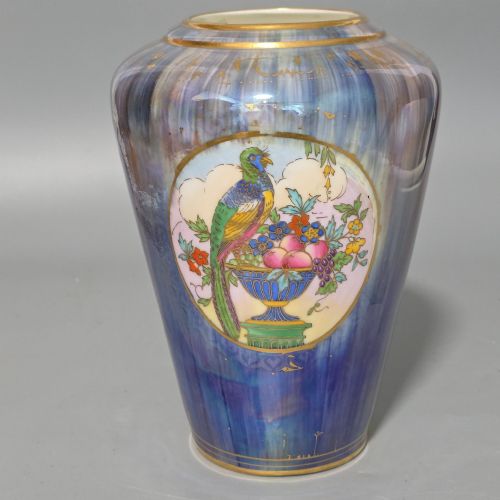


Iridescent Pottery Vase
An iridescent pottery vase brings shimmering metallic effects and rich coloured glazes to a room, catching the light from every angle.
Understanding the iridescent pottery vase
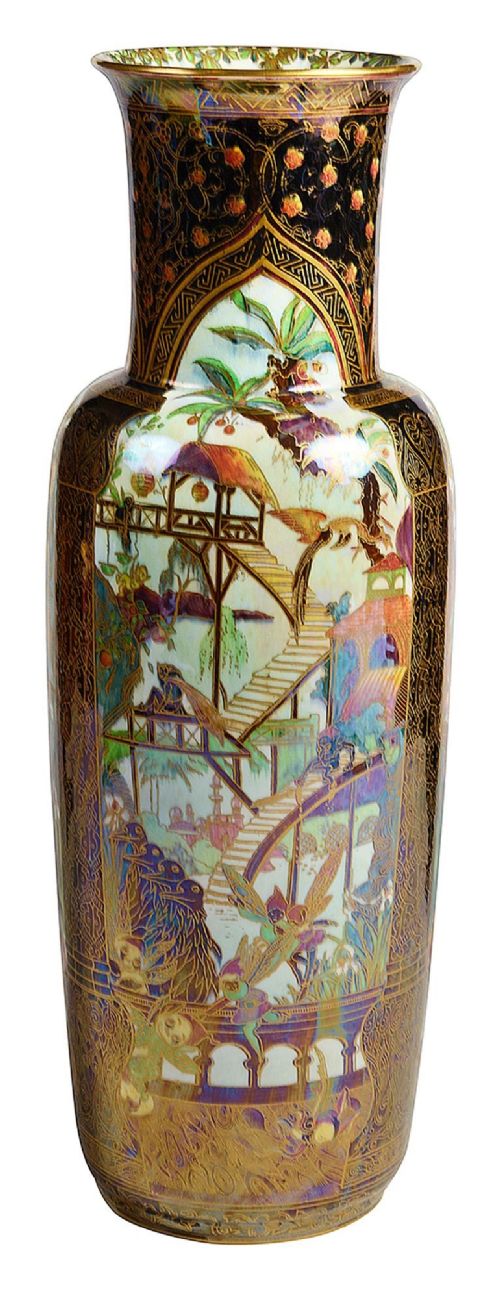
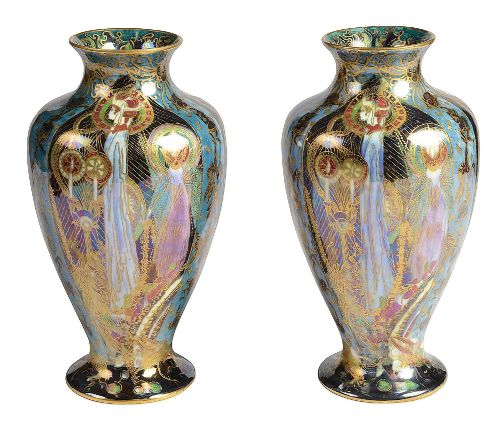
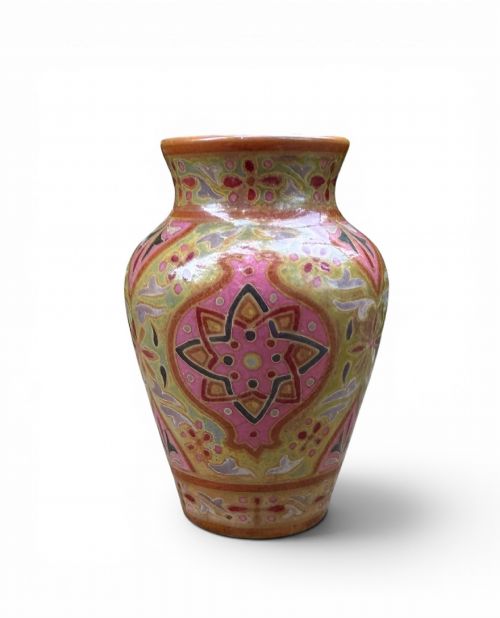
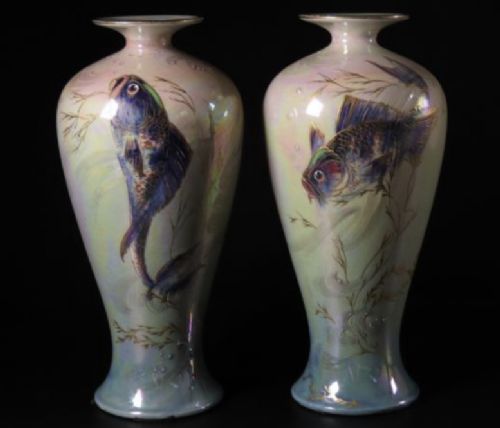
When you search for an iridescent pottery vase, you are looking at decorative vessels finished with special metallic lustre glazes that catch and reflect light. These pieces range from tall baluster shapes to smaller decorative forms designed to stand out on a mantelpiece or cabinet.
The versions you are most likely to meet on this page hail from the Victorian era up through the Art Nouveau and Art Deco periods. They demonstrate the enduring appeal of lustrous surfaces across British and European workshops.
Makers utilised earthenware, bone china, and ceramic bodies as the base for these complex glazed finishes. Each period brought distinct aesthetic priorities, moving from intricate mythical scenes to bold geometric patterning.
Materials and construction
Potters used earthenware, bone china, and standard ceramic bodies to form the base vessels before applying specialised glazes. These foundational shapes were thrown or moulded carefully to support the subsequent chemical treatments.
The characteristic shimmer comes from lustre glazes and applied gold leaf, which required multiple firings in a kiln under precise atmospheric conditions. This technique creates the metallic sheen that reacts dynamically with light.
Retail Price Guide 2026
Typical UK retail prices for iridescent pottery vase, calculated from the Sellingantiques database of over a million retail prices indexed since 2003. This retail price guide relies exclusively on Sellingantiques data; no external sources or auction records are used, so the figures do not describe the wider market.
Current listings feature earthenware, bone china, and glazed ceramic bodies decorated with lustre glazes and gold leaf.
Assessing quality and craftsmanship
Quality in these pieces rests upon the complexity and depth of the glaze finish rather than mere decorative ornamentation. Superior examples show a vibrant play of colour across the surface without cloudiness or dull patches.
The precision of hand-painted details and the crispness of the underlying ceramic form distinguish the finest works from standard production pieces. A well-executed glaze enhances the sculptural qualities of the vase rather than masking imperfections.
Wedgwood·Daisy Makeig-Jones·Zsolnay Pecs·Charlotte Rhead
The Iridescent Pottery Vase Glossary
- Lustre Glaze
- A type of ceramic glaze containing metallic oxides that produce an iridescent, shimmering surface upon firing. This finish is central to the visual appeal of these vessels.
- Baluster
- A tall vase form with a rounded lower body that tapers towards a narrow neck. This shape provides an expansive canvas for decorative motifs and shimmering glazes.
- Bone China
- A type of porcelain containing bone ash, known for its high strength, chip resistance, and translucent white body. It serves as a refined base for delicate lustre decorations.
- Earthenware
- Porous pottery fired at relatively low temperatures, requiring a glaze to become impermeable. It forms the robust structural body for many traditional decorative vases.
Frequently Asked Questions
What is an iridescent pottery vase?
An iridescent pottery vase is a ceramic vessel finished with special metallic lustre glazes that produce a rainbow-like sheen.
These pieces use chemical reactions in the kiln to create reflective surfaces that change colour depending on the viewing angle.
How do I display a lustre vase?
Place your vase in an area with direct natural light or focused indoor illumination to fully appreciate the shimmering glaze effects.
Keep them away from direct heat sources and handle them carefully to preserve the delicate metallic surface over time.
What materials make up these vases?
The underlying structures are typically formed from earthenware, bone china, or standard ceramic bodies.
Potters then coat these clay bases in specialised lustre glazes, sometimes incorporating elements such as gold leaf for added richness.
How do I identify Art Nouveau styles?
Art Nouveau pieces often feature flowing organic lines, natural motifs, and iridescent finishes inspired by insect wings and oil slicks.
They reflect a design movement that turned away from rigid industrial geometry in favour of fluid, plant-like forms.