

Interior Scene Painting
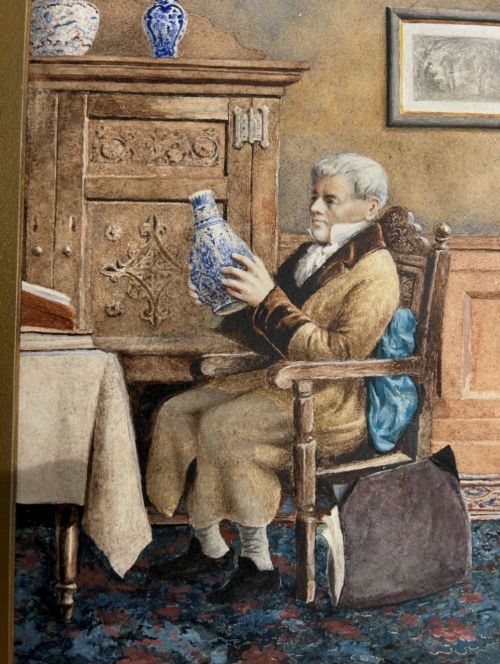
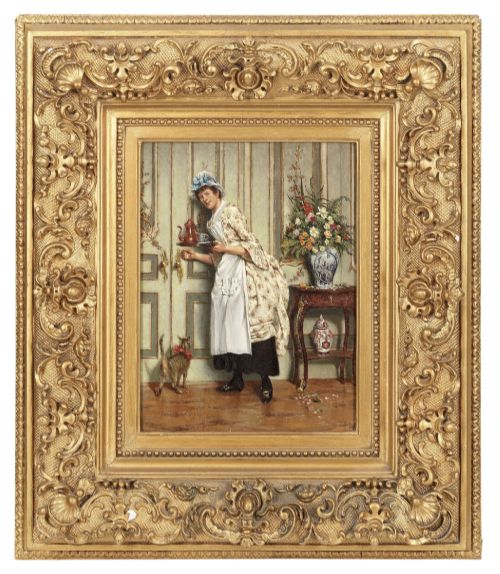
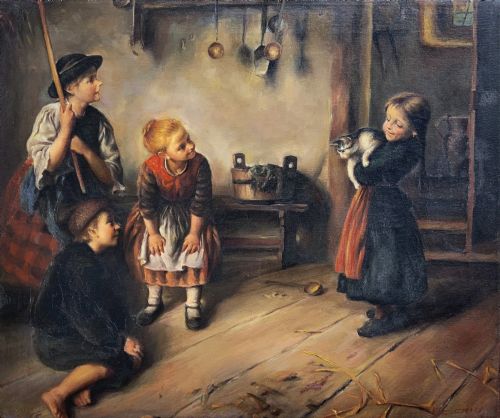
An interior scene painting records domestic and social life within rooms, offering a glimpse into past daily routines.
Interior Scene Painting
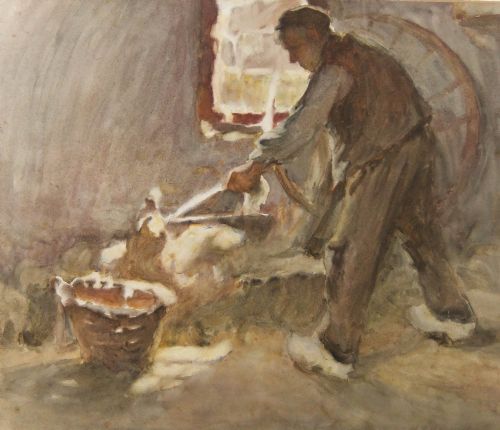
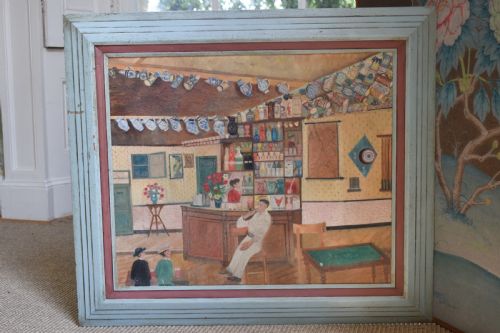
An interior scene painting captures everyday domestic and social life within domestic rooms, taverns, and workshops.
The pieces appearing on this page span from the nineteenth century through to the mid-twentieth century.
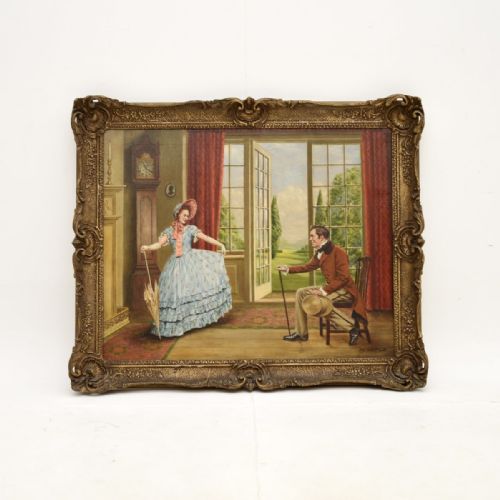
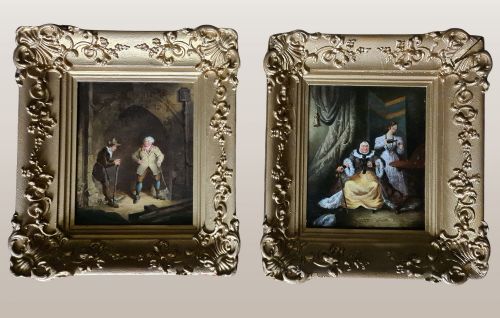
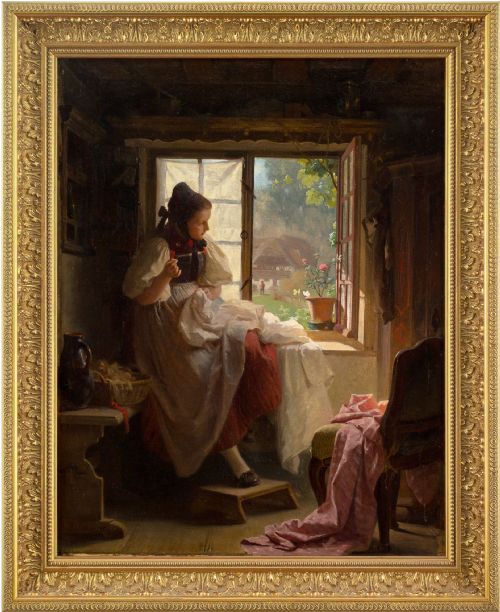
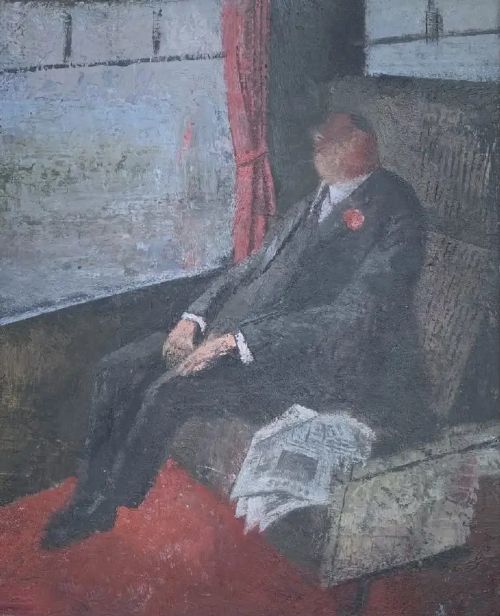
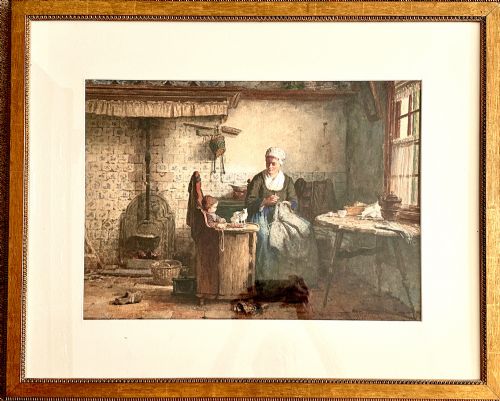
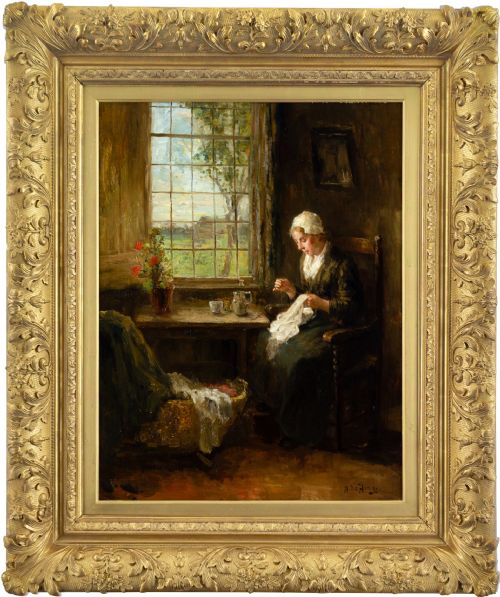
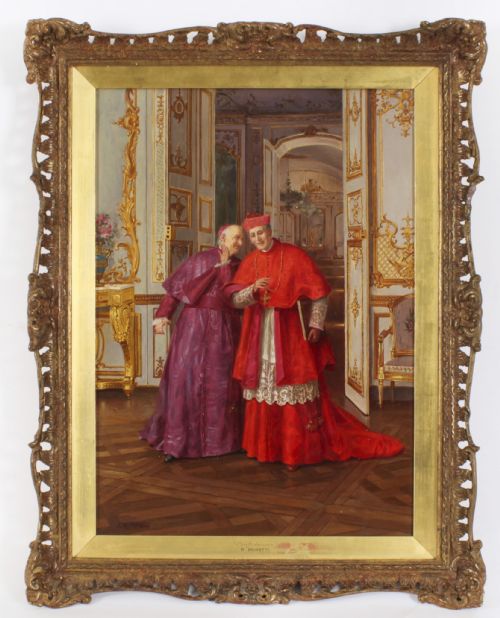
Most examples present figures engaged in domestic tasks, tea times, sewing, or quiet moments by a window, painted in oil or watercolour.
How they were made
Artists painted primarily using oil on canvas, wood panel, or board, alongside watercolours on paper.
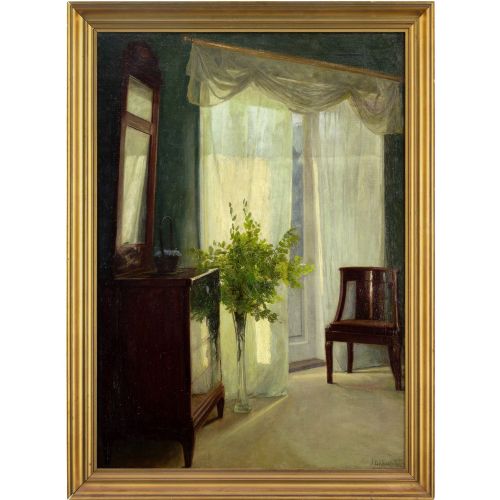
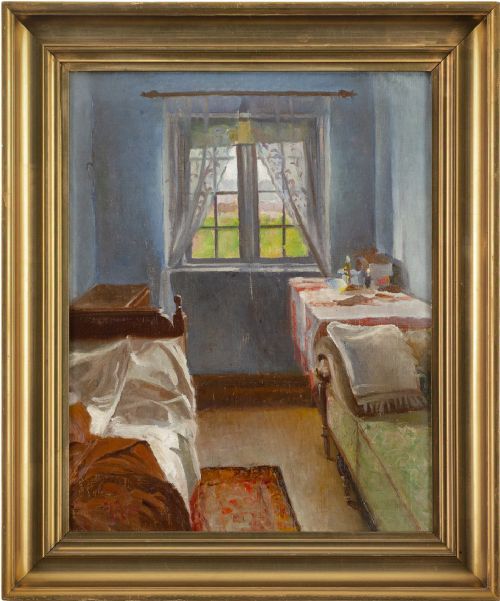
Many works incorporate layered oil paint to create depth in shadowed interiors and play with natural light entering through doors and windows.
Listings feature works executed in oil and watercolour on canvas, board, tin, and paper.
What varies in quality
The standard of an interior scene painting rests upon the artist's command of light, shadow, and human proportion within a confined space.
Pebbles of quality appear in the subtlety of the brushwork, particularly in how daylight falls across fabrics, furniture, and faces.
Works that capture genuine character and atmospheric depth distinguish themselves from formulaic studio compositions.
Henry Stacy Marks·Stephen Samuel Lewin·Henry Silkstone Hopwood·Alfred Lyndon Grace·John Lübschitz·Max Kaltenmoser·David Teniers·Harry Kluge·Hendrik Valkenberg·Bernard De Hoog·Renato Moretti·Jacob Akkersdijk·James Hayllar·Harry Brooker·George Kilburne·Alexander Rosell·Benjamin Eugene Fichel·John Arthur Lomax·Gabriel Puig Roda·Haynes King·James Kyd·Robert Eadie·Robert Alexander Hillingford·George Smith·Edwin Hughes
The Interior Scene Painting Glossary
- Genre painting
- A style that depicts aspects of everyday life by portraying ordinary people engaged in common activities. These works provide valuable social history through their detailed recording of domestic interiors and clothing.
- Chiaroscuro
- An artistic technique using strong contrasts between light and dark to give a three-dimensional volume to figures and objects. This method helps direct the viewer's eye toward the primary action within a shadowed room.
- Gesso
- A plaster-like mixture applied to wooden panels or frame mouldings as a base for paint or gold leaf. It allows craftsmen to carve intricate decorative details before gilding.
- Watercolour
- A paint consisting of pigment suspended in a water-based solution, typically applied to paper. It yields translucent washes that capture soft interior lighting.
- Giltwood
- Wood that has been coated with a thin layer of gold leaf. Frames finished in this manner frequently complement nineteenth-century canvases.
Interior Scene Painting: Frequently Asked Questions
What is an interior scene painting?
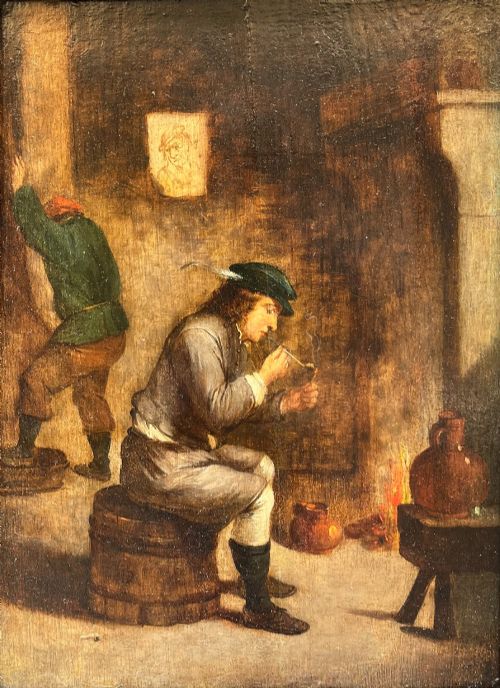
An interior scene painting is an artwork depicting people within domestic rooms, taverns, workshops, or historic buildings. These pieces focus on daily activities, leisure, and social gatherings.
Subjects range from family tea times and quiet reading to tavern card games and blacksmiths at work. They serve as visual records of past domestic interiors, furniture, and clothing.
How were these paintings used?
These paintings were created primarily as decorative art for domestic parlours, drawing rooms, and galleries. Victorians and later collectors hung them to display taste and narrative interest.
Smaller watercolours and cabinet oils suited intimate residential spaces, while larger canvases commanded central positions on reception room walls.
How do I live with one?
Display your painting away from direct sunlight and damp environments to protect oil pigments and paper watercolours. Proper placement preserves the stability of the canvas and the supporting wooden frame.
Lighting the artwork with a dedicated picture light enhances the interior illumination captured by the artist, particularly in works employing chiaroscuro.
How can I tell periods apart?
Nineteenth-century works often feature detailed realism, narrative domestic drama, and heavily carved giltwood frames. Mid-century and twentieth-century examples frequently show shifts toward looser brushwork and modern interior styling.
Examining the support materials, clothing styles of the figures, and framing techniques provides clear clues to the date of execution.