

Inlay Corner Cabinet
An inlay corner cabinet turns awkward domestic angles into focal points, storing porcelain and silver while adding warm timber tones to a room.
Inlay Corner Cabinet
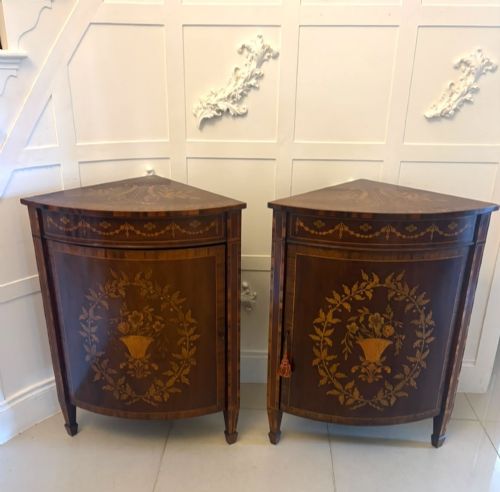
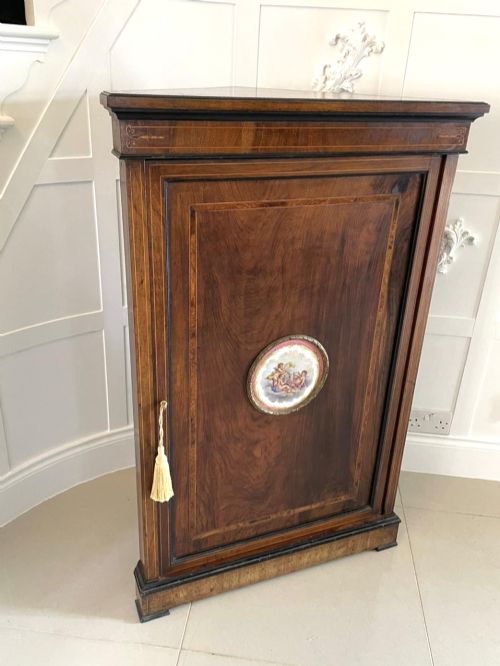
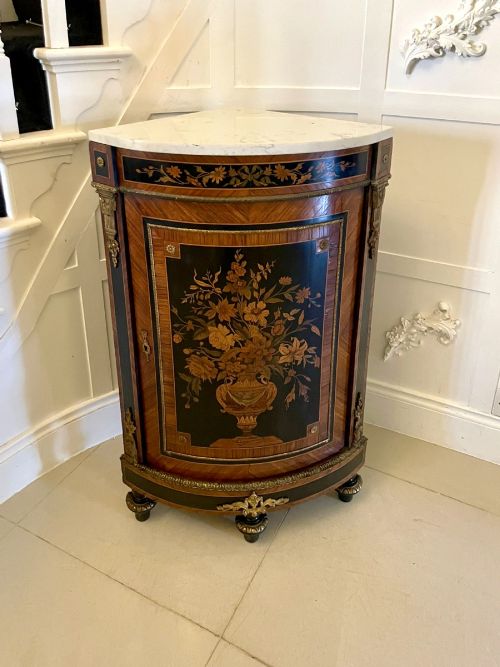
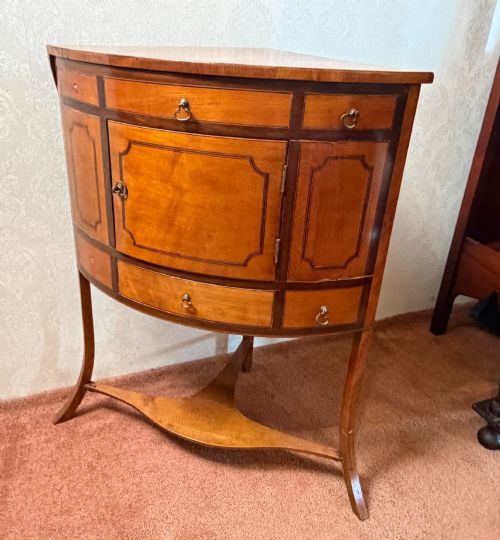
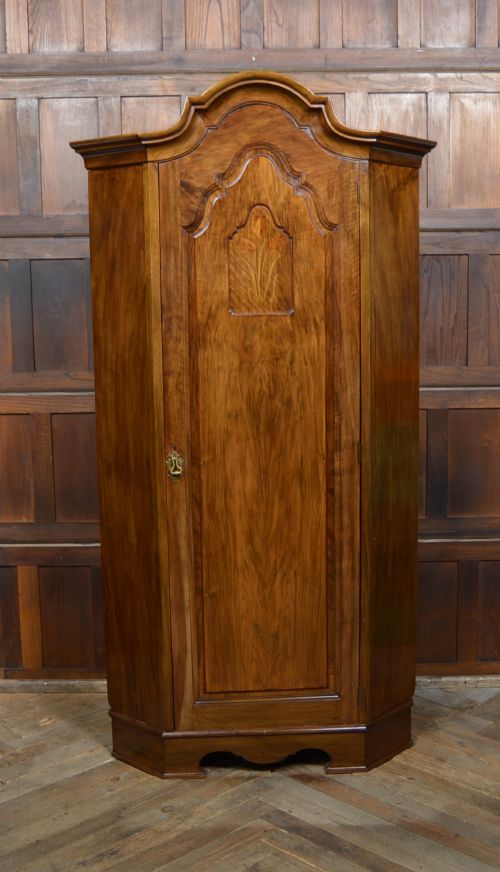
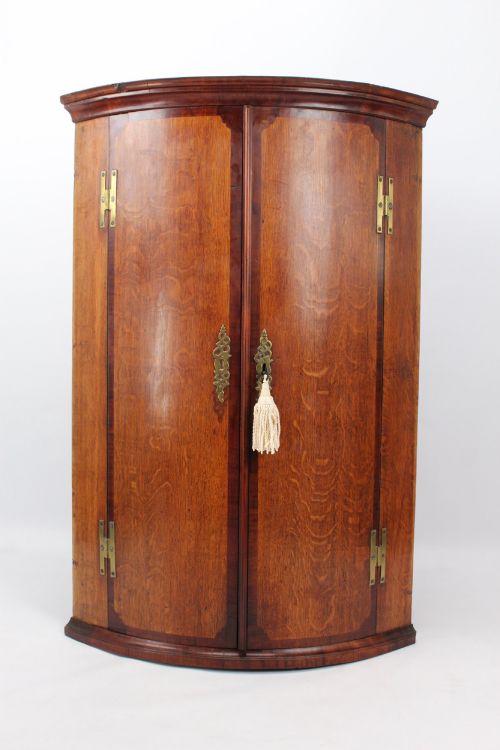
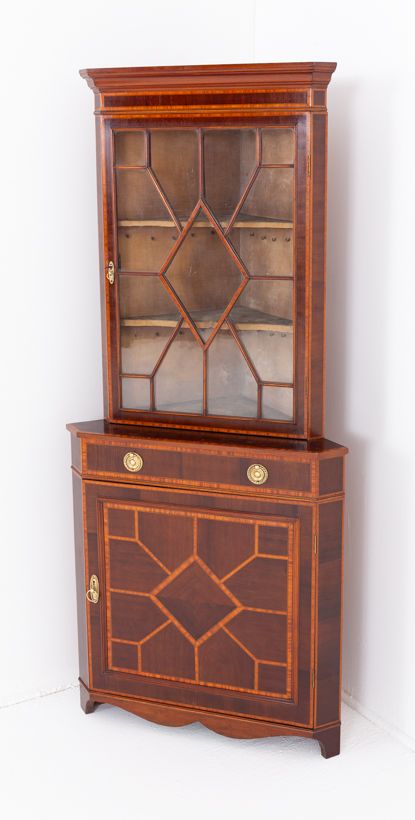
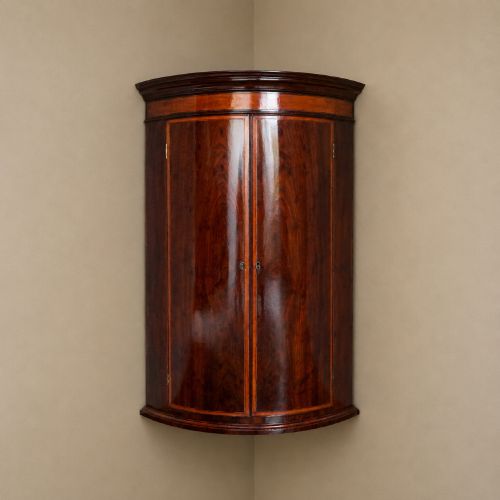
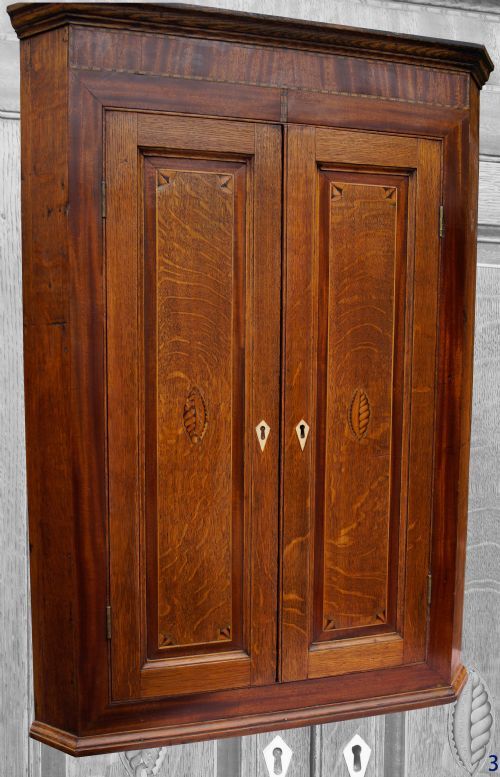
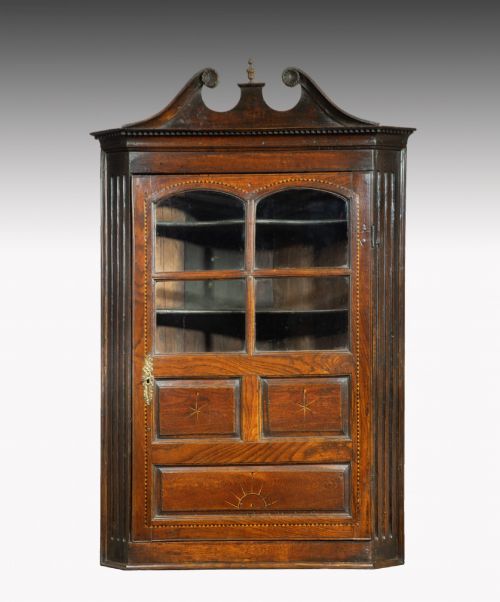
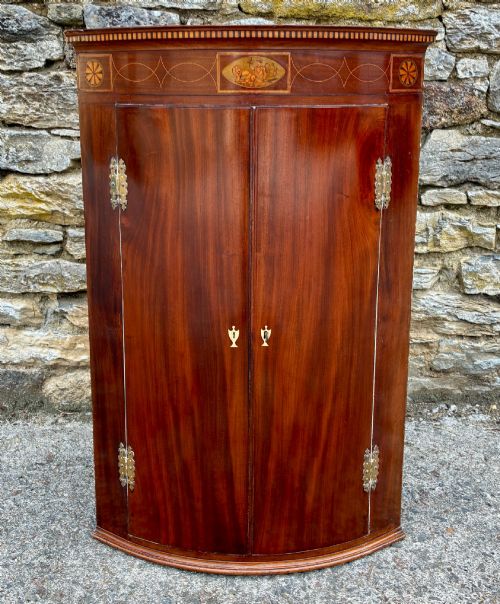
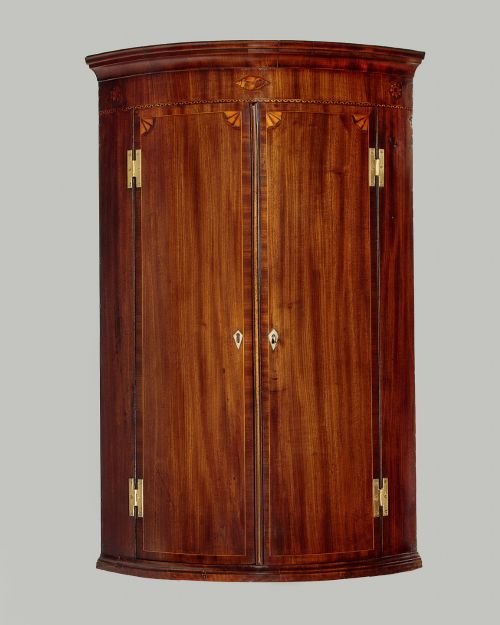
An inlay corner cabinet brings together timber carcase work and decorative banding designed to fit domestic room intersections. These pieces range from wall-hanging cupboards to floor-standing units and display cases with glazed doors.
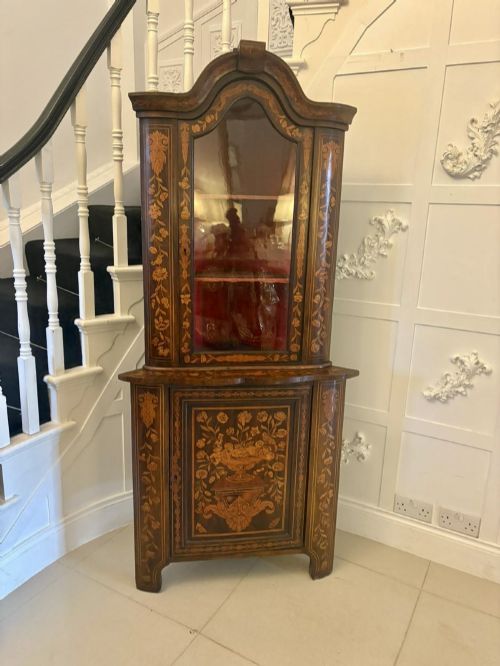
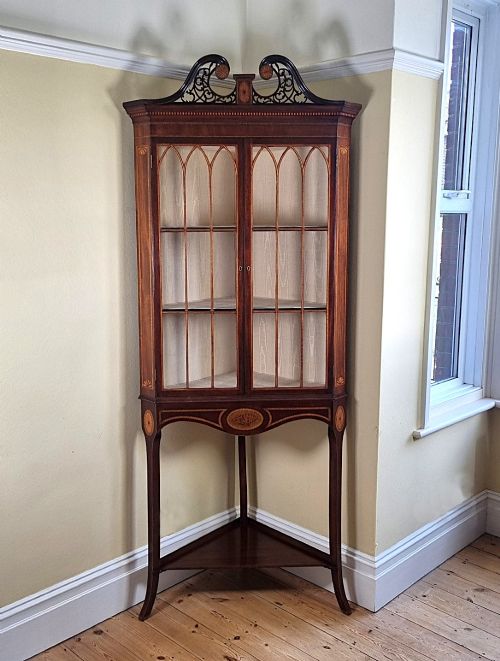
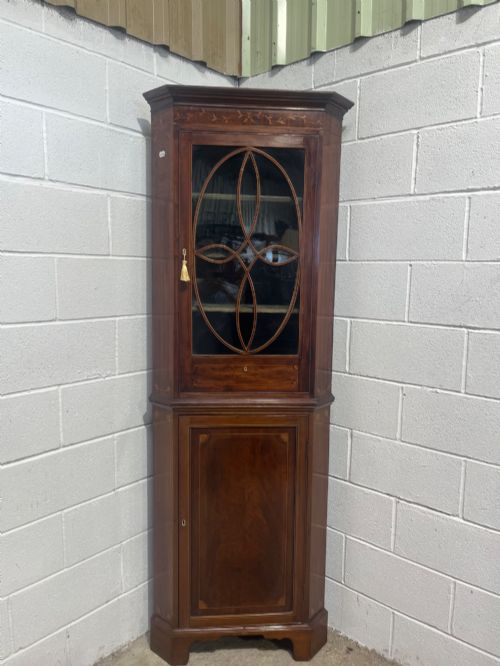
The most common examples on this page date from the Georgian period through to the Edwardian era, constructed in mahogany, oak, or walnut with contrasting wood veneers. Many feature bow fronts or astragal glazing bars enclosing shelving.
Makers produced these storage items in various styles including Sheraton Revival, George III, and Dutch Baroque Revival, reflecting changing tastes in domestic joinery over two centuries.
Materials and Technique
Cabinetmakers built these carcases primarily using solid mahogany, oak, or walnut, often applying fine wood veneers and contrasting satinwood inlay to exterior door panels and friezes.
Glazing techniques involve timber astragal bars dividing glass panes on display models, while hanging versions utilise brass hinges and escutcheons to secure doors to walls.
Marquetry and parquetry methods introduce complex floral or geometric patterns onto the timber surfaces using dyed and natural woods.
Some nineteenth-century makers cleverly disguised corner washstands as conventional cabinets until someone lifted the folding top to reveal the basin.
Judging Quality
Quality rests on the selection of timber figures, such as plum pudding mahogany or figured walnut, matched with crispness in the inlaid banding rather than painted substitutes.
Construction details distinguish finer examples, including solid secondary timbers inside, well-fitted brass hardware, and original glass panes within glazed doors.
Proportion and architectural elements, like swan neck pediments or finely carved cornices, elevate standard utilitarian storage into high-status furniture.
The Inlay Corner Cabinet Glossary
- Astragal
- A moulding profile used to divide glass panes within a cabinet door. These narrow timber bars form geometric patterns typical of Georgian and Edwardian display pieces.
- Bow Front
- A convex curved cabinet front that projects outward from the corner. This shape gained popularity during the Georgian period.
- Marquetry
- A decorative technique applying fitted pieces of wood veneer to a carcase to form pictures or floral designs. It appears frequently on Dutch and Victorian examples.
- Pediment
- The decorative crown situated at the top of a floor-standing or tall wall cabinet. Swan neck versions feature scrolling wooden arches terminating in rosettes.
- Satinwood Inlay
- Contrasting pale yellow timber used in thin strips to border panels and drawer fronts. This detail characterises Sheraton Revival and Edwardian pieces.
Inlay Corner Cabinet: Frequently Asked Questions
How do I hang a wall corner cabinet?
Wall-hanging pieces require secure fixing into solid masonry or stud work using appropriate brackets behind the interior backboards.
Because these timber carcases carry considerable weight when filled with ceramics, professional installation ensures safety.
What is the difference between a corner cupboard and a display cabinet?
Cupboards generally feature solid wooden doors enclosing private storage space for household provisions or linens.
Display cabinets utilise glass doors and internal shelving specifically designed to showcase porcelain and glassware.
How do I tell Georgian from Edwardian inlay corner cabinets?
Georgian pieces display hand-cut joinery, dense native hardwoods, and restrained inlay patterns executed around the late eighteenth century.
Edwardian Sheraton Revival pieces often exhibit lighter satinwood banding, machine-finished elements, and brighter mahogany veneers from around nineteen hundred.
Where should I place an inlay corner cabinet in a modern room?
These units fit directly into ninety-degree room intersections, utilising dead space that standard rectangular furniture cannot occupy.
They work effectively in dining rooms for tableware or in living spaces to display collections without blocking floor area.