
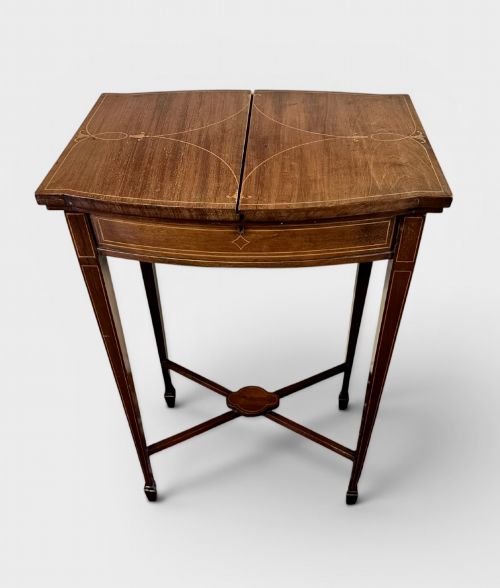


Inlaid Wooden Work Box
An inlaid wooden work box brings together precise cabinet work and small scale storage, offering a compartmented interior designed to hold sewing gear or personal papers.
Inlaid Wooden Work Box
An inlaid wooden work box is a portable lidded chest designed for domestic crafts, featuring fitted compartments for cotton reels, needles, and small tools.
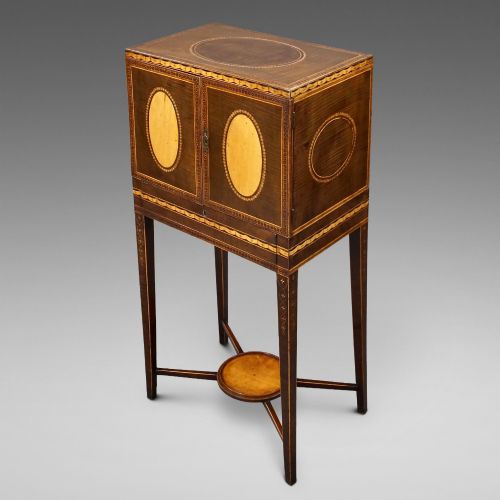
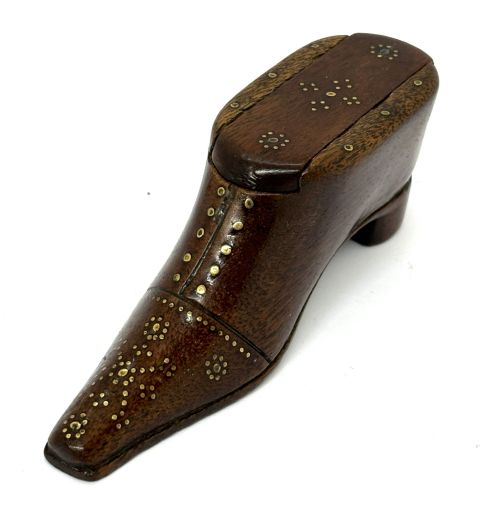
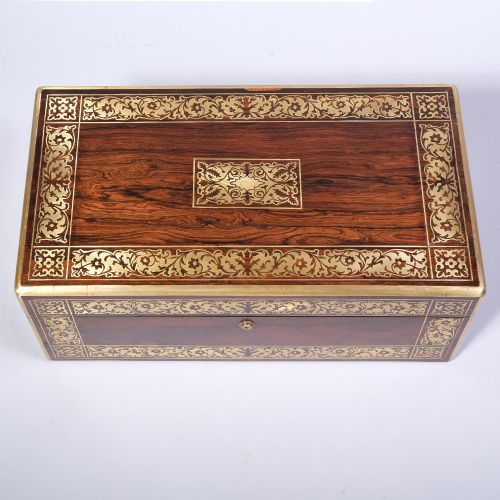
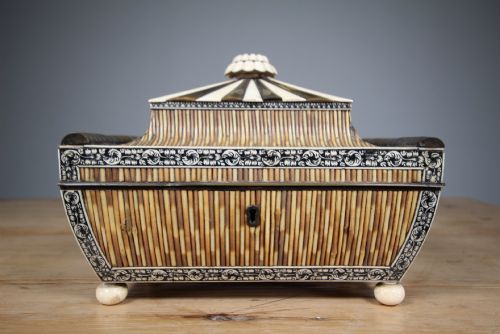
The pieces appearing on this page span the Georgian, Regency, and Victorian eras through to the Edwardian period, manifesting in rectangular, sarcophagus, and octagonal forms.
Makers utilised woods such as rosewood, walnut, mahogany, and satinwood, embellished with contrasting stringing, brass lines, mother-of-pearl, and pictorial marquetry.
How they were made
Carpenters constructed the carcase from solid timbers or applied dense veneers like burr walnut, rosewood, and coromandel over a stable secondary wood base.
Inlay work relied on contrasting veneers such as boxwood, harewood, and satinwood, often cut by hand and set into precise channels carved into the surface.
Specialist techniques included Tunbridge ware micro-mosaic banding, Sorrento marquetry, and brass pique work, alongside fitted interior trays lined with paper, velvet, or silk.
Some nineteenth-century makers concealed secret drawers behind dummy partitions, giving owners a private spot for love letters or hidden currency.
What varies in quality
Quality rests upon the precision of the timber selection, such as the lively grain of burr walnut or figured rosewood, matched evenly across the lid and sides.
The refinement of the inlay dictates the standard of the piece, separating simple boxwood lines from intricate Sorrento wood pictures or complex Tunbridge mosaic tesserae.
Internal architecture marks the superior box, seen in solid secondary woods, well-fitted lift-out trays, and original working locks with matching keys.
The Inlaid Wooden Work Box Glossary
- Tunbridge ware
- A form of British woodwork characterised by tiny mosaic tiles assembled from different coloured natural timbers to form geometric or pictorial scenes. It originated in Kent during the nineteenth century.
- Marquetry
- The art of forming decorative patterns on a wooden carcase using thin slices of wood veneer, shell, or ivory. Craftsmen cut these elements together to ensure tight joints.
- Satinwood
- A durable hardwood featuring a lustrous, golden-yellow sheen that catches the light. It found favour for fine stringing and cabinet veneers in Georgian and later pieces.
- Boulle
- A technique of inlaying brass and tortoiseshell together in contrasting counter-form panels. French cabinet makers developed the method, which later influenced nineteenth-century British boxes.
- Stringing
- A narrow strip of contrasting wood inlaid into the surface of a box to form a linear border. It outlines the edges of lids and drawers.
Inlaid Wooden Work Box: Frequently Asked Questions
What was an inlaid wooden work box used for?
These boxes served as portable repositories for needlework, embroidery threads, and pins. Ladies kept them close at hand in the parlour for sorting mending or pursuing decorative stitching.
The fitted interior trays lifted out to store larger pieces of fabric underneath, while smaller compartments secured thimbles, bodkins, and measuring tapes.
How do I date a wooden work box?
Dating relies on combining the timber choice, the style of the brass hardware, and the construction methods used inside the carcase. Georgian and Regency examples often display restrained mahogany or satinwood with simple stringing, while Victorian pieces lean towards heavy burr walnut and mother-of-pearl.
Looking at the interior paper linings and the design of the lock plates provides further clues to the manufacturing decade.
What is Sorrento ware?
Sorrento ware refers to decorative wooden items produced in the Italian town of Sorrento during the nineteenth century, often brought home by travellers on the Grand Tour. These pieces feature characteristic micro-mosaic marquetry depicting buildings, figures, or floral sprays.
Olive wood and walnut formed the common base materials for these pictorial caskets and work boxes.
How should I care for an antique box?
Keep the wood away from direct sunlight and steady heat sources to prevent the veneer from drying out and lifting from the carcase. A light application of microcrystalline wax feeds the polished surface without building up residue.
Avoid placing damp items inside the lined compartments to protect the original paper and fabric interiors.