



Inlaid Wooden Hall Table
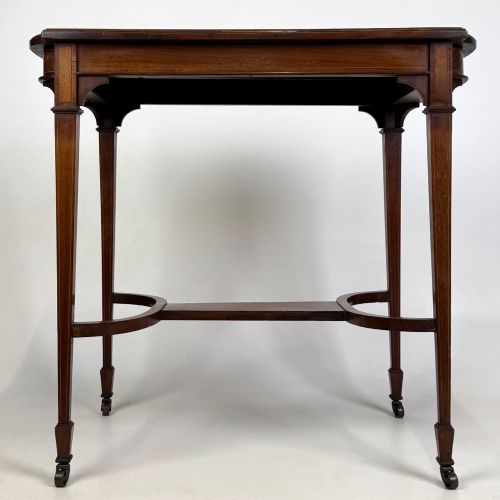
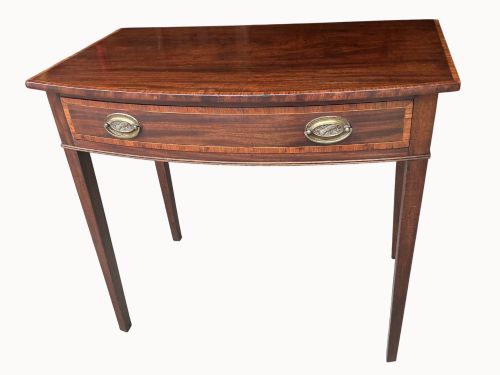
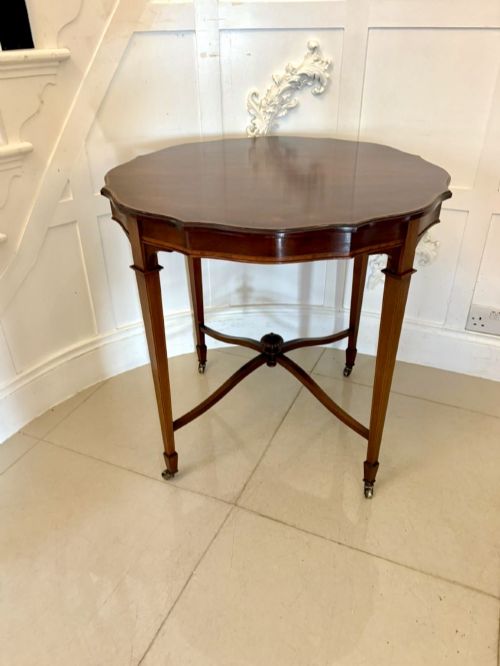
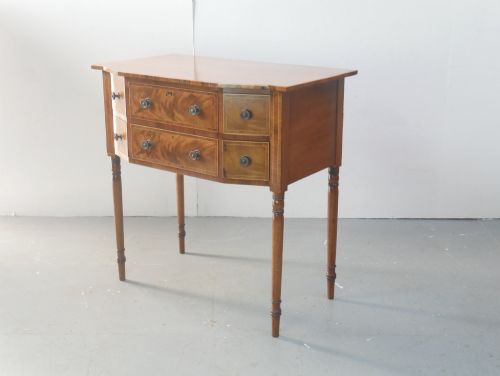
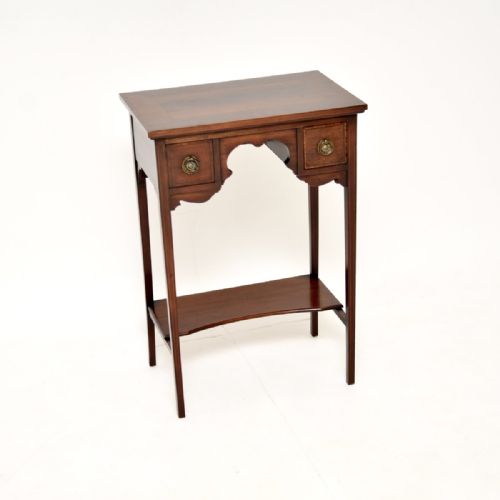
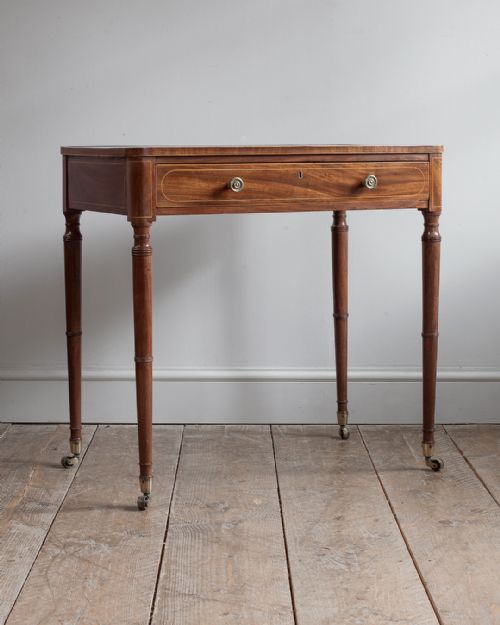
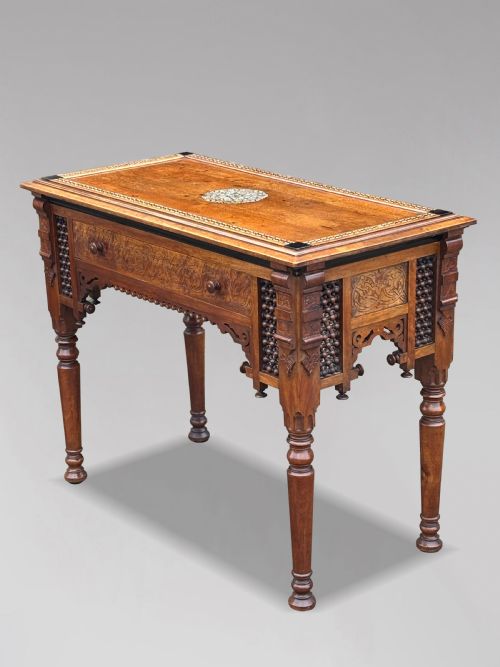
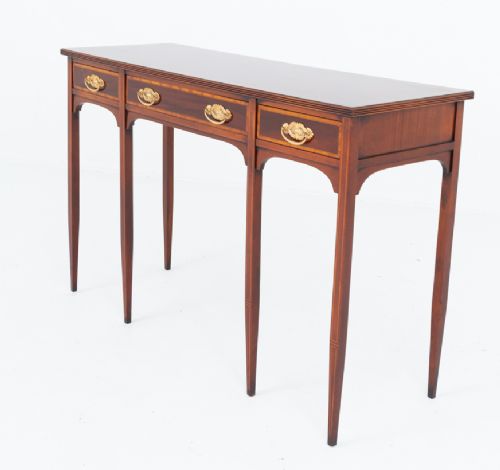
An inlaid wooden hall table brings together rich timber and precise contrasting stringing to ground an entranceway with period character.
Inlaid Wooden Hall Table
An inlaid wooden hall table encompasses compact side tables, demilune surfaces, and slender occasional pieces designed to sit neatly against a corridor wall. The selections span Georgian, Regency, Victorian, and Edwardian eras, reflecting changing domestic requirements for a functional surface near the front door.
Most examples encountered here rely on mahogany, satinwood, or walnut, frequently accented by contrasting boxwood or general wood inlay in classical motifs. The primary forms function as practical landing spots for daily correspondence and keys, balancing decorative marquetry with sturdy four-legged or pedestal support.
Earlier Georgian and Regency variants offer restrained proportions and rich timber grains, whereas Edwardian and Sheraton Revival pieces lean into lighter satinwood grounds and delicate painted or inlaid decorative borders.
Timber Construction and Inlay Techniques
Cabinet makers constructed these tables using solid primary timbers such as mahogany and rosewood, often applying veneers over stable secondary woods to achieve smooth, figured tabletops. Joinery relied on traditional mortise and tenon frames designed to endure daily household use without twisting.
Inlay work involved meticulous hand-cutting of contrasting woods like boxwood and satinwood, fitted precisely into recessed channels carved directly into the solid timber or veneer surface. This linear stringing or geometric marquetry defined borders, table edges, and central medallions with sharp geometric accuracy.
Listings feature tables spanning from the Georgian and Regency eras through to Victorian, Edwardian, and early twentieth-century periods.
Distinguishing Craftsmanship and Material Selection
Quality rests heavily on the selection of timber figures, where richly flamed mahogany, burr walnut, and choice satinwood command greater attention than plain, unfigured boards. The crispness of the inlay work further separates standard utility pieces from exceptional examples, as tight, seamless joints between contrasting woods require consummate skill.
Walker and Hall·Shoolbred and Co·James Winter
The Inlaid Wooden Hall Table Glossary
- Inlay
- A decorative technique where pieces of contrasting wood, brass, or other materials are set into a recessed surface to form a flat design. This method defines the primary ornamentation on these corridor tables.
- Demilune
- A half-moon shape commonly applied to small console and side tables designed to stand flat against a wall. This profile saves precious floor space in narrow hallways.
- Marquetry
- Elaborate patterns formed by fitted wood veneers applied to a carcass, creating pictorial or geometric designs. It differs from linear stringing through its broader use of varied timber shades.
- Satinwood
- A durable, lustrous tropical timber with a golden-yellow sheen, frequently utilised for banding, stringing, and entire veneered surfaces during the late eighteenth and Edwardian periods.
- Stringing
- Thin, narrow strips of contrasting wood inlaid in parallel lines to outline the edges of tabletops and drawer fronts. This subtle detail frames the primary timber grain.
Inlaid Wooden Hall Table: Frequently Asked Questions
How do I distinguish Edwardian pieces from Georgian ones?
Georgian tables generally exhibit heavier proportions, darker unvarnished mahogany tones, and restrained architectural lines with minimal surface decoration. Their construction prioritises solid timber mass and traditional joinery.
Edwardian and Sheraton Revival examples often feature lighter satinwood grounds, delicate painted floral motifs, and finer stringing. These later pieces reflect a revival of eighteenth-century neoclassical tastes executed with lighter framing.
Where should I place a console table?
A console or demilune table sits flush against a hallway or landing wall, frequently anchored beneath a mirror or framed artwork. Its shallow depth prevents obstruction in high-traffic corridors.
Ensuring adequate clearance around the table allows doors to open fully and maintains an unobstructed pathway through the entrance space.
How do I care for antique wood surfaces?
Maintaining these surfaces involves regular dusting with a soft, dry cloth and avoiding placement near direct heat sources or strong sunlight. Excessive heat dries out old timbers and causes veneers to lift.
Applying a quality beeswax periodically nourishes the historic finish and preserves the natural lustre of the mahogany or satinwood grain without building up heavy chemical residues.