


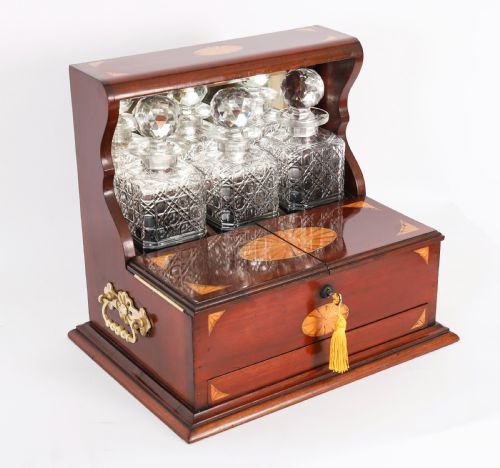

Inlaid Wooden Games
These inlaid wooden games offer tactile entertainment and fine craftsmanship, bringing centuries of social play into modern rooms through folding boards, tables, and caskets.
Inlaid Wooden Games
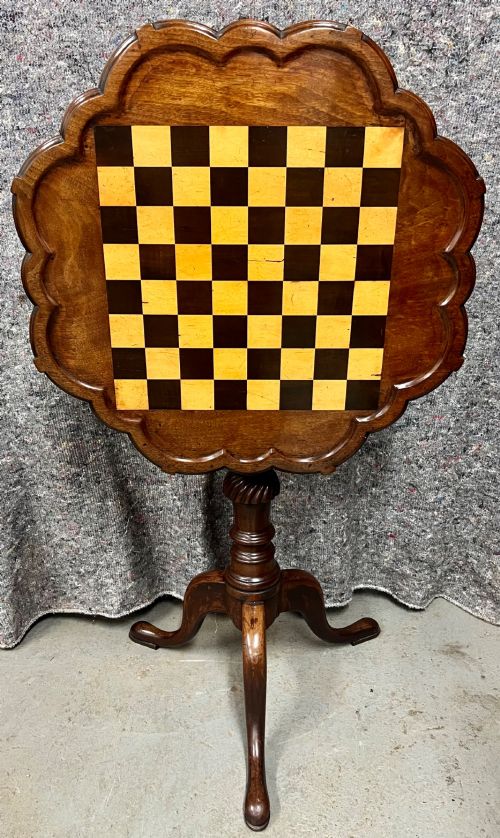
Inlaid wooden games encompass everything from multi-use folding tables and tea-and-card combinations to portable caskets and specialised boards for chess, backgammon, and cribbage. The selection relies heavily on tables and boxes produced across the Georgian, Regency, and Victorian eras, alongside Edwardian variations.
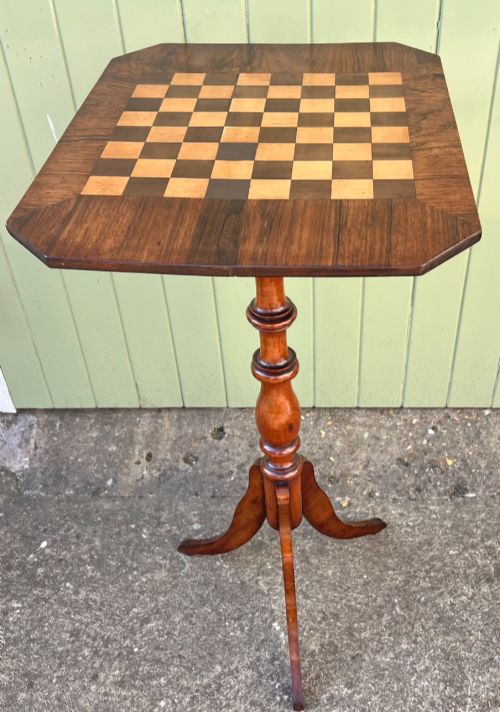
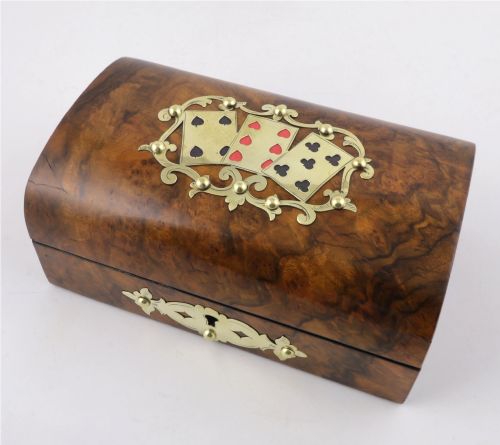
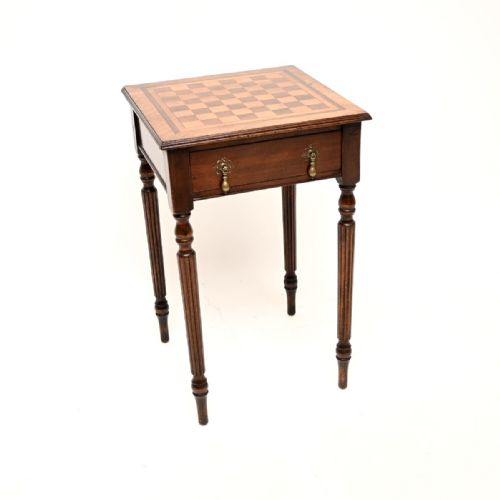
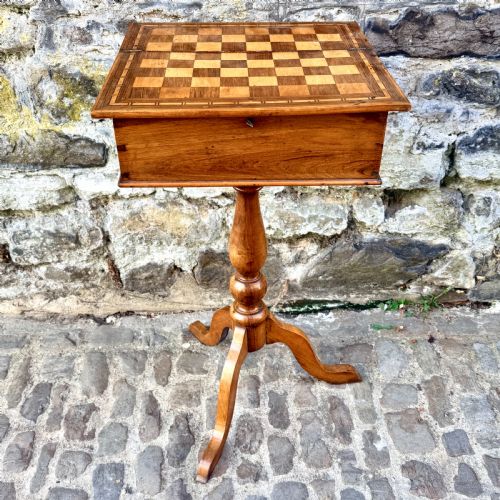
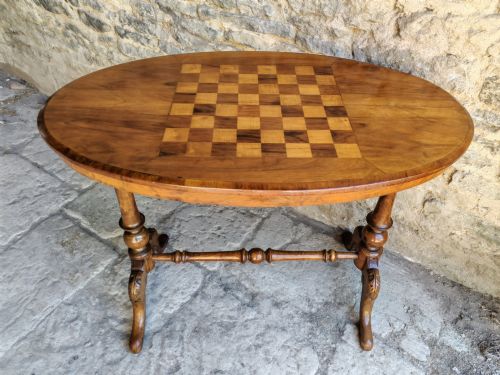
Buyers will encounter freestanding occasional tables with chess boards integrated directly into their tops, as well as smaller folding boxes designed for travel. Mahogany, walnut, and rosewood form the structural backbone of these pieces, often enriched with contrasting boxwood and satinwood inlay.
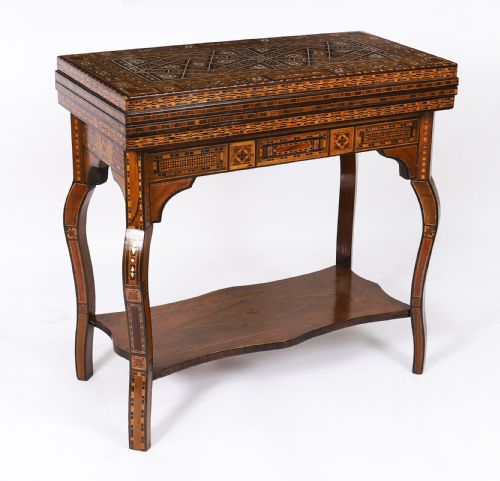
Regional diversity also emerges through specific pieces such as French Provincial, Swedish birch, Levantine, and Anglo-Indian examples. These variations demonstrate how different workshops adapted European parlor pastimes and indigenous cabinet-making traditions.
Materials and construction
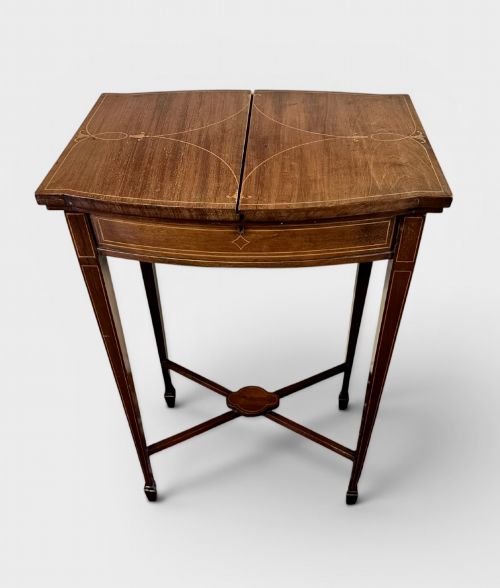
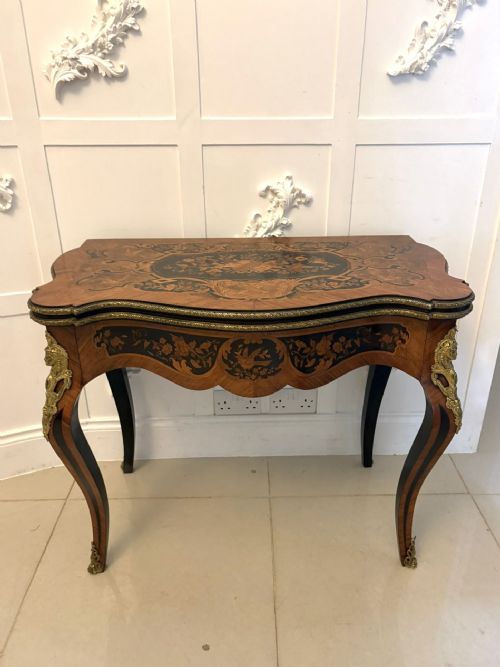
Cabinet-makers relied on dense hardwoods like mahogany, walnut, rosewood, and kingwood for stability and rich natural grain patterns. Surfaces received intricate contrasting inlay and marquetry using lighter timbers such as satinwood, birch, and boxwood to delineate playing squares and decorative motifs.
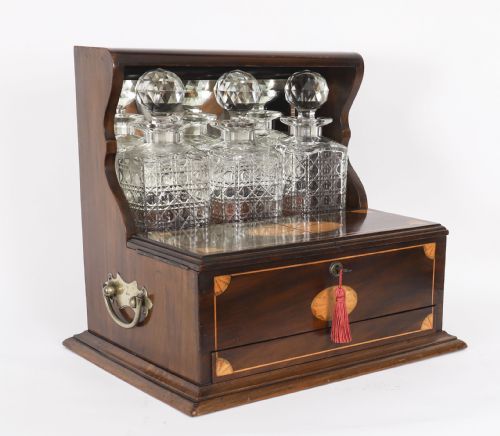
Many tables incorporate clever mechanical folding leaves, pivoting tops, and internal compartments lined for sewing equipment or playing pieces. Structural elements occasionally include cast brass mounts, tripod bases, and specialised fittings for decanters or dice.
One surviving Edwardian table brings the ancient race game of goose directly onto the timber top for family play.
Evaluating craftsmanship
Quality rests on the precision of the timber inlay and the stability of the foundational hardwoods. Sharp alignment between contrasting woods dictates the visual success of a chess board or decorative border.
Mechanical integrity defines the better examples, particularly in how smoothly folding leaves, pivoting tops, and fitted internal compartments operate. The integration of secondary materials, such as Ormolu mounts, cast brass, and fitted crystal decanters, elevates the ambition of the piece.
Gillows
The Inlaid Wooden Games Glossary
- Marquetry
- Decorative veneer applied to furniture in patterns and pictures. It uses thin slices of various woods to create pictorial designs on table tops.
- Tripod table
- A small freestanding table supported by a pillar and three legs. This form appears frequently among nineteenth-century chess and occasional tables.
- Cribbage
- A card game traditionally scored on a dedicated board with pegged tracks. Wooden cribbage boards and boxes form a distinct category within surviving parlor items.
- Turn over leaf
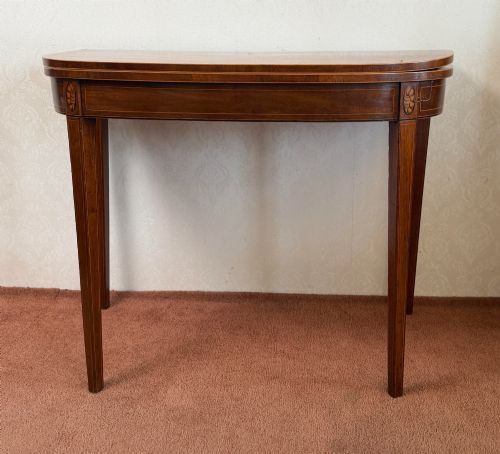
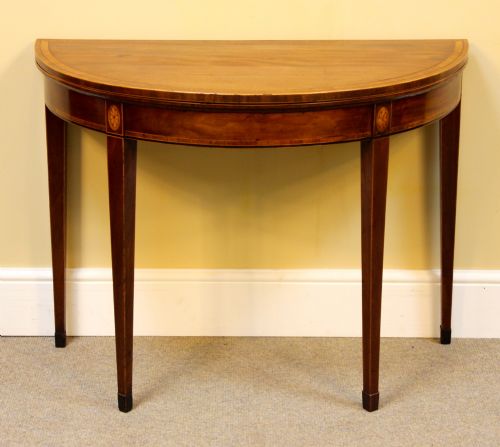
- A hinged table top that folds open to double its surface area. This mechanism allows a compact console or side table to convert into a card table.
- Tantalus
- A locked wooden cabinet holding decanters visible behind wooden bars. Surviving examples frequently combine this liquor storage with integrated games equipment.
Inlaid Wooden Games: Frequently Asked Questions
What games do these tables play?
Surviving pieces primarily accommodate chess, backgammon, and card games, with dedicated surfaces often built directly into the furniture tops.
Many examples feature reversible or multi-functional boards paired with internal storage compartments for dice, counters, and cards.
How do I identify a Regency card table?
Regency card tables typically feature bold mahogany veneers, 'D' shaped folding tops, and pedestal or pillar bases supported by sabre legs.
These pieces date from the early nineteenth century and rely on clean architectural lines rather than heavy carving.
Were these items used for travel?
Certain items, such as compact caskets and folding boards, were specifically constructed for portability during the Victorian era.
These travel sets allowed players to pack chess pieces, backgammon counters, and cards securely inside wooden boxes.
How do I care for inlaid wooden surfaces?
Protect antique wood and inlay by keeping pieces away from direct sunlight and fluctuating radiator heat.
Applying a traditional beeswax polish periodically helps maintain the moisture and sheen of walnut, mahogany, and rosewood.