


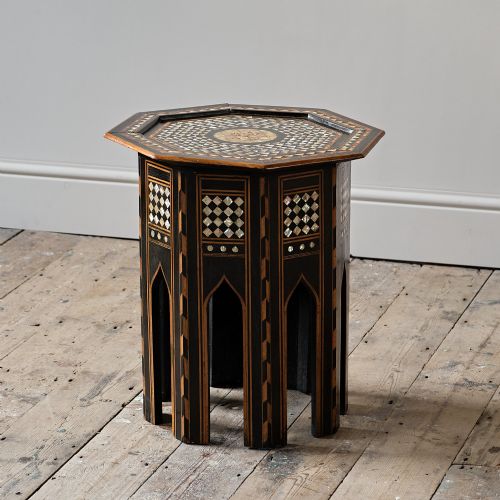
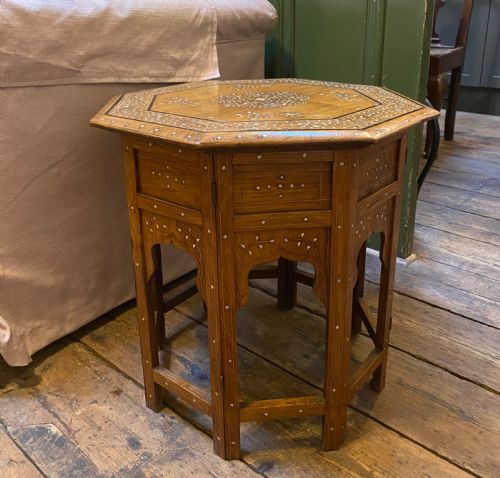
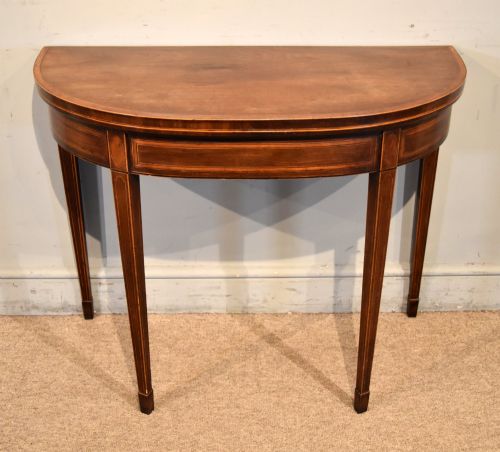
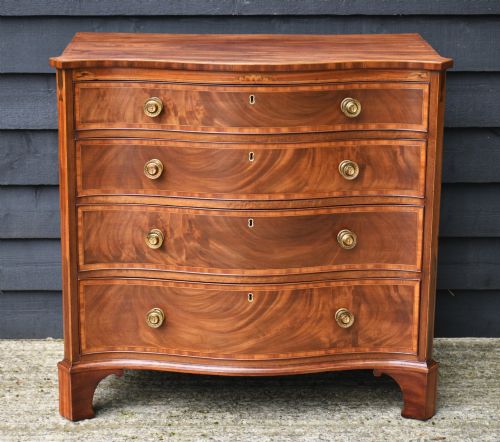
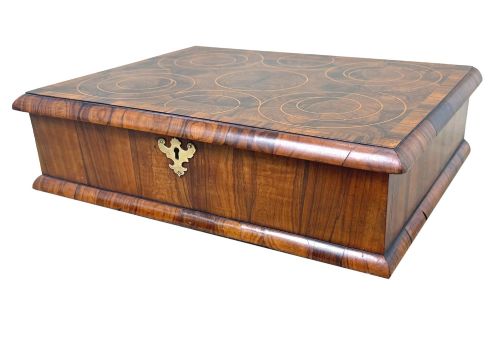
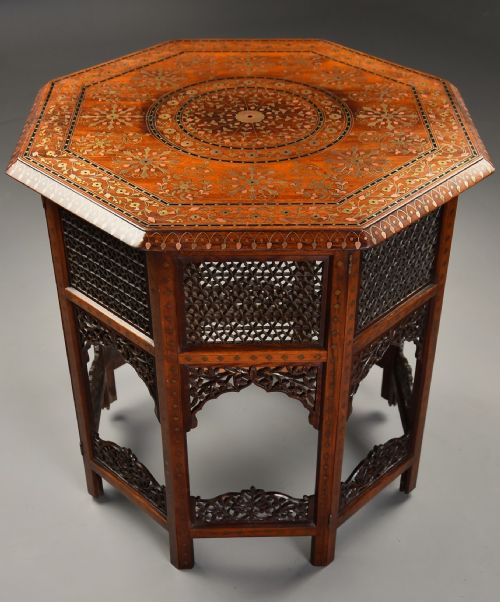
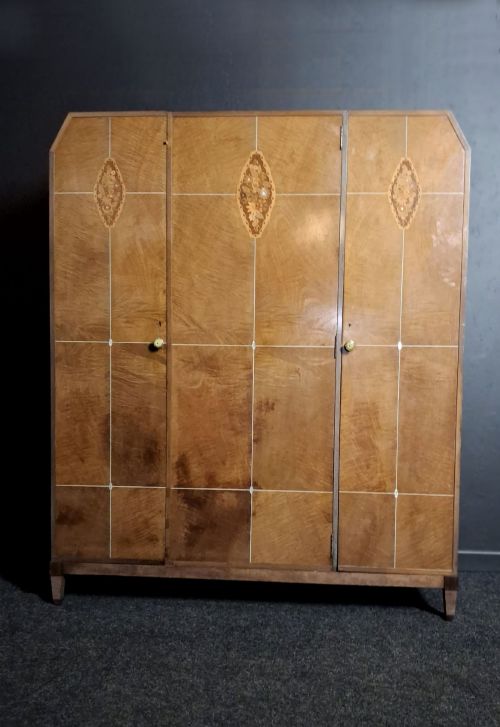
Inlaid Wooden Furniture
Inlaid wooden furniture brings together rich timbers and precise contrasting details across tables, cabinets and seating.
Inlaid Wooden Furniture
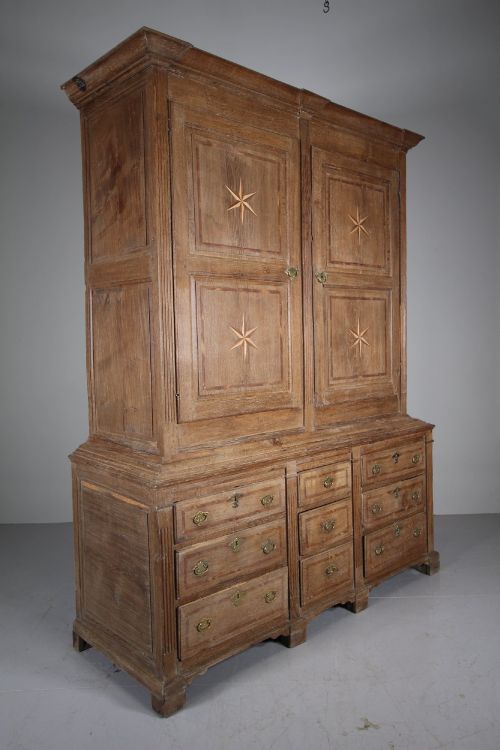
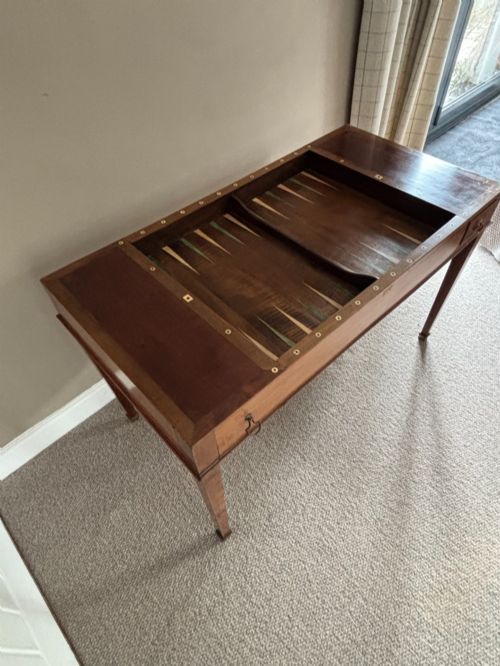
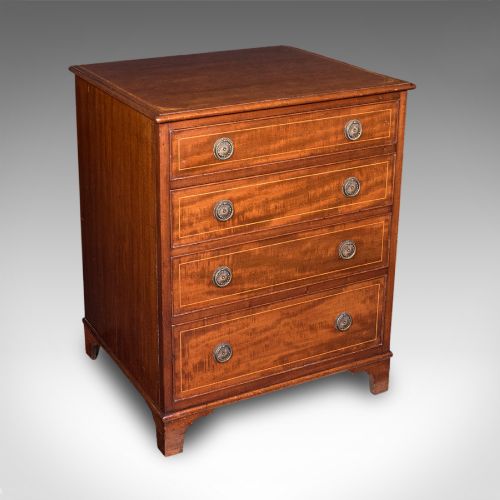
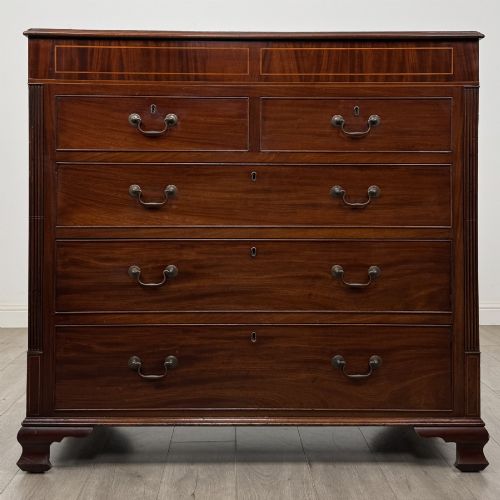
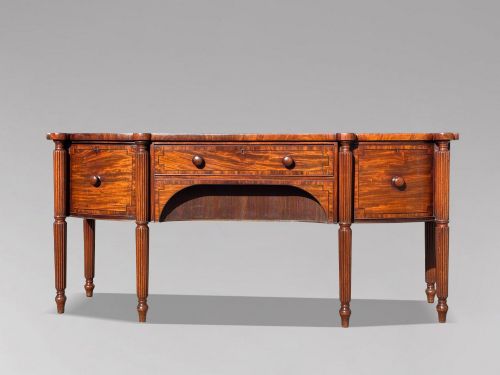
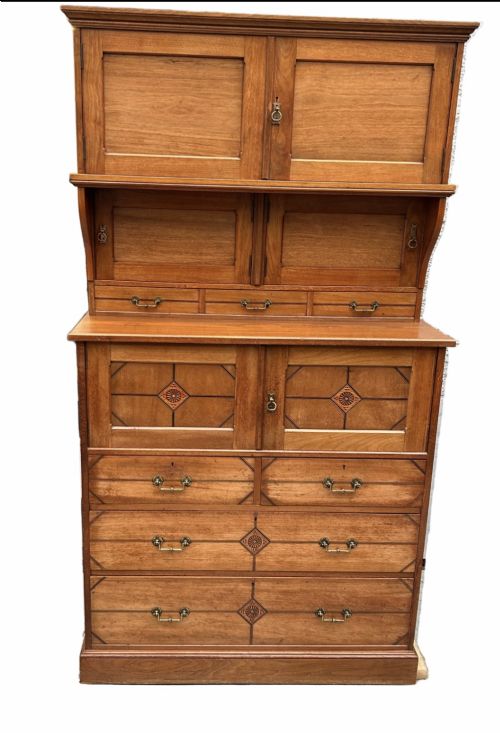
When buyers search for inlaid wooden furniture, they encounter a broad selection of pieces spanning the seventeenth through to the twentieth centuries, with Edwardian and Victorian examples appearing frequently. The forms range from occasional tables, nests of tables and chests of drawers to seating such as armchairs, benches and settles.
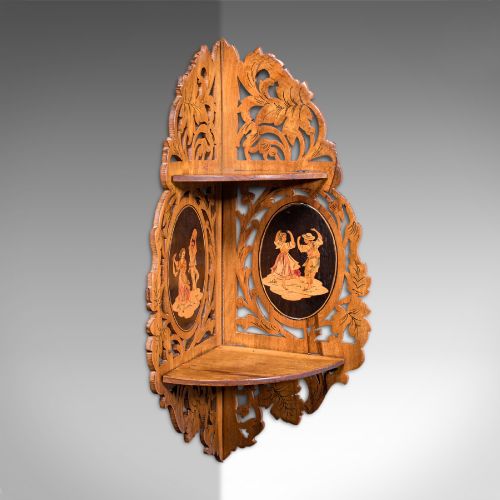
Originating from diverse stylistic traditions including Georgian, Regency, Arts and Crafts, and Syrian Ottoman designs, these items integrate contrasting woods and decorative motifs into everyday domestic objects. The surviving examples demonstrate how workshops utilised surface decoration to elevate functional items into statement pieces for the home.
The assortment on this page reflects distinct manufacturing periods, notably the late nineteenth and early twentieth centuries, alongside earlier Georgian and seventeenth-century forms. Buyers will find that smaller occasional tables and chests of drawers dominate the selection, though larger seating and cabinetry also feature.
How they were made
Cabinetmakers constructed these pieces primarily using structural timbers such as mahogany, walnut, oak, and satinwood, applying contrasting elements directly into prepared recesses. Workshops employed specialised saws and chisels to fit fine veneers, brass, mother-of-pearl, and abalone into the primary wood body.
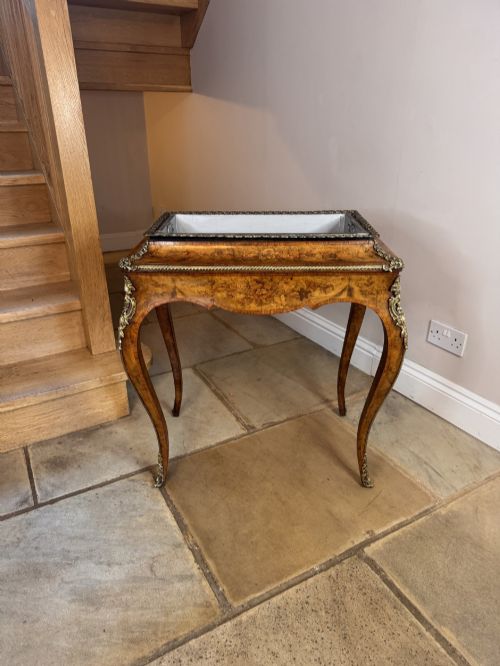
The integration of materials required precise joining techniques, where wood inlay, parquetry, and marquetry formed complex geometric or pictorial compositions across tabletops, drawer fronts, and cabinet doors. Finishing agents such as polish or wax were then applied to seal the timber and accentuate the natural grain alongside the lighter or metallic insertions.
Inlaid Wooden Furniture Retail Price Guide 2026
Typical asking prices for inlaid wooden furniture among the pieces listed under this phrase on Sellingantiques today, from the lower quarter to the upper quarter. They describe what is for sale here now, not the wider market.
Listings feature pieces spanning from the seventeenth century through to the Edwardian period, utilising mahogany, satinwood, walnut, and mother-of-pearl.
What varies in quality
The distinction between standard domestic production and superior work rests on the precision of the joinery and the complexity of the contrasting materials. Pieces from advanced workshops exhibit seamless flush surfaces where different timbers or shell insertions meet without gaps or excessive filler.
Design coherence also separates the range, as finer examples display thoughtful proportions, balanced wood selection such as burr walnut or figured mahogany, and well-executed secondary timbers in less visible areas. The integrity of the underlying structure matters as much as the surface ornamentation, ensuring that drawers run smoothly and frames remain rigid over generations.
Jacob and Joseph Kohn·Shapland and Petter·Trevor Page and Co·GM Elwood for JS Henry
The Inlaid Wooden Furniture Glossary
- Inlay
- The technique of inserting pieces of contrasting material into a depressed wooden matrix to form a decorative design. This method defines the primary visual characteristic of these items.
- Marquetry
- Formed by assembling veneers on a paper backing before gluing them to a carcase, creating pictorial or floral patterns. It differs from simple inlay by covering entire surfaces with complex designs.
- Parquetry
- A geometric mosaic of wood pieces used for floors and furniture surfaces. It relies on repeating angular shapes to create patterned panels.
- Satinwood
- A durable, yellowish timber prized for its lustrous sheen and smooth texture. Makers utilised it extensively in Edwardian Sheraton style pieces for contrasting bands and panels.
- Tunbridge Ware
- Small decorative wooden objects decorated with mosaic patterns made from thousands of tiny tinted wood blocks. This specialised technique originated in Kent during the nineteenth century.
Inlaid Wooden Furniture: Frequently Asked Questions
How do I clean inlaid wooden furniture?
Dust surfaces gently with a soft, dry cloth to prevent abrasive particles from scratching the delicate wooden matrix and inserted materials. Avoid liquid cleaners or excessive moisture, which can loosen historical glues and damage delicate mother-of-pearl or brass elements.
Apply a micro-crystalline wax occasionally to nourish the timber and maintain a protective barrier against humidity changes. Buff the surface lightly after application to restore the soft sheen characteristic of well-maintained antique pieces.
Can I use an inlaid table daily?
Most occasional tables, desks, and small cabinets function well for daily domestic use provided they receive gentle treatment. Placing coasters beneath glasses and protecting surfaces from direct heat helps preserve the fragile veneer and inlay work.
Heavier items like chests of drawers and dining chairs handle regular structural loads safely when placed on level floors. Care should be taken to distribute weight evenly and avoid dragging items across carpeted or unlevel surfaces.
How do I identify Edwardian inlaid pieces?
Edwardian items often feature lighter satinwood banding, neoclassical urn motifs, and slender tapered legs derived from earlier Sheraton revivals. The construction typically incorporates machine-sawn secondary timbers alongside hand-finished decorative elements.
Examining the interior drawer linings and backboards reveals the standard manufacturing practices of the period around nineteen hundred. These pieces generally display a brighter finish and lighter overall proportions compared to heavier mid-Victorian counterparts.
What is the difference between marquetry and inlay?
Inlay involves carving recesses directly into a solid wooden surface and inserting contrasting materials like brass, wood, or shell into those cavities. The surrounding timber remains the primary structural and visual field.
Marquetry applies an entire sheet of assembled veneer, composed of various wood types, across the whole surface of the furniture piece. This technique allows for elaborate pictorial scenes and complex geometric fields that cover the entire carcass.