


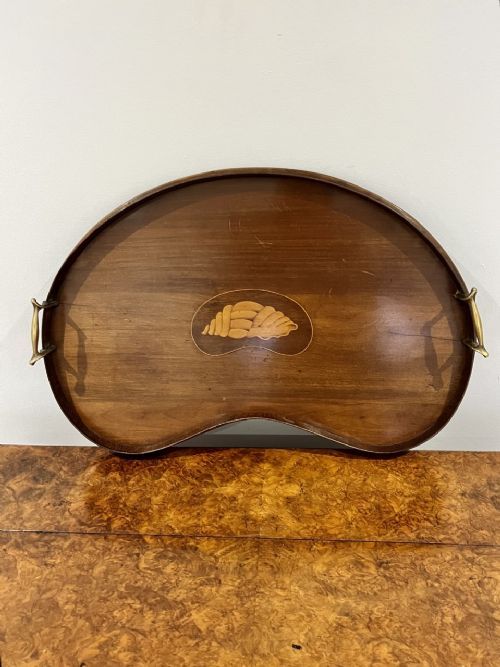

Inlaid Wooden Drinks Tray
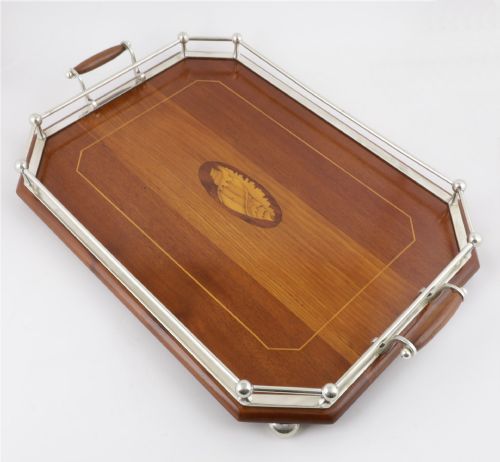
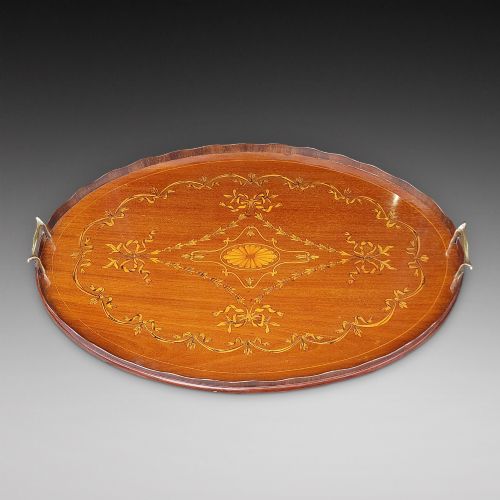
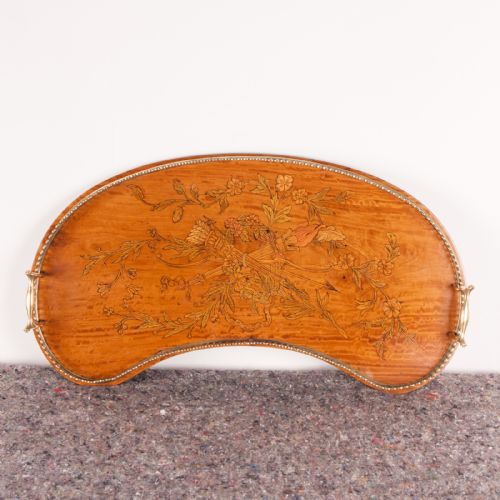
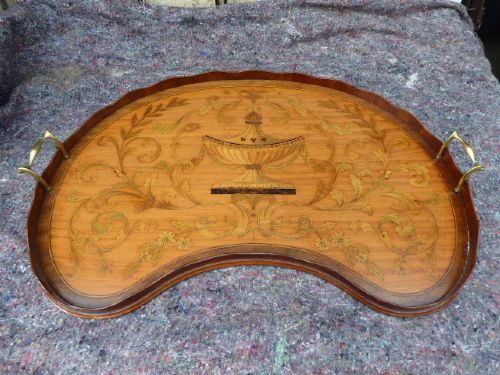
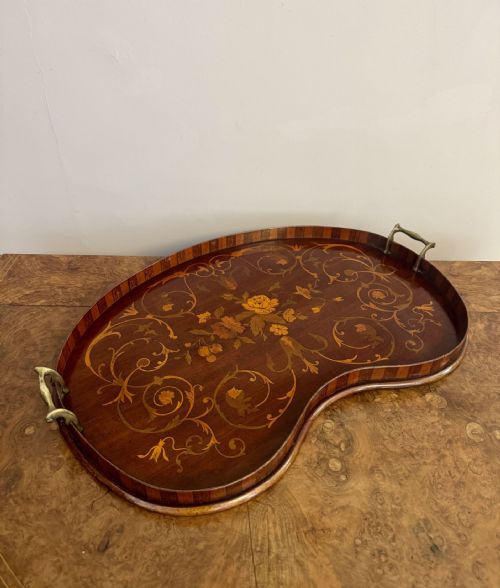
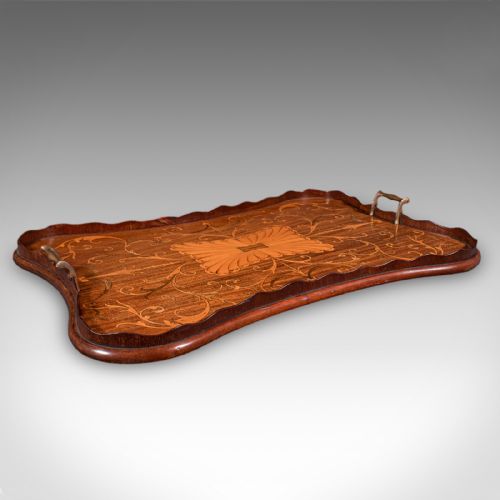
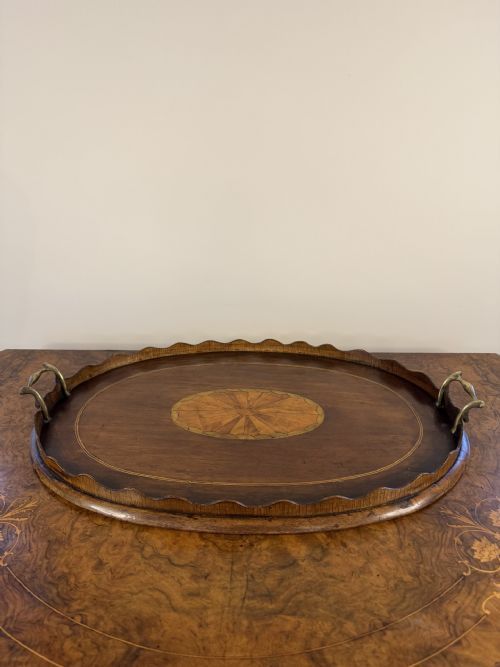
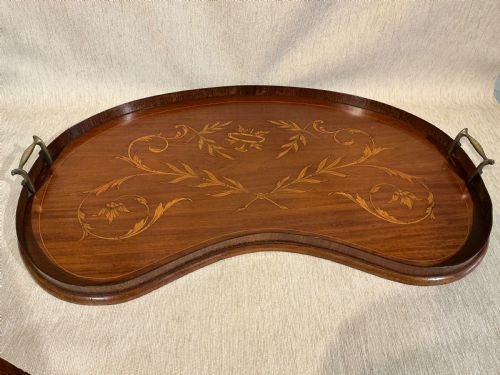
An inlaid wooden drinks tray brings rich mahogany, satinwood, and delicate marquetry to the table when serving afternoon tea.
Inlaid Wooden Drinks Tray
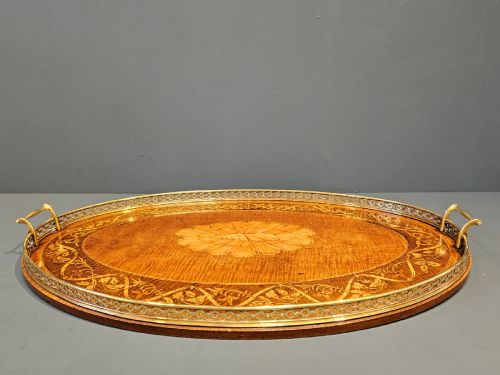
An inlaid wooden drinks tray is a functional serving piece designed for carrying glassware and teaware, frequently encountered in Edwardian and Victorian forms. These pieces range from oval, kidney-shaped, and octagonal serving trays to occasional tables with removable tray tops. Examples span from the Georgian period through the Edwardian era, utilising hardwoods such as mahogany and teak.
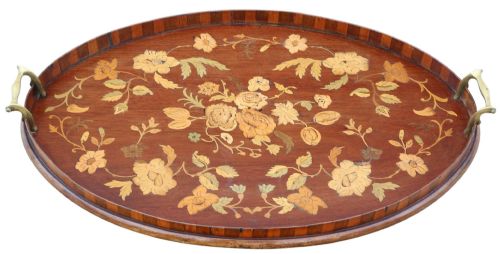
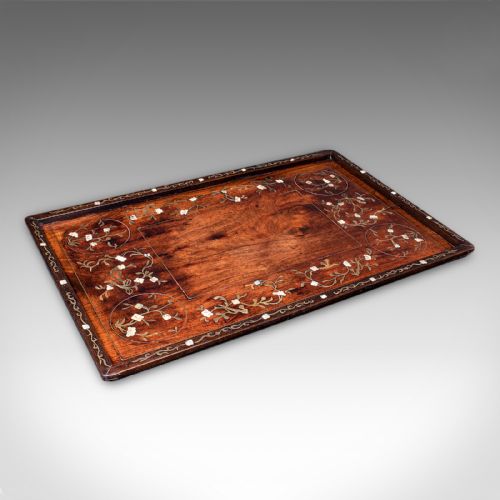
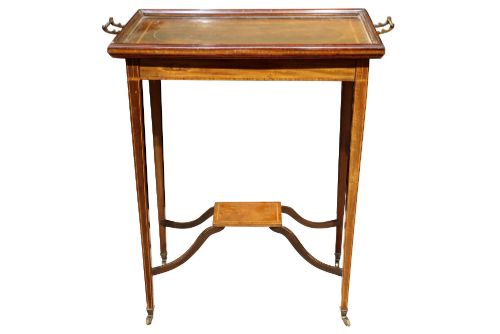
The standard version met on this page is the Edwardian mahogany tea tray, often featuring contrasting marquetry inlay, shaped handles, and raised rims. Alongside these standard serving trays, the selection includes Anglo-Indian specimens, miniature oval pieces, and hybrid items mounted upon folding or fixed stands as side tables.
Makers and workshops of the late nineteenth and early twentieth centuries produced variations in shape, from traditional rectangles to flowing kidney outlines. The survival of these pieces demonstrates their enduring utility in domestic settings, moving easily between living spaces and dining rooms.
Materials and construction methods
Cabinetmakers constructed these trays primarily from solid mahogany or satinwood carcasses, sometimes incorporating teak or burr yew. Surfaces received detailed marquetry inlay using boxwood and other contrasting timbers to create floral or geometric motifs.
Many examples integrate metal elements alongside woodwork, featuring brass galleries or silver-plated mounts and silvered side rails. Turned wooden handles appear frequently, secured directly into the raised rims of the serving tray.
The listings feature mahogany, satinwood, and teak, spanning the Georgian, Victorian, and Edwardian periods.
Distinguishing quality in craftsmanship
The standard of a piece rests on the precision of the marquetry and the crispness of the timber selection. Fine examples display tightly fitted inlay work without gaps between contrasting woods, whereas lesser pieces rely on simpler painted decoration or sparse stringing.
Structural integrity dictates the standing of a tray, particularly around handles and gallery joins where weight is applied during lifting. Thicker timber bases and substantial brass galleries separate robust working pieces from lighter decorative items.
Edwards and Roberts
The Inlaid Wooden Drinks Tray Glossary
- Marquetry inlay
- The technique of fitting decorative wood veneers into a prepared wooden surface to form pictorial or geometric patterns. This adds significant visual depth to the centre of the tray.
- Tray top table
- An occasional or side table featuring a removable tray as its top surface, fitted with a raised rim or handles. Such pieces combine serving utility with permanent furniture placement.
- Brass gallery
- A pierced or open metal rail running around the perimeter of the tray to secure glassware and decanters. This fixture appears frequently on late nineteenth-century satinwood examples.
- Kidney shaped
- A curved, indented outline mirroring the organ, popular in Edwardian serving trays. This profile allows the user to hold the tray closer to the body during transit.
- Stringing
- Thin lines of contrasting timber inlaid in straight or curved channels to outline the borders of a tray. It frames the central marquetry panels.
Inlaid Wooden Drinks Tray: Frequently Asked Questions
What periods do these trays come from?
The pieces span from the late Georgian era through the Victorian period and into the Edwardian years. Georgian examples tend to feature restrained mahogany construction with simple inlaid decoration.
Later Victorian and Edwardian trays introduce exotic woods like satinwood and complex marquetry, reflecting changing interior tastes of the early twentieth century.
How were these trays used historically?
These trays served primarily for carrying teaware, afternoon tea services, and alcoholic drinks across formal rooms. They functioned as portable surfaces for domestic hospitality.
Some examples double as furniture when placed upon dedicated folding stands, acting as removable serving tops for side tables.
How do I care for an antique wood tray?
Maintenance requires keeping wooden surfaces away from direct heat sources and excessive moisture to protect the delicate veneer and inlay. Gentle dusting preserves the polished finish.
Silver-plated brass galleries benefit from occasional careful cleaning with appropriate metal polish, avoiding contact with the surrounding wood.
What is a tray top table?
A tray top table consists of a fixed or folding wooden stand supporting a removable serving tray as its upper surface. This dual-purpose design allowed servants to bring the tray directly from the kitchen.
These pieces offer the functionality of an occasional table while retaining the portability of a standard drinks tray.