



Inlaid Wooden Cutlery Box
An inlaid wooden cutlery box organises silver with precise craftsmanship, pairing figured timber with crisp banding.
Inlaid Wooden Cutlery Box
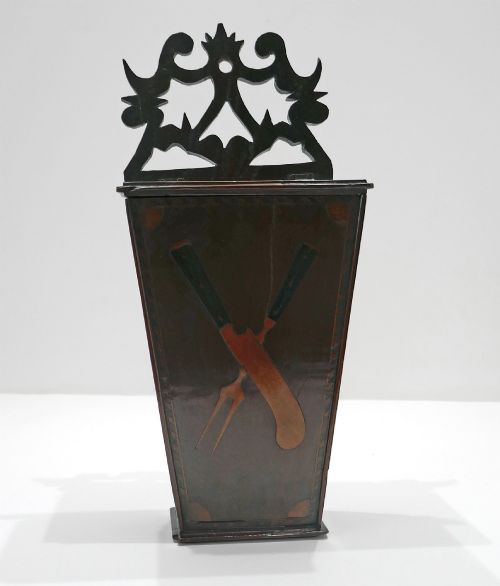
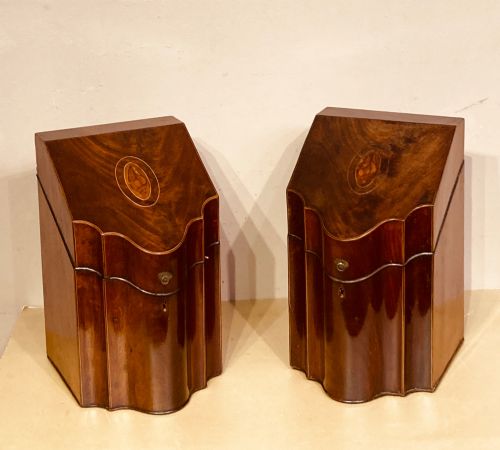
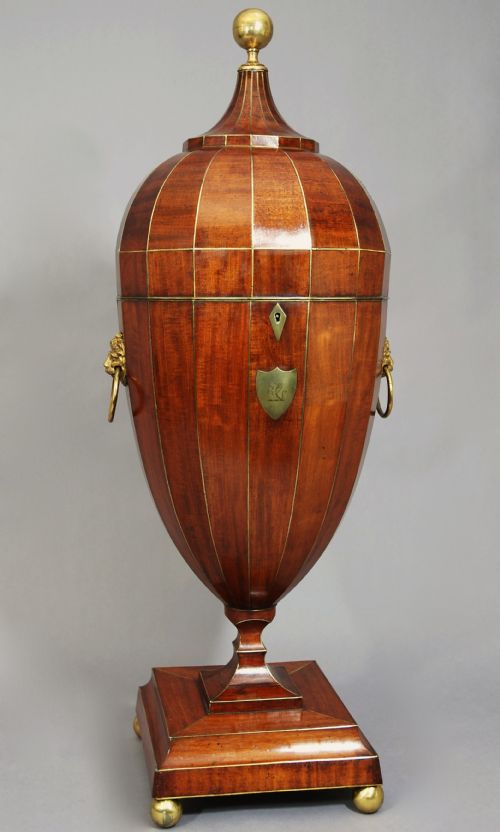
An inlaid wooden cutlery box provides secure storage for dining implements, appearing in forms from sloping lidded cases to grand urns. Buyers searching for an inlaid wooden cutlery box will frequently encounter Georgian and Victorian examples fashioned from mahogany, oak, or walnut.
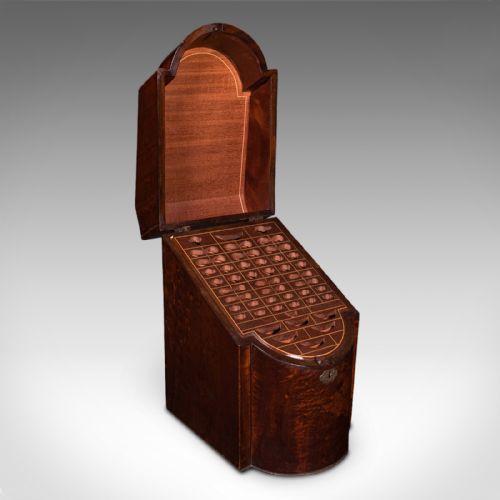
The selection ranges from upright hanging boxes and serpentine fronts to pairs of matching urns designed to sit on sideboards. These containers often retain fitted interiors intended to hold knives, forks, or spoons safely.
Originating primarily in English workshops, these pieces bridge the gap between utilitarian kitchen equipment and sophisticated dining room display. The presence of contrasting wood inlay elevates the form beyond simple storage into decorative furniture.
How they were made
Cabinetmakers constructed these boxes using solid timbers such as mahogany and oak, applying decorative veneers to curved and flat surfaces alike. Boxwood and satinwood provide the pale contrast for delicate lines of inlay.
Metal fittings including brass hinges, escutcheons, and carrying handles secure the structure while adding functional detail. Interior divisions receive careful carpentry to accommodate specific cutlery counts and sizes.
Inlaid Wooden Cutlery Box Retail Price Guide 2026
Typical asking prices for inlaid wooden cutlery box among the pieces listed under this phrase on Sellingantiques today, from the lower quarter to the upper quarter. They describe what is for sale here now, not the wider market.
Materials documented across these listings include mahogany, oak, walnut, coromandel, brass, satinwood, and boxwood.
What varies in quality
The crispness of the wood inlay and the choice of highly figured mahogany or walnut distinguish finer pieces. Precision in the serpentine curves and the symmetry of matched pairs indicate skilled joinery.
The survival of original brass hardware and fitted interior partitions elevates the standing of a box. Superior examples maintain structural integrity in their lid joints and locking mechanisms.
The Inlaid Wooden Cutlery Box Glossary
- Serpentine front
- A furniture shape featuring a double-curved front that bulges outward in the centre and recesses at the sides. This contour requires advanced woodworking skill to execute cleanly on a box lid or body.
- Inlay
- A technique where pieces of contrasting wood like boxwood or satinwood are inserted into recesses in a primary timber. It creates flat decorative patterns across the surface.
- Escutcheon
- A protective plate surrounding a keyhole, usually cast in brass. It prevents the wood around the lock from splitting during daily use.
- Veneer
- A thin slice of figured wood applied over a secondary timber base. This method displays striking grain patterns without using solid scarce timber throughout.
Inlaid Wooden Cutlery Box: Frequently Asked Questions
What is an inlaid wooden cutlery box used for?
These boxes store dining cutlery and kitchen implements securely while resting on sideboards or dining tables. Their fitted interiors organise individual knives and forks in dedicated slots.
Historically, they protected silver from tarnishing and kept dining utensils close to the table during large meals.
How do I date a Georgian cutlery box?
Examination of the timber, brass hardware, and secondary woods helps determine the production period. Georgian pieces frequently utilise solid mahogany with precise dovetail joints and hand-cut veneers.
Stylistic cues such as serpentine fronts and delicate boxwood stringing also point toward eighteenth-century manufacture.
Are cutlery boxes found in pairs?
Yes, many eighteenth-century and Victorian examples survive as matched pairs designed to balance each other on opposite ends of a sideboard. These pairs often mirror each other in timber grain and inlay patterns.
Single boxes also appear frequently, reflecting different original dining room layouts.
What woods were used in these boxes?
Mahogany serves as the primary structural timber for the majority of these pieces, alongside oak and walnut. Boxwood and satinwood provide the contrasting light tones for decorative stringing and motifs.
Coromandel and other exotic timbers appear on later nineteenth-century examples.
How should I clean the wood surface?
Gentle dusting with a dry, soft cloth preserves the aged patina and prevents scratching the delicate veneer. Avoid using modern silicone polishes that can build up a hazy film over time.
Microcrystalline wax applied sparingly can nourish older timber without harming the original finish.