




Vintage Cutlery Canteen
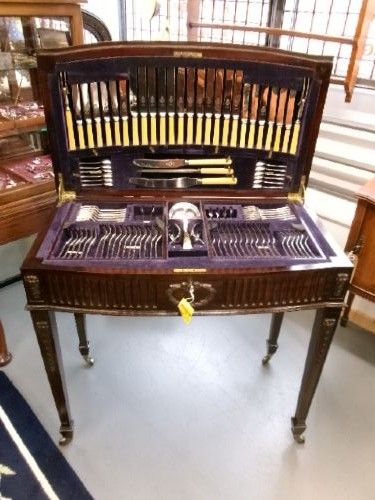
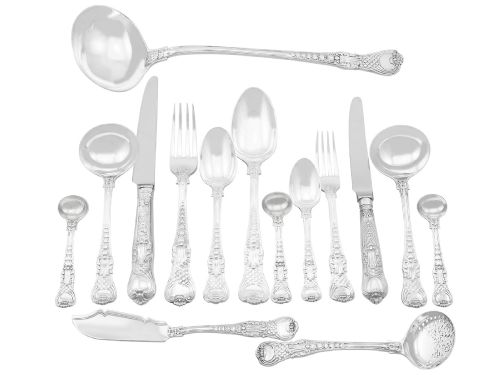
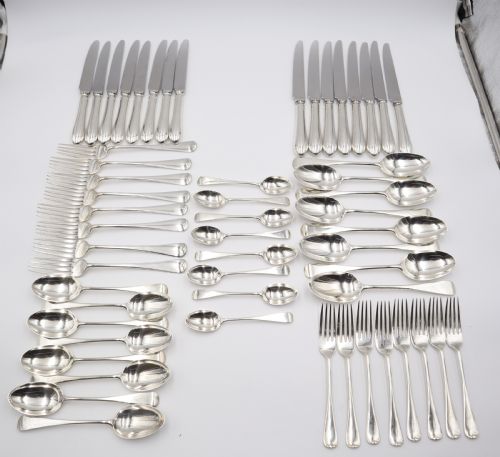
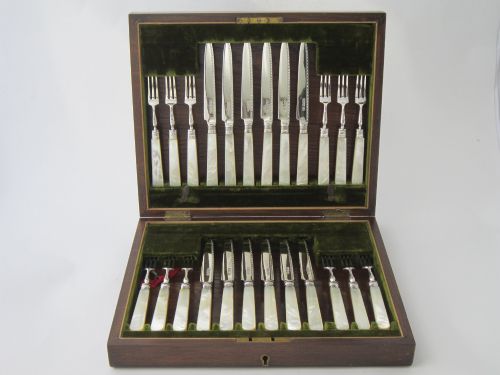
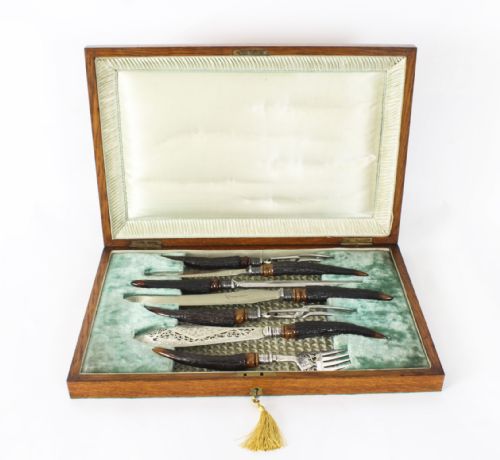
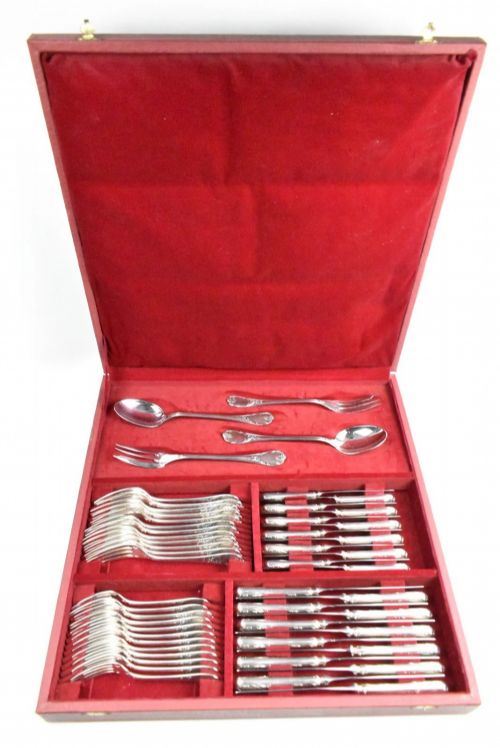
These vintage cutlery canteens are fitted wooden chests and boxes holding complete sets of silver, silver plate, and steel tableware for the dining table.
Vintage Cutlery Canteen
A vintage cutlery canteen provides a dedicated storage solution for keeping matching dining implements organised and protected within a fitted wooden enclosure. When searching for a vintage cutlery canteen, buyers encounter everything from compact knife boxes and dessert sets to large multi-tiered cabinets designed for twelve or more persons.
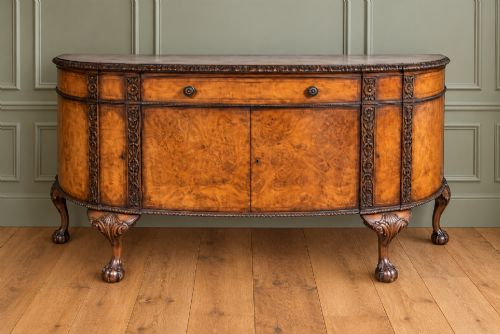
The objects span multiple eras, with examples appearing from the Georgian and Victorian periods, through the Edwardian years and the nineteen-twenties and thirties. Common forms include oak and mahogany chests, fitted sideboards, and standalone canteen tables housing complete sets of flatware.
Makers such as Walker & Hall, Mappin & Webb, and Waring & Gillows are represented alongside prominent international silver houses. Buyers select these pieces to bring complete historical table settings into active service or to store flatware securely within period furniture.
Materials and construction
Canteens and storage boxes were constructed primarily from hardwoods including mahogany, oak, walnut, burr walnut, and coromandel, often lined internally with velvet to cushion the contents. Exterior surfaces frequently feature brass hardware, locks, and carrying handles suited to heavy domestic service.
The cutlery housed within these chests combines sterling silver or silver plate with steel blades and occasionally mother of pearl handles. Master silversmiths and cutlers shaped these metals using traditional forging, stamping, and plating techniques before housing them in custom-partitioned wooden compartments.
Vintage Cutlery Canteen Retail Price Guide 2026
Typical asking prices for vintage cutlery canteen among the pieces listed under this phrase on Sellingantiques today, from the lower quarter to the upper quarter. They describe what is for sale here now, not the wider market.
Listings feature canteens constructed from oak, mahogany, walnut, and coromandel, dating from the Georgian era through the nineteen-thirties.
Factors determining quality
Quality in a vintage cutlery canteen depends upon the integrity of the cabinetwork and the completeness of the inner service. Solid timber construction with dovetailed joints and original fitted velvet interior partitions indicates a higher standard of manufacture than simpler veneered boxes.
The distinction between standard service and exceptional quality rests on the matching uniformity of the flatware pieces and the reputation of the maker who retailed the set. Fully intact sets bearing hallmarks from established silversmiths represent the upper tier of the range.
Walker and Hall·Mappin and Webb·Waring and Gillows·Christofle·Tiffany
The Vintage Cutlery Canteen Glossary
- Flatware
- Table utensils such as knives, forks, and spoons used for eating. These items form the primary contents of any fitted canteen.
- Silver plate
- A layer of silver applied to a base metal core such as steel or brass. This technique offered a durable alternative to solid silver for large household sets.
- Knife box
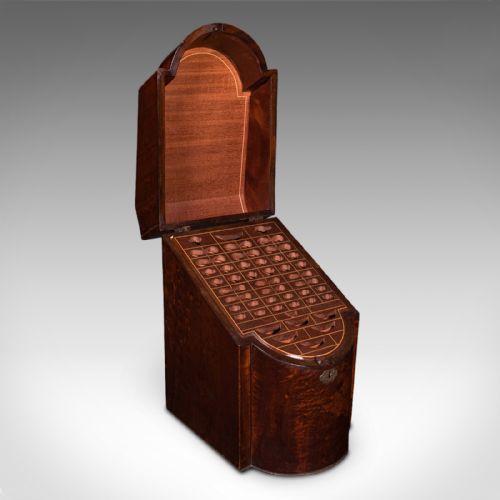
- A specialised upright wooden container designed during the Georgian period to store dining knives vertically. These often feature sloping lids and serpentine fronts.
- Fitted interior
- The internal arrangement of slots, blocks, and velvet-lined trays designed to hold each individual piece of cutlery securely in place.
Vintage Cutlery Canteen: Frequently Asked Questions
What is a cutlery canteen?
A cutlery canteen is a fitted box, chest, or cabinet designed to hold a complete and organised set of dining implements. These enclosures protect silver and steel flatware while keeping matching pieces together for formal meals.
Such canteens range from portable tabletop oak boxes to large freestanding mahogany chests and fitted sideboards. They serve as both practical storage and decorative furniture for the dining room.
How do I date a canteen?
Dating a canteen relies on examining the timber, construction methods, and any maker marks stamped onto the wooden chest or the cutlery inside. Georgian and Victorian examples display different dovetailing techniques, wood choices, and hardware styles compared to later twentieth-century Art Deco pieces.
Silver components often carry hallmarks indicating the exact year of assay and the silversmith responsible. Comparing the cabinet style with the flatware hallmarks provides an accurate period attribution.
How were canteens used?
These canteens were utilised in large households to store, transport, and protect extensive sets of tableware between dining services. Servants used the fitted compartments to quickly verify that all forks, spoons, and knives were accounted for after a meal.
Today, owners utilise them to house complete dining sets for daily use or special occasions. The fitted layout prevents the metal from scratching during storage.
How do I care for wooden canteens?
Caring for a wooden canteen involves keeping the timber away from direct heat sources and extreme humidity changes that could warp the wood or crack the interior lining. Periodic polishing with appropriate wax maintains the finish of mahogany, oak, or walnut exteriors.
The velvet interior should be kept dry and brushed gently to remove dust. Proper maintenance of the outer chest ensures the internal flatware remains protected.