


Inlaid Wooden Bed Frame
An inlaid wooden bed frame brings warmth and distinct pattern to a bedroom, drawing on Edwardian and continental cabinet-making traditions.
Inlaid Wooden Bed Frame
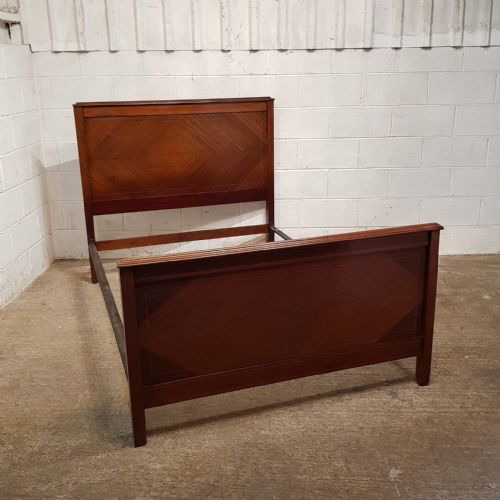
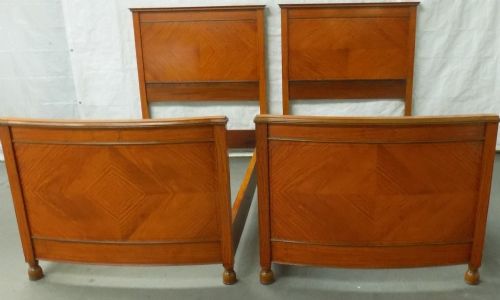
An inlaid wooden bed frame typically appears as an Edwardian mahogany, satinwood or walnut structure, often featuring delicate marquetry or parquetry details. These pieces range from single sizes and pairs to larger double and king formats, reflecting domestic requirements from the late nineteenth and early twentieth centuries.
Continental examples bring French Louis XVI revival and Art Deco styling into the mix, utilising contrasting fruitwoods and burr veneers alongside mahogany. Alongside standard bedsteads, the selection includes pieces with brass elements or companion furniture such as marble top nightstands.
Buyers seeking an inlaid wooden bed frame will encounter robust mahogany double frames alongside lighter satinwood twin beds with bow ends. The construction combines traditional timber framing with decorative wood veneers arranged to catch the light.
How they were made
Cabinet-makers constructed these frames using solid timbers like mahogany, walnut and fruitwood for the structural rails and posts, overlaid with fine veneers for decorative surfaces. Parquetry and marquetry panels were painstakingly assembled from contrasting woods such as satinwood to create geometric or floral motifs.
Joinery methods relied on sturdy tenon joints and metal brackets to support the substantial weight of mattresses while keeping the decorative headboards and footboards stable. Details such as brass mounts and ormolu accents were integrated alongside inlaid stringing to finish the woodwork.
Materials in these listings span mahogany, walnut, satinwood, fruitwood, iron, brass, ormolu and wood veneer.
What varies in quality
The sophistication of the timber selection and the precision of the marquetry define the upper tiers of these pieces. Fine grain selection in burr walnut and mahogany, combined with crisp parquetry work, separates standard workshop output from exceptional commissions.
Structural integrity and the retention of matching pairs or original associated pieces like nightstands influence desirability. Finer examples display harmonious proportions across large king sizes or balanced twin sets without excessive restoration to the veneer.
Heal's
The Inlaid Wooden Bed Frame Glossary
- Marquetry
- Decorative veneer work forming pictorial or ornamental patterns using various tinted woods. It is applied to the flat surfaces of headboards and footboards.
- Parquetry
- Geometric mosaic woodwork used for repeating patterns on panels. This technique often appears on French revival bed frames.
- Satinwood
- A durable, lustrous timber with a golden yellow sheen. It is frequently utilised for light-toned Edwardian inlay work.
- Bedstead
- A framework of a bed supporting the springs and mattress. Many period examples are designed to dismantle into headboard, footboard and side rails.
Inlaid Wooden Bed Frame: Frequently Asked Questions
Will modern mattresses fit period bed frames?
Most antique frames were built before standard sizing existed, meaning internal dimensions can vary by a few inches from modern mattresses.
Custom mattress makers or simple adjustments to the internal slats often resolve these discrepancies for daily use.
How do I care for inlaid wood?
Keep wooden frames away from direct heat sources and strong sunlight to prevent the delicate veneers and natural glues from drying out.
Regular dusting with a soft, dry cloth preserves the polished finish without building up heavy wax residues.
Are single beds sold as pairs?
Makers frequently produced matching pairs of single beds for grand Edwardian guest rooms and twin chambers. Listings occasionally offer these as matched sets.
Checking dimensions ensures both pieces share identical proportions and decorative inlay schemes.
How do I identify Edwardian pieces?
Edwardian furniture typically employs lighter mahogany or satinwood timbers combined with refined string inlay and subtle neoclassical motifs. These pieces date from the reign of Edward VII around the turn of the twentieth century.
Construction methods often incorporate sturdier factory techniques alongside traditional hand-finishing.