



Inlaid Mahogany Bedstead
An inlaid mahogany bedstead brings warm timber and delicate stringing to a bedroom, offering a sturdy frame with period character.
Inlaid Mahogany Bedstead
When you search for an inlaid mahogany bedstead, you encounter furniture principally dating from the Edwardian era and the nineteenth century. These pieces encompass single beds, double bedsteads, king size frames, and four poster beds built for domestic sleeping quarters.
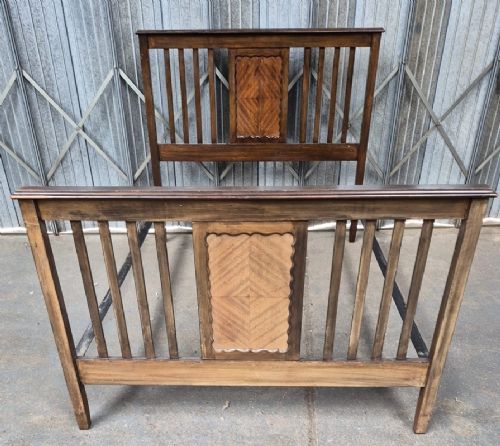
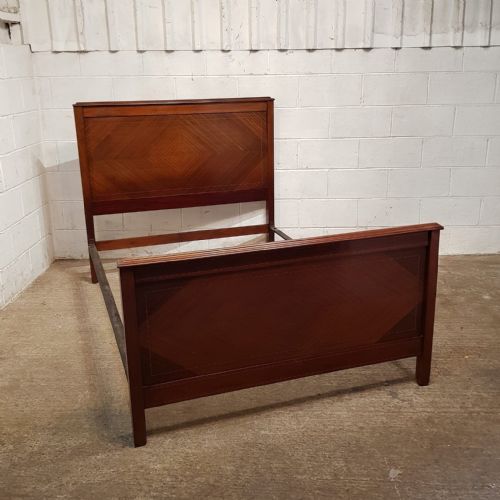
The version you are most likely to meet on this page is the Edwardian double bedstead featuring crisp boxwood inlay and mahogany panels. Single beds, pairs, and grander French revival styles also appear frequently across the inventory.
Makers such as Heal's and Louis Majorelle represent the range of craftsmanship available within these historical categories. The forms vary from simple rail and panel designs to elaborate marquetry and parquetry.
How they were made
Cabinet makers utilised solid mahogany and flamed mahogany veneers over timber carcases, incorporating fruitwood and satinwood for contrasting decorative details. Boxwood inlay provides sharp linear definition around panels and rails.
Structural integrity often relies on iron and brass components integrated into the framework to support modern mattresses while maintaining period aesthetics. Ormolu mounts and porcelain details appear on select continental and four poster pieces.
Surface ornamentation ranges from subtle stringing to elaborate fruitwood marquetry and parquetry. Timber selection prioritises rich grain patterns, particularly in Burr mahogany and flamed varieties.
Inlaid Mahogany Bedstead Retail Price Guide 2026
Typical asking prices for inlaid mahogany bedstead among the pieces listed under this phrase on Sellingantiques today, from the lower quarter to the upper quarter. They describe what is for sale here now, not the wider market.
Some nineteenth-century makers concealed iron structural ties behind ornate brass fittings to trick the eye into seeing only solid timber.
What varies in quality
The refinement of the timber selection dictates the visual impact of the piece, with flamed and burr mahogany marking the upper tier of production. Simpler straight-grained mahogany panels represent standard domestic output.
The precision and complexity of the inlay work distinguish standard frames from finer workshops. Delicate boxwood stringing contrasted against rich fruitwood requires expert hand-cutting and fitting.
Hardware integration, such as solid brass fittings and robust iron side rails, separates basic framing from superior construction. Maker attribution to established houses like Heal's elevates the standing of a bedstead.
Heal's·Louis Majorelle
The Inlaid Mahogany Bedstead Glossary
- Inlay
- A technique where pieces of contrasting timber such as boxwood or fruitwood are inserted into depressions in the mahogany surface to form decorative patterns. This method creates flat, smooth ornamentation along rails and panels.
- Marquetry
- Elaborate pictorial or geometric patterning assembled from various wood veneers on a ground of mahogany. It differs from simple inlay by covering larger expanses with diverse timbers.
- Parquetry
- Geometric mosaic woodwork forming repeating patterns like squares or triangles across large surfaces such as headboards. Fruitwood and mahogany are often paired for tonal contrast.
- Boxwood
- A dense, pale yellow timber traditionally utilised for fine stringing and inlay lines against dark mahogany backgrounds. Its tight grain allows for precise cutting.
- Bedstead
- The complete structural framework of a bed, including headboard, footboard, and side rails. Historical examples are adapted to accommodate contemporary bedding sizes.
Inlaid Mahogany Bedstead: Frequently Asked Questions
Will a standard mattress fit an antique bedstead?
Many Edwardian and nineteenth-century frames were built to historical dimensions that differ slightly from modern standard sizes. Adapting slats or utilising custom bases ensures contemporary mattresses sit securely within the antique timber rails.
Checking internal length and width measurements before purchase prevents fitting issues. Modern support systems can be discreetly integrated into historical wooden and iron side rails.
How do I care for mahogany and inlay?
Maintaining mahogany requires simple dusting with a soft, dry cloth and occasional application of traditional beeswax to nourish the grain. Avoiding direct sunlight and extreme humidity prevents the timber and delicate boxwood inlay from drying out.
Liquids and abrasive cleaners damage polished fruitwood and veneer surfaces. Gentle upkeep preserves the warm patina developed over a century of use.
Are these beds easy to dismantle?
Most antique bedsteads utilise iron bolt systems or slot-in brackets that allow the headboard, footboard, and rails to separate completely. This modular construction facilitated transport between rooms and houses during the Edwardian period.
Careful handling of brass fixings and timber joints during assembly prevents structural strain. Professional delivery teams often handle the setup to ensure correct alignment.
How do I date an Edwardian bed?
Edwardian pieces typically date from the turn of the twentieth century up to the First World War, combining lingering Victorian solidity with lighter decorative arts influences. Characteristics include restrained boxwood inlay, mahogany panels, and transitional styling.
Maker stamps, brass patent plates, and registration numbers occasionally provide specific production years. Construction methods such as machine-sawn framing components assist in confirming the era.