





Inlaid Wood Tier Shelf
An inlaid wood tier shelf brings tiered elegance to a room, offering multiple display levels finished with detailed marquetry and fine timbers.
Inlaid Wood Tier Shelf
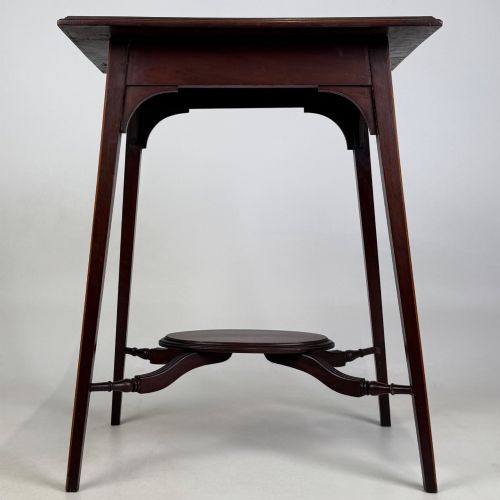
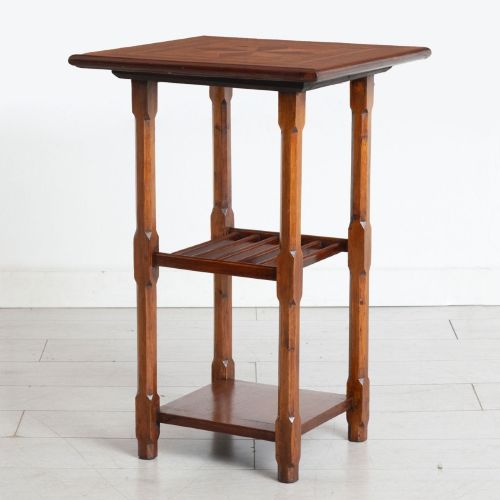
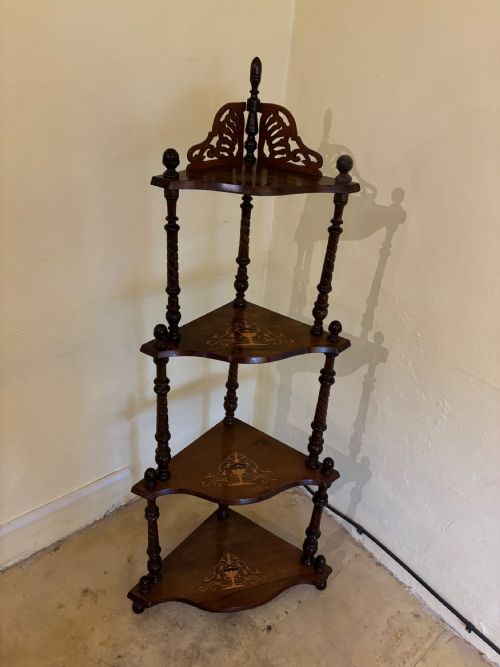
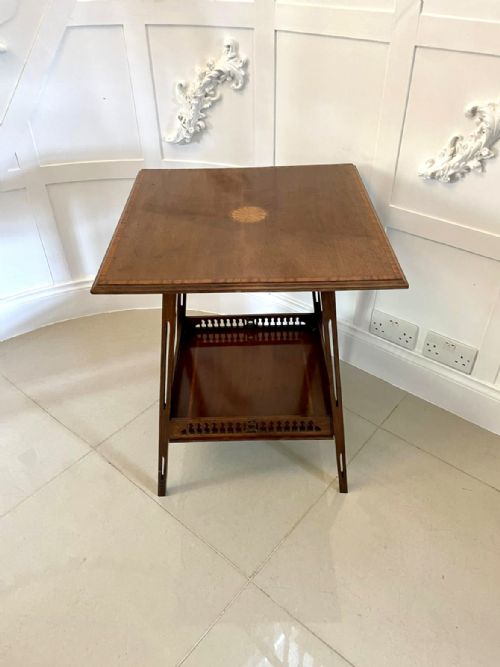
When searching for an inlaid wood tier shelf, buyers encounter multi-level display furniture primarily from the Victorian and Edwardian eras, along with nineteenth-century pieces. These forms include etageres, corner whatnots, side tables, and waterfall bookcases designed to hold books or display objects across several tiers.
The pieces appearing here lean heavily toward walnut, rosewood, and mahogany, often enhanced by marquetry veneer and boxwood details. Corner stands and hexagonal or oval occasional tables provide varied configurations for corners and central spaces alike.
How they were made
Cabinetmakers utilised dense hardwoods like walnut, rosewood, and mahogany as foundations for these multitiered pieces. Marquetry inlay and marquetry veneer provided ornamental surface patterns, frequently incorporating boxwood for contrast within the floral or geometric motifs.
Metal mounts in brass, ormolu, and gilt metal added structural edge protection and decorative highlights to etageres and tables. Fretwork details also appear, reflecting Arts and Crafts techniques alongside French Revival influences.
Listings span the Victorian and Edwardian periods, featuring materials such as walnut, brass, rosewood, mahogany, and marquetry veneer.
What varies in quality
The standard of a piece rests heavily on the crispness of the marquetry inlay and the selection of figured timbers like burr walnut or palisander. Superior examples display precise alignment in their brass mounts and secure joinery across multiple tiers.
Proportion and decorative restraint also separate standard production from finer work. Pieces demonstrating harmonious tier spacing and clean fretwork command greater attention from collectors.
The Inlaid Wood Tier Shelf Glossary
- Étagère
- A piece of furniture consisting of a set of open shelves for displaying small objects. They became particularly popular during the nineteenth century in various revival styles.
- Whatnot
- An open stand with several shelves placed one above the other, used for displaying ornaments. Corner variants are especially common in Victorian interiors.
- Marquetry
- Decorative woodwork where small pieces of veneer are fitted into a design on a structured surface. Boxwood and darker timbers are often contrasted to create floral patterns.
- Palisander
- A richly coloured tropical timber, often resembling rosewood, utilised for high-end nineteenth-century cabinet work. It provides a striking dark grain for inlaid surfaces.
- Ormolu
- Gilded bronze applications used for mounts on French-influenced furniture. They frame shelves and corners to catch the light.
Inlaid Wood Tier Shelf: Frequently Asked Questions
What is the difference between a whatnot and an etagere?
An etagere generally leans toward French-influenced display stands with delicate brass mounts and open tiers. A whatnot is typically a British multi-tiered shelving unit used for general display and books.
Both forms overlap significantly in nineteenth-century design, often sharing similar tier counts and corner placements.
Where should I place a corner whatnot?
A corner whatnot is designed to fit snugly into room angles, making use of otherwise empty space. They suit sitting rooms and hallways for displaying small decorative items.
Ensure the wall angles match the specific tier shape before positioning these stands.
How do I identify Victorian inlaid tier shelves?
Victorian examples frequently combine walnut or mahogany with contrasting marquetry inlay and multiple graduated tiers. Look for structural elements like turned wooden supports and brass mounts.
Dates often cluster around the mid to late nineteenth century, reflecting prevailing revival tastes.
What woods were commonly used for these shelves?
Cabinetmakers relied on durable timbers such as walnut, burr walnut, rosewood, mahogany, and palisander. Boxwood provided pale contrast for intricate marquetry designs.
Maple surfaces also appear on specific Edwardian centre tables and tiered stands.