


Floral Marquetry Display Stand
A floral marquetry display stand brings together intricate botanical wood-inlay and tiered display surfaces, offering a striking focal point for prized small objects.
Floral Marquetry Display Stand
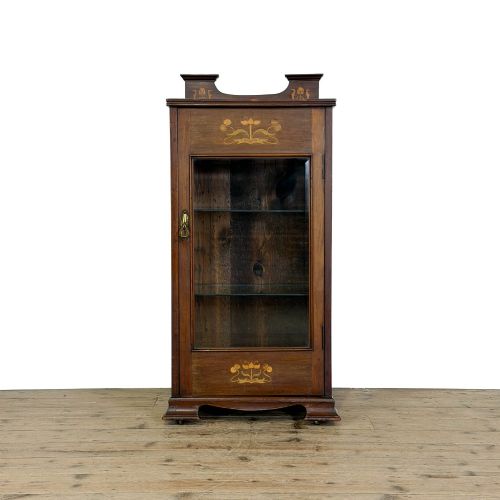
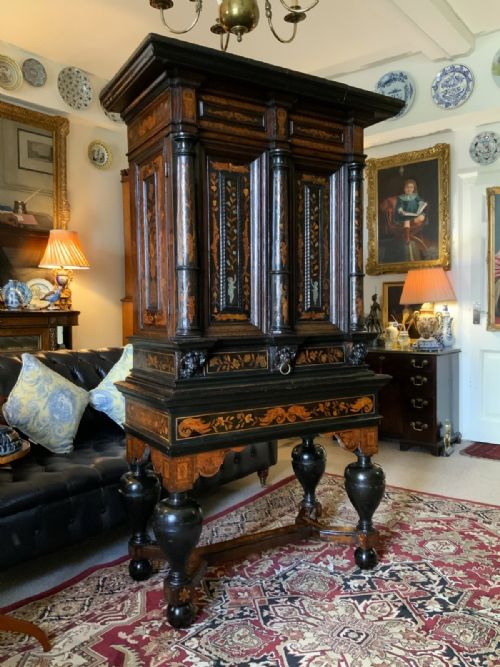
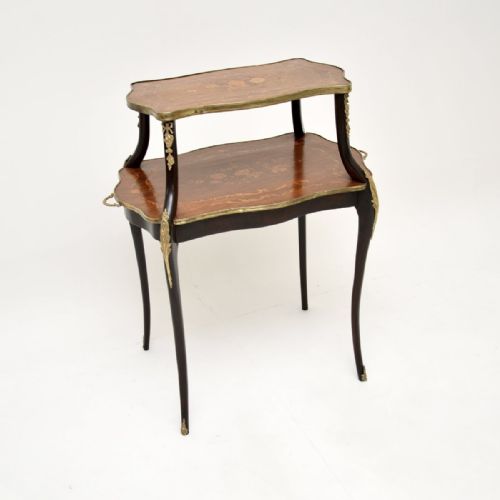
A floral marquetry display stand encompasses a variety of elevated display furniture, most commonly appearing on this page as etagere tables, cabinets on stand, and tiered corner whatnots. These pieces serve to showcase decorative items while introducing elaborate timber artistry into a room.
The selections span several distinct periods and aesthetic movements, ranging from seventeenth-century Dutch baroque cabinet work to nineteenth-century French rococo revival and Edwardian occasional tables. Walnut, mahogany, and exotic wood veneers form the foundational structure for these varied display formats.
Buyers seeking a floral marquetry display stand will frequently encounter multi-tiered étagères and glazed cabinets featuring botanical veneer work. Each form adapts the underlying marquetry technique to different spatial requirements within a home.
How they were made
Cabinet makers constructed these pieces using solid carcases of walnut or mahogany, overlaid with delicate veneers of satinwood, rosewood, kingwood, and walnut to create contrasting background fields. Individual floral motifs were meticulously cut from thin sheets of dyed and natural woods using hand saws.
The cut veneer pieces were fitted together like a jigsaw puzzle and glued onto paper before being pressed onto the furniture surface. Additional refinement came through engraved details on the wood and occasional pewter inlay, complemented by cast brass or ormolu mounts that edge the tiers and protect vulnerable corners.
Some nineteenth-century makers hid secret compartments inside their display cabinets, perfect for stashing love letters away from inquisitive family members.
What varies in quality
The distinction between ordinary and exceptional execution rests in the botanical precision and tonal variety of the wood-inlay itself. Superior examples utilise a rich palette of contrasting timbers to give petals and leaves a naturalistic sense of shading and depth, rather than relying on flat, uniform veneers.
Structural integrity and the quality of secondary mounts also separate tiers of craftsmanship. Finer pieces integrate cast ormolu or brass mounts cleanly into the woodwork, maintaining sharp casting details and stable joinery across multiple tiers or cabinet doors.
Edwards & Roberts
The Floral Marquetry Display Stand Glossary
- Marquetry
- A decorative technique where small pieces of wood veneer are assembled into pictorial or botanical patterns on a carcase. This craft requires immense precision to ensure tight joints between contrasting timbers.
- Étagère
- A piece of furniture consisting of open shelves or tiers designed for displaying small objects or ornaments. These tiers are often supported by slender columns or cabriole legs.
- Ormolu
- Gilded bronze ornamentation applied to furniture mounts, feet, and edges during the eighteenth and nineteenth centuries. The process involves treating bronze with a gold-mercury amalgam.
- Kingwood
- A dense, richly grained tropical timber prized in fine cabinet making for its dark violet-brown tones and distinct figuring. It frequently appears alongside rosewood and satinwood in nineteenth-century inlay.
- Whatnot
- A nineteenth-century multi-shelved stand used for storing and displaying books, ornaments, or curiosities. The form developed into various corner and freestanding configurations.
Floral Marquetry Display Stand: Frequently Asked Questions
What is a floral marquetry display stand?
A floral marquetry display stand is a piece of furniture featuring detailed botanical wood-inlay and designated surfaces for exhibiting decorative objects. These items range from multi-tiered etageres to cabinets raised on stands.
They combine practical display space with complex surface decoration created from contrasting veneers like satinwood, rosewood, and walnut.
How were these stands used historically?
Historically, these stands occupied prominent drawing rooms and parlours where hosts displayed porcelain, small sculptures, and other treasured curiosities. The elevated tiers allowed guests to view collections at eye level.
Cabinets on stand offered both open display and enclosed storage, protecting delicate items behind glass panels while celebrating the maker's inlay work.
Where should I place an etagere?
An etagere works best in reception rooms, hallways, or corners where its multi-tiered shelves can catch the light without blocking foot traffic. Placing them away from direct sunlight helps protect sensitive veneers and natural wood dyes.
Consider the height of the piece and the surrounding furniture scale to ensure the open shelves balance the room visually.
How do I distinguish nineteenth century styles?
Nineteenth-century pieces often draw inspiration from earlier French court aesthetics, particularly Louis XV and rococo revival styles characterised by curved lines, cabriole legs, and elaborate ormolu mounts. Victorian examples frequently utilise walnut and heavier proportions.
Examining the underlying secondary woods, construction methods, and the style of the floral motifs helps separate mid-nineteenth century interpretations from later Edwardian revivals.