
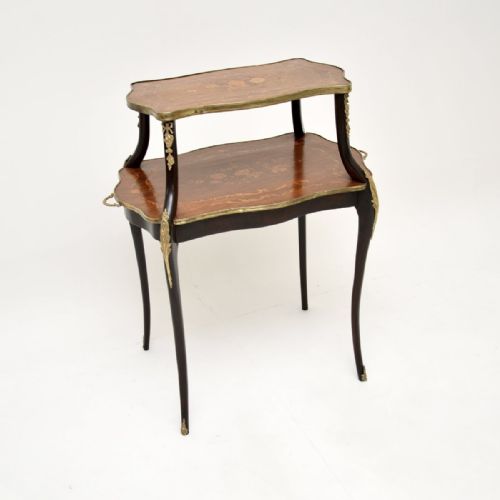
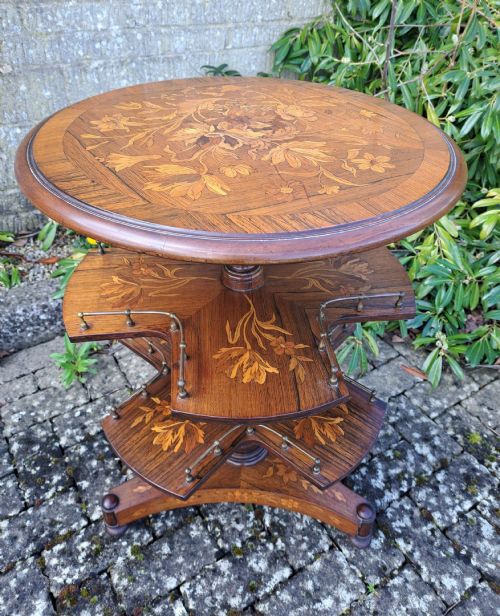
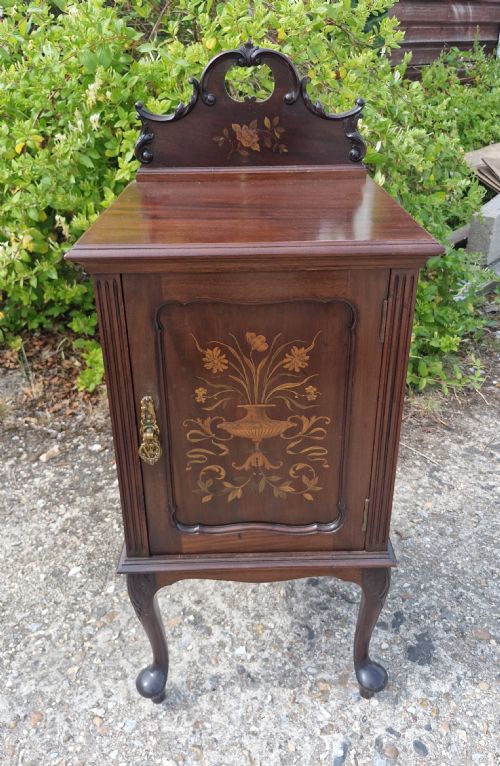

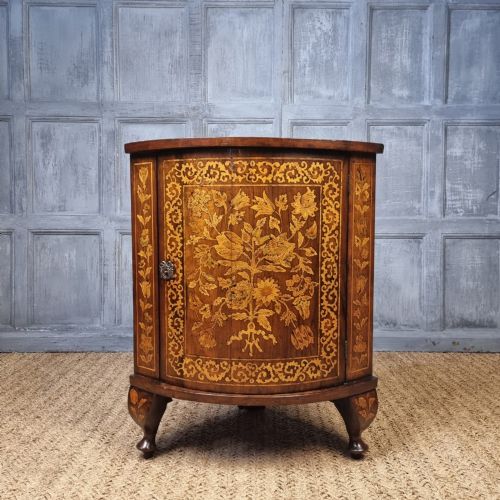


Floral Marquetry Stand
A floral marquetry stand brings botanical imagery and intricate wood veneers into daily interiors through tables, cabinets, and pedestals.
Floral Marquetry Stand
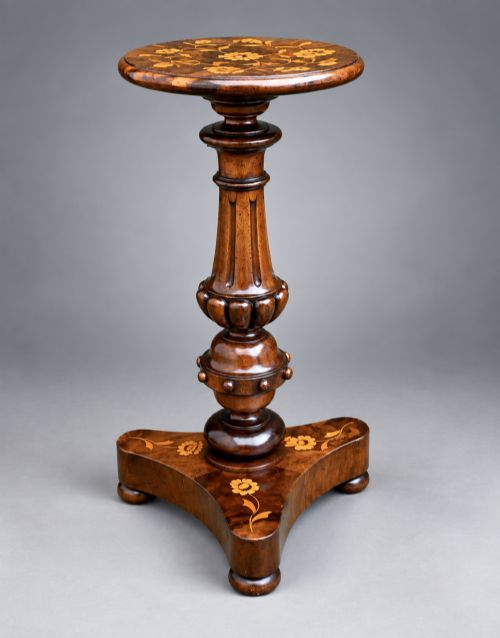
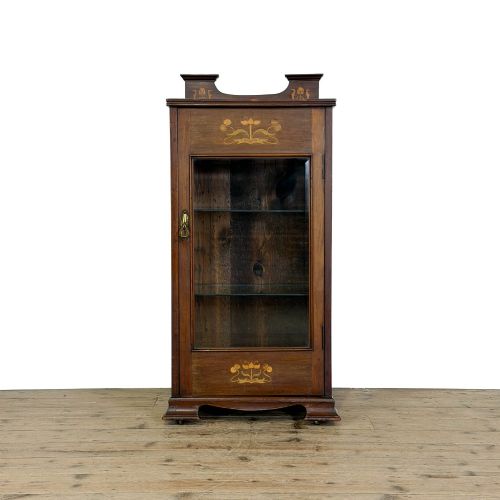
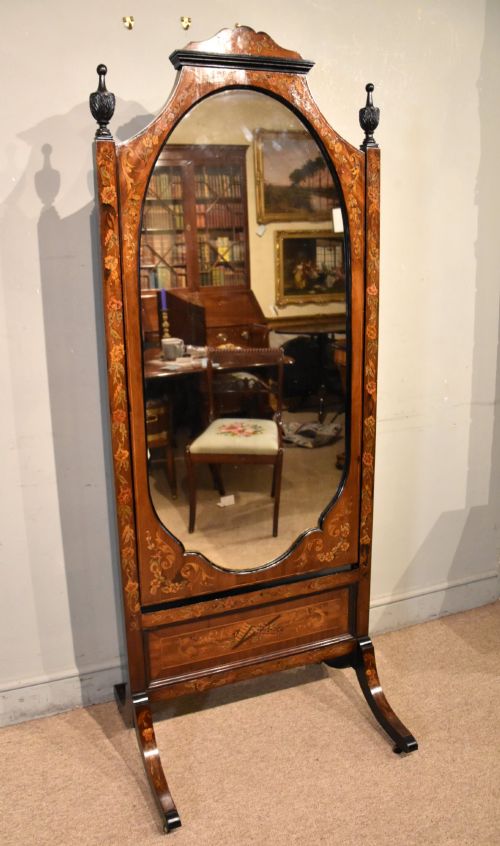
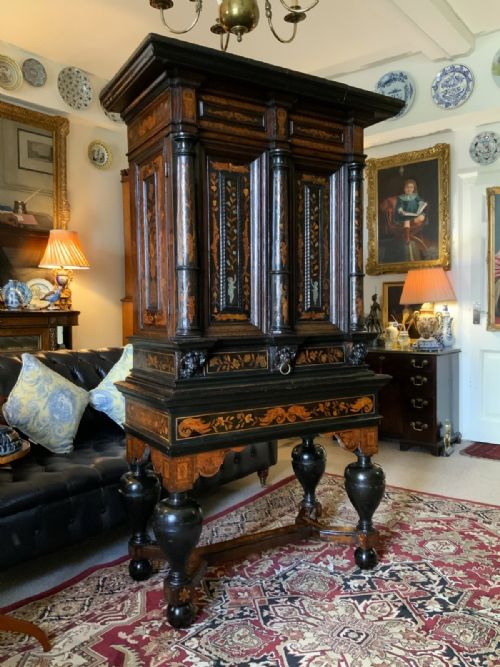
A floral marquetry stand encompasses decorative tables, plant holders, and occasional pieces ornamented with patterned wood veneers. These items emerge across the seventeenth, nineteenth, and early twentieth centuries in English, French, and Dutch workshops.
Buyers most frequently encounter Victorian walnut and mahogany examples alongside French inspired etageres and occasional tables. The category also includes specialised pieces such as candle stands and plant tables decorated with floral veneer motifs.
Materials and Technique
Craftsmen construct these pieces using solid foundational timbers like mahogany, walnut, or oak overlaid with decorative veneers. Marquetry cutters slice contrasting woods, bone, or pewter into floral designs before setting them flush into the surface.
Mounts in cast or gilt brass and ormolu often edge the timber structures, while French polish seals the contrasting wood grains.
Some seventeenth-century artisans embedded tiny pewter insects among the floral marquetry just to surprise attentive viewers.
Assessing Craftsmanship
The sophistication of the veneer cutting dictates the merit of the piece, with tighter joints and finer botanical detail separating superior examples from simpler production. The choice of underlying cabinet timbers and the preservation of original polished surfaces also determine distinction.
Meticulous matching of wood grains across the expanse of the top signals a higher standard of workshop execution.
Edwards & Roberts·Nathaniel Pyne·Peter Wise·Richard Baker
The Floral Marquetry Stand Glossary
- Marquetry inlay
- The practice of fitting decorative pieces of wood, bone, or metal into a prepared cavity on a timber surface to form a picture or pattern. This technique defines the visual character of the category.
- Ormolu
- Gilded bronze mountings applied to furniture edges and feet. These cast metal additions protect vulnerable corners and provide decorative contrast to the timber.
- Etagere
- A set of open shelves supported by small columns used for displaying ornaments. These tiered structures frequently feature detailed marquetry tops.
- Credenza
- A sideboard or cabinet featuring decorative panel work and often enclosed by doors. Victorian examples frequently incorporate extensive floral veneer designs.
- Kingwood
- A dense, richly figured tropical timber utilised for contrasting borders in veneer work. Its dark purple-brown grain enhances the brightness of floral panels.
Floral Marquetry Stand: Frequently Asked Questions
What woods are used in these stands?
Makers rely on walnut, mahogany, rosewood, and kingwood as primary structural timbers and background veneers. Contrasting lighter woods form the petals and leaves of the floral patterns.
Exotic species provide colour variation without requiring paint or stains.
How do I date a piece?
Construction methods, secondary timbers, and prevailing decorative styles indicate the period of production. Seventeenth-century examples display distinct structural framing compared to Victorian or Edwardian interpretations.
Hardware styles and veneer thickness also provide chronological markers for an experienced eye.
Where should I place a stand?
These pieces function well as accent tables in living spaces, hallways, or studies. Smaller candle stands and plant tables suit corners or beside seating.
Placing items away from direct sunlight protects vulnerable tinted veneers from fading.
How do I maintain the surface?
Dust regularly with a dry cloth and apply a quality furniture wax sparingly to preserve the polish. Avoid synthetic sprays and harsh cleaning agents that degrade historical finishes.
Maintaining stable room humidity prevents the veneer from lifting over time.