

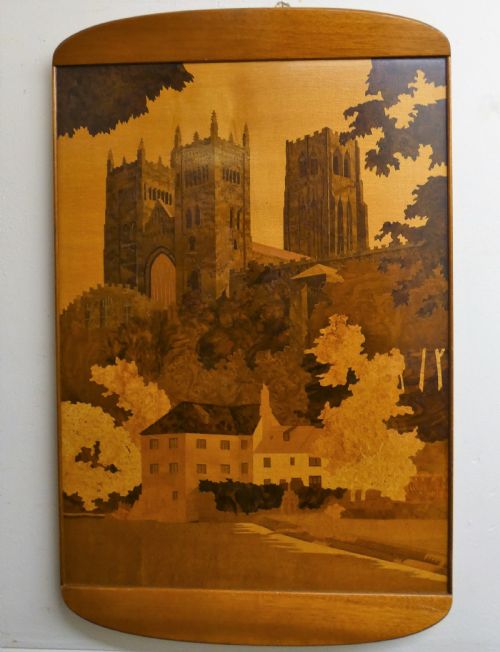


Inlaid Wood Picture
An inlaid wood picture brings together natural tones and careful craftsmanship to add warmth and texture to any interior wall.
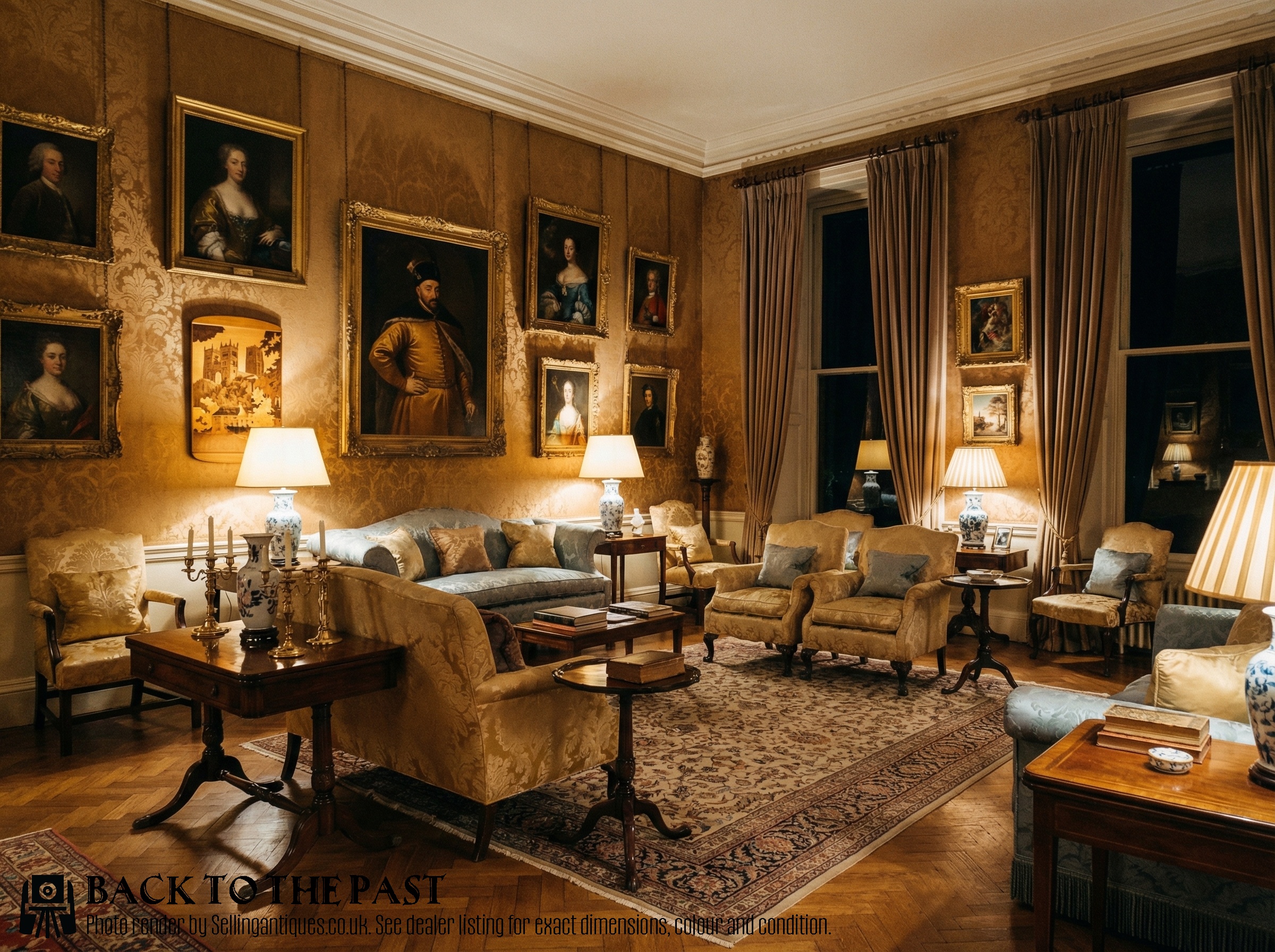
Inlaid Wood Picture
An inlaid wood picture covers a range of wall art, wall plaques, framed artwork, and wall mirrors created through detailed joinery and surface ornamentation. When you search for this phrase, you encounter works spanning the Victorian, Edwardian, and mid-century periods, alongside regional items from British and international workshops.
You are most likely to meet geometric Tunbridge Ware wall plaques from the mid-nineteenth century or pictorial marquetry panels depicting animals and buildings from the early twentieth century. These pieces rely on contrasting timber veneers to build up complex pictorial scenes rather than relying solely on surface paint.
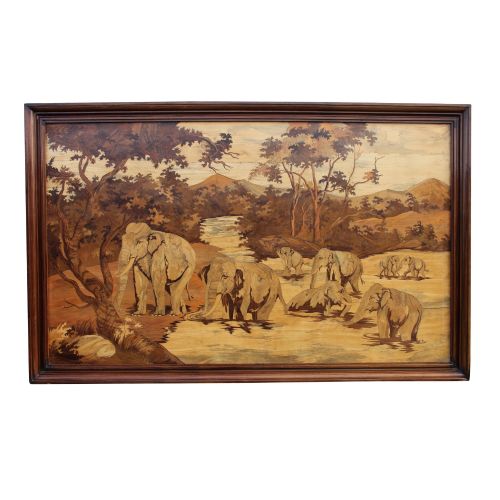
The assortment includes works tied to specific design traditions such as Anglo-Indian elephant marquetry panels, Scottish School compositions, and Arts and Crafts productions from the Rowley Gallery. Each piece uses the natural grain and colour variations of different timbers to create depth and perspective within a flat frame.
Materials and construction
The makers of these items utilised a wide palette of native and exotic timbers, including rosewood, walnut, satinwood, teak, burr walnut, sycamore, and general specimen woods. These materials were chosen for their distinct natural hues and grain patterns, allowing artisans to shade and define elements of a picture without using pigments.
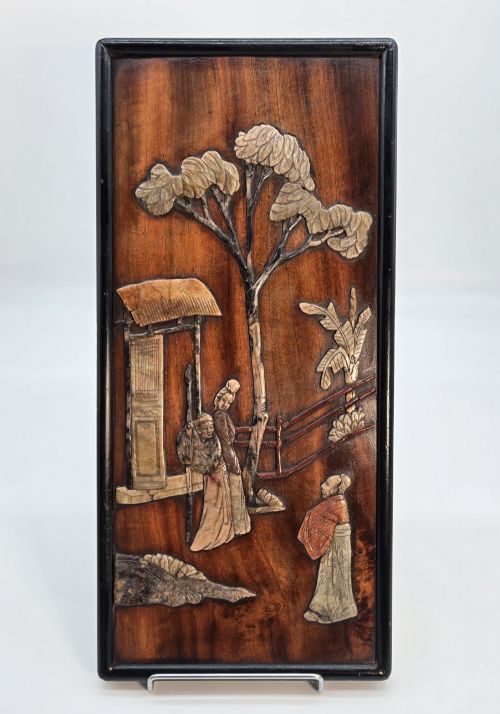
Construction methods range from microscopic mosaic tiling seen in Tunbridge Ware to broader marquetry veneers assembled on wooden backing panels. Some pieces incorporate additional elements like brass fittings, carved stone frames, or optical instrument housings to complete the framed artwork.
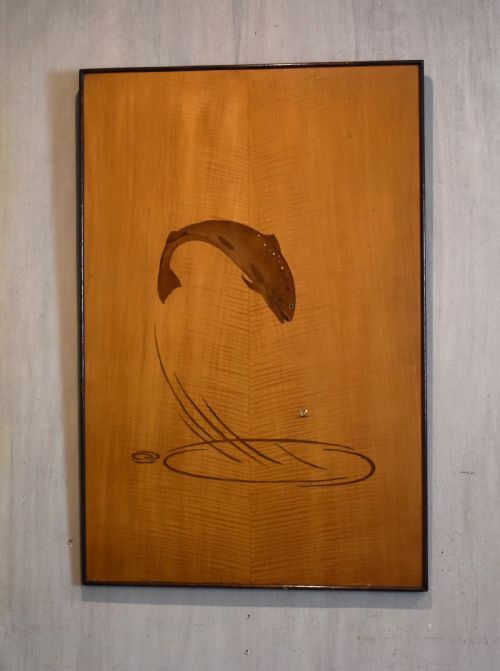
A leaping salmon caught in mid-air remains remarkably placid when rendered entirely in contrasting wood veneers.
Assessing quality and execution
The distinction between standard examples and finer works rests on the precision of the veneer fitting and the complexity of the wood selection. Superior pieces demonstrate an exact alignment of tiny timber segments, where the natural grain direction is harnessed to simulate light, shadow, and movement.
The sophistication of the subject matter and the reputation of the workshop also influence the standing of a piece. Works originating from documented centres like the Rowley Gallery or specific regional schools display an artistic ambition that elevates them above standard commercial wall plaques.
The Inlaid Wood Picture Glossary
- Marquetry
- A technique where pieces of veneer are applied to a backing structure to form decorative patterns or pictorial scenes. It differs from inlay by covering the entire surface rather than being set into recesses.
- Tunbridge Ware
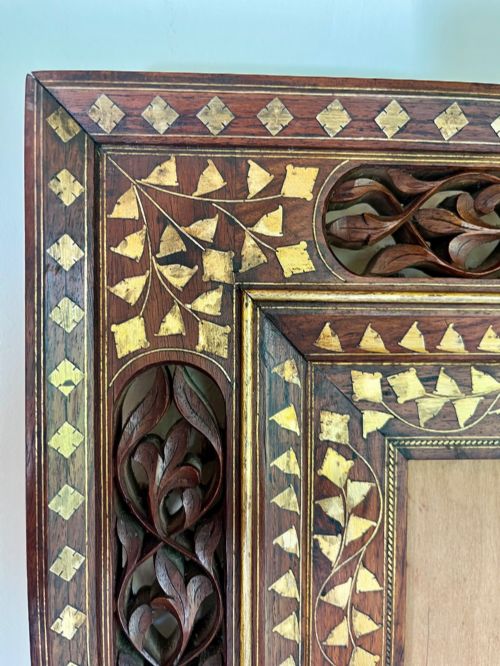
- A specialised form of woodworking originating from Tunbridge Wells, characterised by tiny blocks of coloured wood assembled into precise geometric mosaic patterns. These mosaics typically form the borders or central motifs of plaques and frames.
- Veneer
- A thin slice of fine wood glued to a core panel to provide a decorative surface. In these pictures, various timber veneers supply the colour palette.
- Specimen wood
- Timber collected from different tree species, prized for unusual colour or grain. These woods are combined to provide realistic tonal gradations in pictorial panels.
- Mosaic
- A pattern or picture made by arranging small coloured pieces of hard material together. In this context, it refers to the meticulous arrangement of wood segments.
Inlaid Wood Picture: Frequently Asked Questions
What is an inlaid wood picture?
An inlaid wood picture is a decorative wall panel, plaque, or framed artwork where artisans create images using different types of wood veneer or mosaic blocks. These pieces range from geometric Tunbridge Ware designs to pictorial marquetry scenes depicting animals, buildings, and landscapes.
Craftsmen selected timbers like rosewood, walnut, and sycamore for their natural tones, arranging them carefully to build up perspective and shade without the use of paint.
How do I date an inlaid wood picture?
Dating these works involves examining the framing style, timber types, and construction methods relative to known periods like the Victorian, Edwardian, or mid-century eras. Stylistic clues such as Arts and Crafts lettering or specific regional motifs also help establish a time frame.
Comparative examples from documented makers and dated workshop archives provide further benchmarks for identifying whether a piece belongs to the nineteenth or twentieth century.
Where were inlaid wood pictures made?
These pieces were produced across various workshops in Britain, including specialised centres in Tunbridge Wells and London, as well as international locations like India and China. Regional traditions heavily influenced the choice of subject matter and assembly techniques.
British examples often feature local landscapes or geometric patterns, while Anglo-Indian panels typically showcase regional wildlife and intricate marquetry borders.
How do I care for wooden wall art?
Caring for wooden wall art requires keeping the piece away from direct sunlight and fluctuating humidity to prevent the timber veneers from drying out or warping. Gentle dusting with a dry, soft cloth is usually sufficient for routine maintenance.
Harsh chemical cleaners and excessive moisture should be avoided entirely, as they can damage the delicate adhesive holding the wood pieces to the backing panel.
What is the difference between marquetry and inlay?
Marquetry involves covering a structural panel with a complete veneer puzzle to form a picture, whereas inlay traditionally involves setting pieces of wood into carved hollows within a solid base. Both methods create decorated wooden surfaces but use distinct structural approaches.
Many pieces described as inlaid wood pictures actually utilise marquetry techniques to achieve detailed pictorial shading and perspective.