




Architectural Wood Inlay
Architectural wood inlay pieces combine precision joinery with intricate pictorial marquetry, offering collectors striking historical depth and decorative presence.
Architectural Wood Inlay
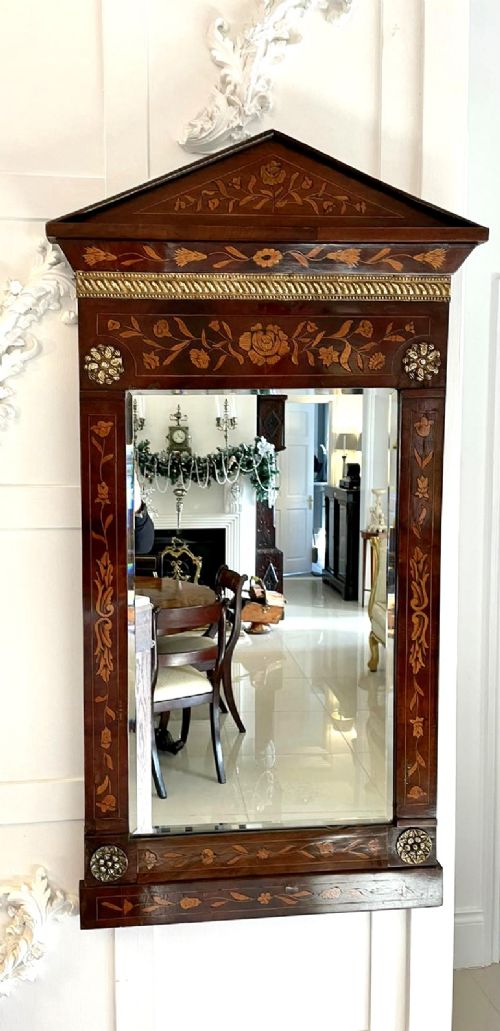
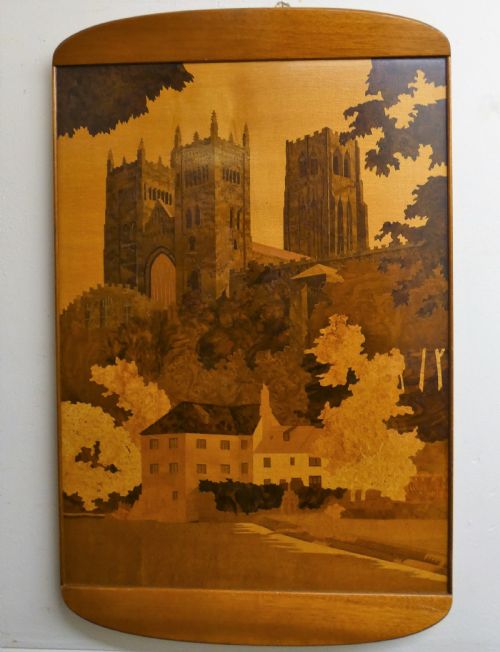
Architectural wood inlay items encompass wall art, mirrors, clocks, and tables that integrate detailed timber marquetry or relief work. These objects translate building facades and geometric schemes into portable wooden panels and furnishings.
The pieces on this page span diverse periods including the seventeenth century, Victorian era, and early twentieth century. Common forms range from wall plaques and architectural dioramas to table cabinets and mantel clocks.
Makers drew on varied regional traditions, producing Dutch marquetry, Moorish Revival pieces, Scottish school works, and Italian cabinet pieces. Buyers frequently encounter mahogany, walnut, and fruitwood surfaces enriched by contrasting timbers.
Materials and construction
Craftsmen built these items using sturdy primary timbers like oak, walnut, and mahogany for structural stability and framing. Marquetry panels then received precise geometric or pictorial veneers cut from fruitwood, sycamore, rosewood, and satinwood.
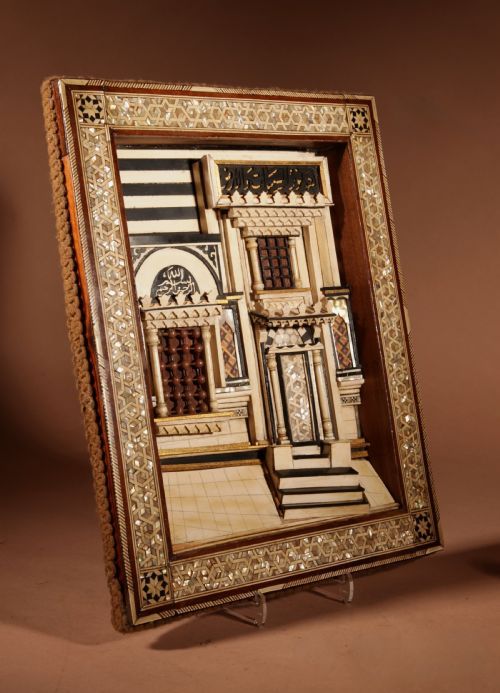
Specialised techniques involved minute wood mosaic work and relief carving, as seen in Tunbridge ware plaques and architectural dioramas. Brass accents occasionally supplemented the timber construction on clocks and portico frames.
Current listings demonstrate timber varieties including brass, wood, walnut, mahogany, fruitwood, rosewood, sycamore, and oak across multiple eras.
Judging quality in inlay work
Quality rests upon the precision of the veneer fitting and the complexity of the timber contrast. Superior examples maintain tight joints and subtle tonal shading across intricate pictorial scenes without lifting or shrinkage.
The artistic ambition of the composition separates standard decorative items from exceptional works. Pieces featuring elaborate architectural perspective, diverse natural wood species, and accomplished relief carving command greater attention.
The Architectural Wood Inlay Glossary
- Marquetry
- The art of forming geometric patterns or pictorial scenes by fitting decorative veneer pieces onto a structural support. It relies on contrasting timber colours and grains.
- Tunbridge Ware
- A distinct form of British woodwork characterised by tiny mosaic tiles assembled to create detailed pictorial panels. Makers used numerous natural woods to achieve photographic colour variation.
- Veneer
- A thin slice of fine timber applied to a coarser primary wood surface to provide a decorative finish. High quality pieces use carefully selected grain directions for visual effect.
- Diorama
- A three dimensional model representing a scene, in this context depicting the facade of a building through relief woodwork. It uses depth and perspective to mimic architecture.
Architectural Wood Inlay: Frequently Asked Questions
What is architectural wood inlay?
Architectural wood inlay refers to decorative objects and furniture featuring precise timber marquetry, mosaic work, or relief carvings that depict buildings, facades, and geometric structures. These items translate large scale architectural motifs into portable domestic pieces.
Craftsmen utilised various woods like mahogany, walnut, and fruitwood to create tonal contrast and perspective within panels, mirrors, clocks, and cabinets.
How were these wooden pieces used?
Original owners displayed these items as statement pieces in domestic interiors, combining functional utility with decorative display. Wall plaques, dioramas, and mirrors served as visual focal points in reception rooms.
Clocks and table cabinets added practical utility while showcasing the owner's taste for intricate fine woodworking and regional decorative styles.
How do I care for inlaid wood?
Protect inlaid wooden surfaces by keeping them away from direct sunlight and sudden temperature shifts, which can cause timber to dry out or veneers to lift. Maintain a stable indoor climate to preserve the natural glues and delicate woods.
Dust gently with a dry, soft cloth and avoid applying modern chemical polishes that may damage aged finishes or seep into fine veneer joints.
How can I tell different periods apart?
Dating relies on examining the construction methods, underlying timber choices, and stylistic traits associated with specific eras like the seventeenth century or the Victorian period. Earlier pieces often display heavier oak or walnut carcases with deep hand carving.
Later Victorian and early twentieth century examples frequently incorporate specialised mosaic techniques, lighter fruitwoods, and varied regional influences such as Moorish Revival or Scottish school designs.