





Wood Inlay Wall Panel
These wood inlay wall panel examples bring rich textures and intricate pictorial marquetry straight into domestic spaces.
Wood Inlay Wall Panel
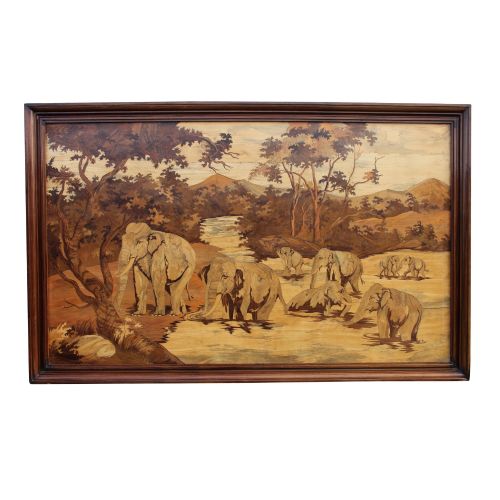
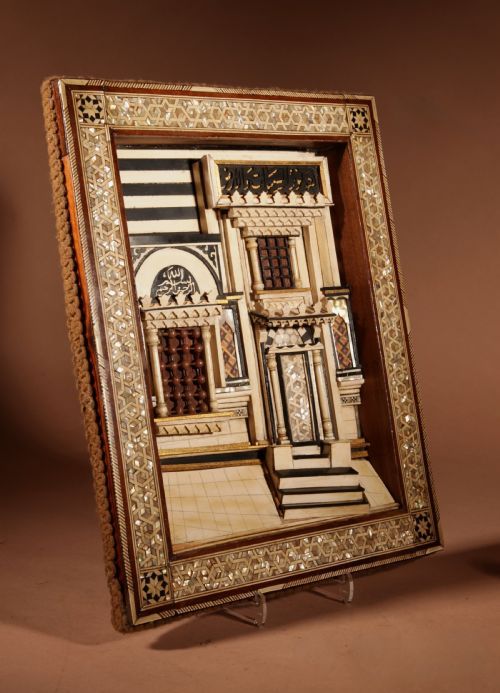
A wood inlay wall panel encompasses decorative plaques, architectural dioramas, and framed works created across various periods including the Georgian era, Victorian times, and the Edwardian epoch. Buyers encounter diverse regional expressions, from geometric Tunbridge Ware to Anglo-Indian marquetry depicting elephants and architectural facades.
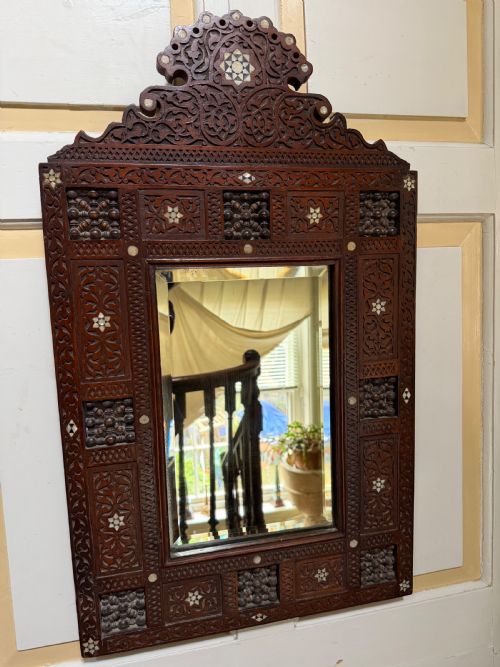
Makers utilised specific timber varieties to build these wall hangings, incorporating forms such as overmantel mirrors, corner cupboards, and dedicated wall art. Pieces range from Scottish School compositions to intricate Moorish Revival reliefs and mid-century modern interpretations.
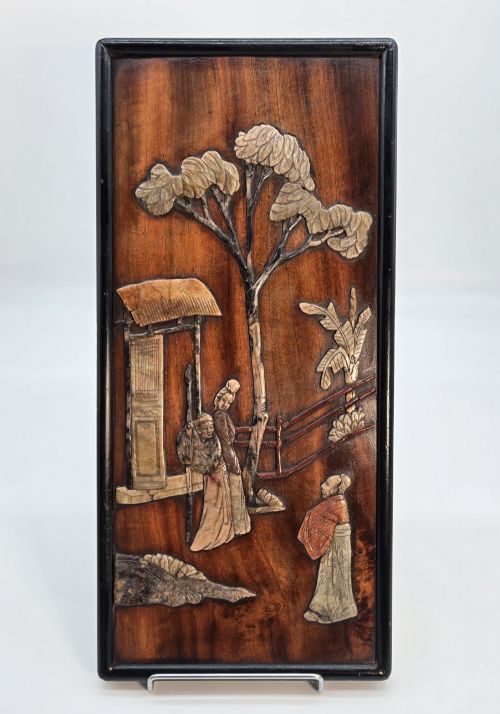
The selection reflects distinct stylistic movements, including Arts and Crafts designs alongside Qing Dynasty examples and traditional British marquetry pictures. Each format demonstrates how artisans applied varied woods directly to vertical display surfaces.
How they were made
Craftsmen built these panels using contrasting timbers such as rosewood, walnut, satinwood, sycamore, and boxwood to construct detailed pictorial scenes and geometric patterns. Wood mosaic and marquetry techniques involved precise cutting and fitting of fine veneers onto solid wood or backing structures.
Certain works integrate carved stone elements, glass, or silver-gilt highlights alongside traditional woodworking methods to add depth and textural contrast. Joinery techniques varied from simple mounted plaques to structural architectural dioramas and framed mirror surrounds.
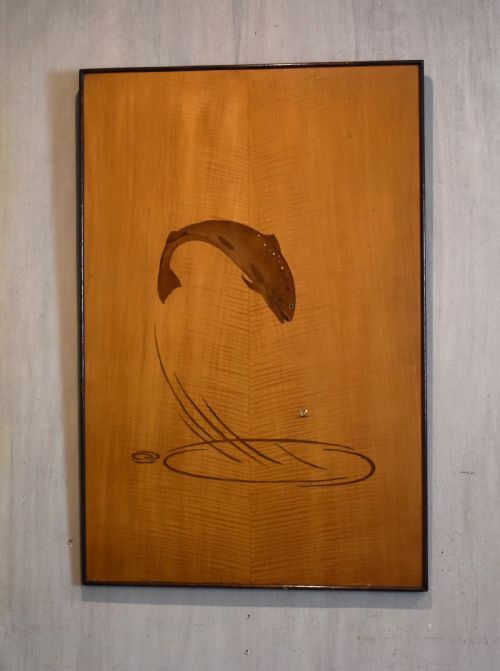
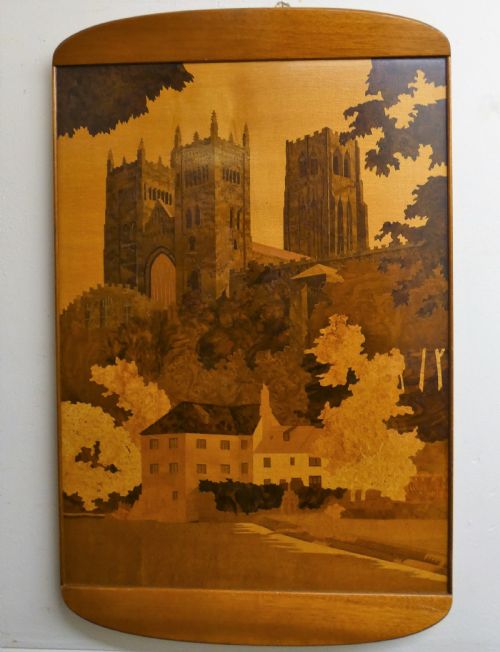
Elephants and leaping salmon share wall space with stately castles and intricate building facades.
What varies in quality
The precision of the veneer cutting and the natural contrast between timber species determine the visual depth achieved in pictorial marquetry. Finer examples display meticulous grain matching and tight joints that maintain stability across changing environmental conditions.
Artistic execution dictates the distinction between standard decorative plaques and sophisticated works associated with known design movements or specific regional workshops. The complexity of the imagery, from simple geometric mosaics to elaborate animal and architectural depictions, separates basic output from master craftsmanship.
Rowley Gallery
The Wood Inlay Wall Panel Glossary
- Marquetry
- The art of applying small pieces of veneer to a structure to form decorative patterns or pictorial scenes. Craftsmen select varied timber species to create natural shading without using paint.
- Tunbridge Ware
- A distinct form of wood mosaic characteristic of nineteenth-century spa towns in Kent. Artisans assemble thousands of tiny tinted wood blocks to create intricate geometric and pictorial designs.
- Veneer
- A thin slice of fine wood applied to a coarser backing material to provide a decorative surface. Selecting high-grade veneer allows makers to exploit interesting grain patterns.
- Diorama
- A three-dimensional representation of a scene or building facade. In wall panels, this involves relief carving and projecting wooden elements to create spatial depth.
Wood Inlay Wall Panel: Frequently Asked Questions
How do I hang a heavy wood inlay panel?
Heavy panels require secure wall fixings suited to the weight of dense timbers like rosewood or walnut. Wall plugs and sturdy picture wire or integrated brackets distribute the load safely.
Ensure the mounting hardware engages directly with wall studs or masonry rather than just plaster. This prevents the panel from shifting or pulling away from the vertical surface over time.
How should I clean a marquetry wall panel?
Dust surfaces gently with a soft, dry cloth to remove everyday particles without disturbing delicate veneer edges. Avoid commercial liquid polishes or damp cloths that might penetrate old timber joints.
Maintain stable indoor humidity levels to protect the wood mosaic from expanding or contracting excessively. Sudden temperature shifts can cause the fine wood pieces to lift from their backing.
What is the difference between marquetry and Tunbridge Ware?
Marquetry involves cutting individual veneer sheets to shape pictorial scenes like animals or architectural views. Craftsmen lay these pieces flat to form a cohesive image across the wooden surface.
Tunbridge Ware relies on assembling thousands of microscopic tinted wood rods into complex geometric or mosaic patterns. The resulting composite block is then sliced thinly to create identical repeating decorative motifs.
Are these panels suitable for modern interiors?
Diverse stylistic origins, from Victorian geometric plaques to mid-century modern compositions, allow these wall pieces to integrate into contemporary schemes. The natural warmth of timber complements neutral modern wall colours.
Positioning a panel away from direct sunlight preserves the natural tones of rosewood, satinwood, and boxwood. Proper placement ensures the detailed wood grain remains the focal point of the room.