


Anglo Indian Wood Panel
These anglo indian wood panel pieces combine dense British colonial forms with intricate South Asian carving.
Anglo Indian Wood Panel
An anglo indian wood panel brings dense carving and regional joinery into domestic spaces, appearing in wall art, deep relief panels, and folding screens across this selection. These items range from nineteenth century examples to early twentieth century pieces.
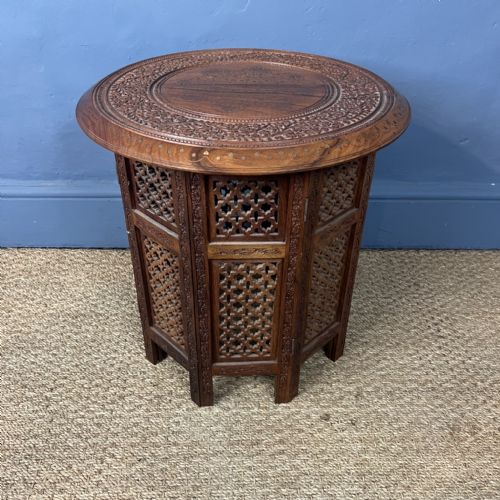
The objects listed show deep relief carving alongside marquetry and fretwork, frequently utilising dense tropical timbers. Buyers encounter folding screens, wall art, and table screens alongside functional furniture adapted to colonial tastes.
Materials and construction
Maker workshops utilised dense hardwoods including teak, rosewood, and mahogany as foundations for intricate hand carving and structural joinery. These timbers provided the weight and stability required for deep relief work and folding screens.
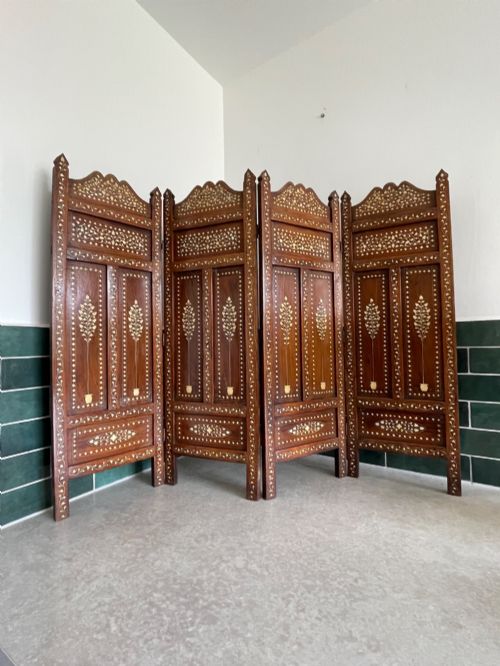
Inlay work incorporated brass, silver, gold, and bone inlay into the wooden surfaces, creating contrasting geometric or figurative patterns. Surface decoration frequently employed painted details alongside fretwork to add texture and depth.
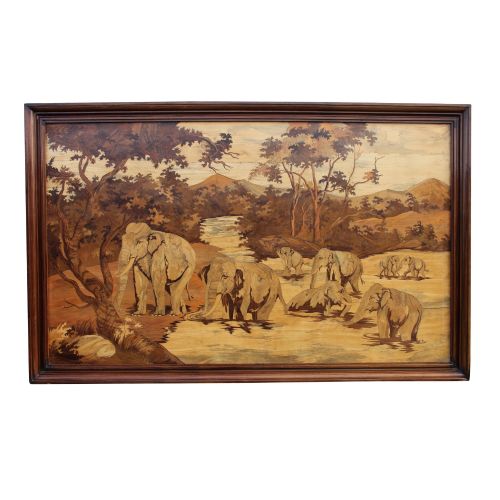
Elephants occasionally sneak into the woodwork, staring out in marquetry from beneath Victorian lintels.
Factors of quality
Quality rests upon the depth of the carving and the crispness of the relief work across the wooden surface. Finer examples display meticulous control in intricate fretwork and stable joinery across multi fold screens or heavy wall panels.
The selection of timber and the precision of inlaid brass or bone components separate standard decorative items from superior masterworks. Integrated elements like elephant marquetry or detailed silver embroidery denote heightened artisan skill.
The Anglo Indian Wood Panel Glossary
- Marquetry
- The art of applying pieces of veneer to a structure to form decorative patterns. This technique appears frequently in pictorial scenes on panels.
- Fretwork
- Ornamental design executed by cutting out material from a plate or board. It provides the openwork lattice seen on folding screens.
- Relief
- Sculptural technique where figures or patterns project from a background plane. Deep relief carving defines the wall panels and furniture.
- Inlay
- Material embedded into the surface of a base object to form a design. Brass and bone serve this purpose in these pieces.
Anglo Indian Wood Panel: Frequently Asked Questions
What is an anglo indian wood panel?
An anglo indian wood panel is a decorative architectural element or wall art piece created during the colonial period.
These items showcase traditional South Asian carving techniques applied to forms suited for British interiors.
How were folding screens used?
Folding screens served to divide large rooms into smaller, intimate spaces or to block draughts in period homes.
Today, they function primarily as decorative wall backdrops or standalone artistic room partitions.
What woods are typical for these pieces?
Workshops primarily employed dense tropical timbers such as teak and rosewood for their durability and dark grain.
Mahogany and general hardwoods also appear frequently across the documented items.
How do I date an anglo indian panel?
Dating relies on examining the timber species, joinery methods, and the style of the relief carving.
Pieces span from the early nineteenth century through the Victorian era to the early twentieth century.