
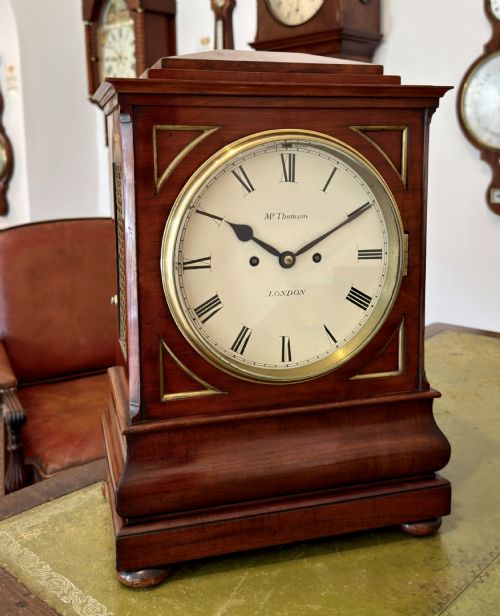
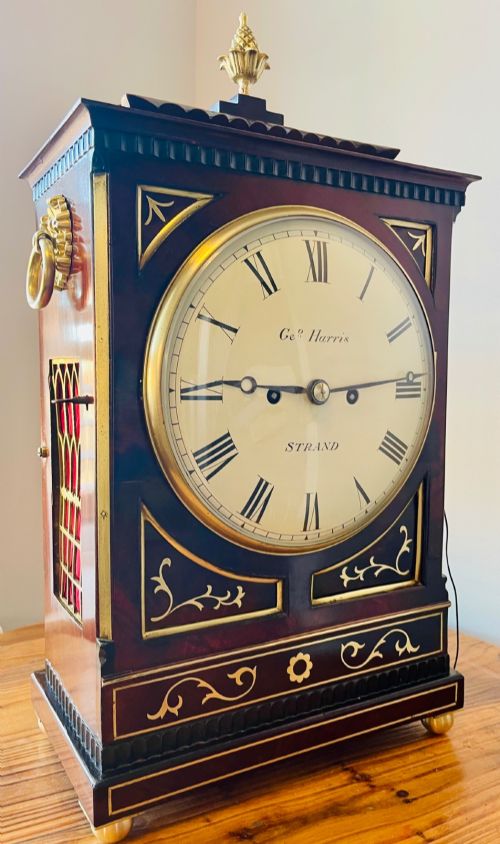
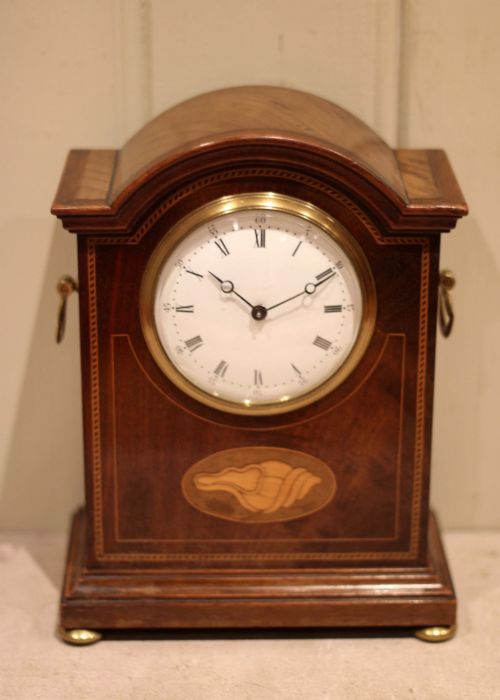
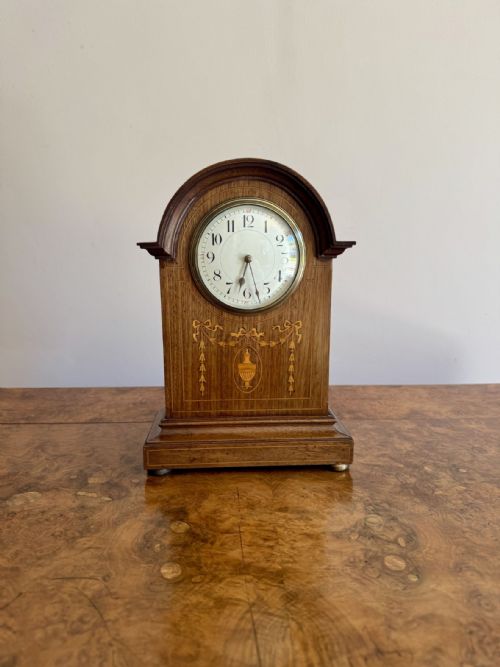


Inlaid Wood Bracket Clock
An inlaid wood bracket clock brings precise mechanical timekeeping into a room within a handsome timber case decorated with contrasting details.
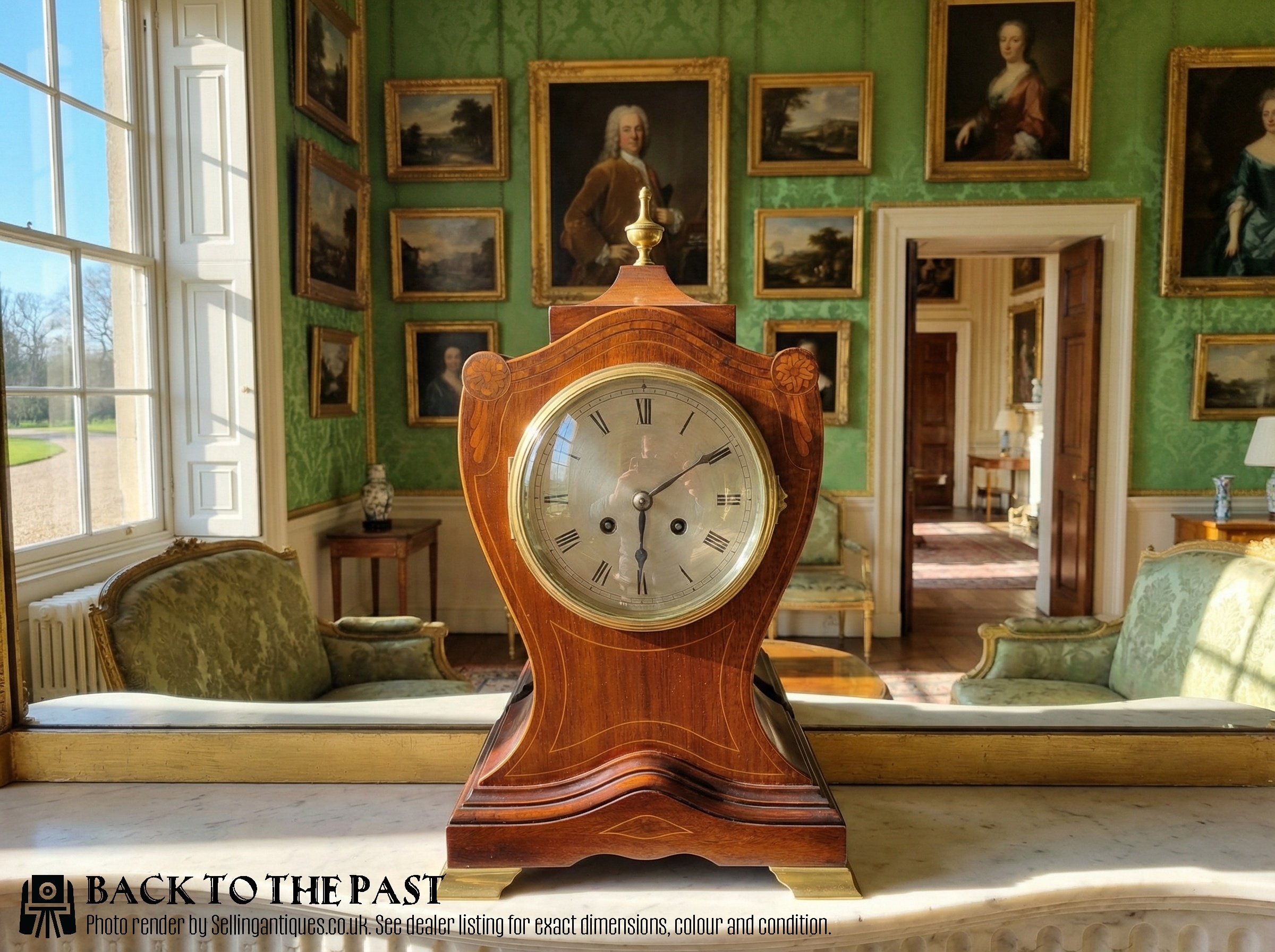
Inlaid Wood Bracket Clock
An inlaid wood bracket clock sits on furniture surfaces or dedicated shelves to measure hours with mechanical movements. These objects combine timekeeping utility with decorative cabinetwork spanning several design periods.
Mahogany and rosewood form the primary casework materials, often enhanced by satinwood, boxwood, or brass stringing. The listed selection ranges from Georgian and Regency examples to Edwardian and Victorian interpretations.
Forms include traditional bracket shapes, architectural break arch designs, and curved balloon silhouettes. Dial configurations feature enamel faces alongside brass and silvered metal details protected behind glass panels.
How they were made
Cabinetmakers constructed the wooden carcasses from solid timbers like mahogany and rosewood, applying fine veneers across curved and flat surfaces. Artisans cut delicate channels into the timber to inlay contrasting lines of satinwood, boxwood, and gleaming brass.
Mechanical movements relied on weight-driven or spring-driven fusee systems designed to equalise the pull of the mainspring as it unwound. Metalworkers cast and polished brass bezels, handles, and feet to complement the polished wood exteriors.
Enamel or silvered metal dials received hand-painted numerals and minute tracks before fitting beneath protective glass doors. Specialised makers assembled these complex gear trains by hand to ensure reliable timekeeping over centuries.
Some nineteenth-century timekeepers include a delicate strike called ting tang, designed to remind busy households of the passing quarters.
What varies in quality
The precision of the cabinetwork and the subtlety of the timber inlay distinguish the finer specimens from standard production. Crisp line work in the boxwood or brass stringing indicates superior hand execution by skilled woodworkers.
Complexity and finish within the movement separate ordinary mechanisms from high-grade workshop output. Fusee movements with delicate engraving on the backplates represent a higher standard of horological craftsmanship.
Proportion and case architecture dictate the visual harmony of the piece. Well-balanced bracket shapes and well-preserved original dials retain greater character than altered examples.
Thomson of London·S Simpson Southampton·Thomas Connold of Alysham·Joseph Jump of London·Walker and Hall·Plumbly and Tupman, London
The Inlaid Wood Bracket Clock Glossary
- Bracket clock
- A portable mechanical clock originally designed to sit upon a matching wall bracket or table. These timepieces typically feature substantial wooden cases with carrying handles.
- Fusee
- A conical pulley connected to the mainspring by a cord or chain. This mechanism maintains even tension on the gear train as the spring unwinds.
- Inlay
- A decorative technique where contrasting materials like brass, satinwood, or boxwood are set flush into recesses cut within the primary timber surface.
- Dial
- The visible face of the clock displaying the numerals and chapter rings. Enamel, silvered metal, and brass serve as common materials for these faces.
- Ting tang
- A striking mechanism that sounds two different notes on bells or gongs to indicate the quarters of the hour.
Inlaid Wood Bracket Clock: Frequently Asked Questions
Why does my clock run fast or slow?
Older mechanical movements are sensitive to temperature changes and minor shifts in level surfaces. Adjusting the pendulum regulation nut typically corrects small timing errors.
Consistent timekeeping issues often indicate that old lubricants have dried within the gear train. A professional service restores smooth operation to the mechanical components.
Where should I place a bracket clock?
Select a sturdy mantel, sideboard, or table away from direct sunlight and dampness. Stable surfaces ensure the pendulum or balance wheel operates without interference.
Keep wooden cases away from active heat sources that can dry out antique timbers and crack veneers. Ensure the furniture piece supporting the clock does not vibrate.
What is a fusee movement?
A fusee is a cone-shaped drum linked to the mainspring by a fine chain or cord. This clever device compensates for the dropping tension of the spring as it runs down.
Clocks featuring this mechanism generally offer more consistent timekeeping across the duration of the winding cycle. It remains a hallmark of better British clockmaking.