
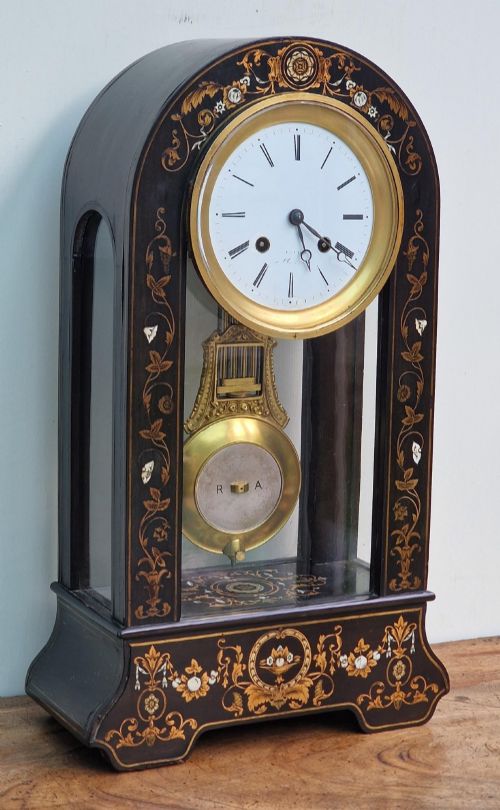
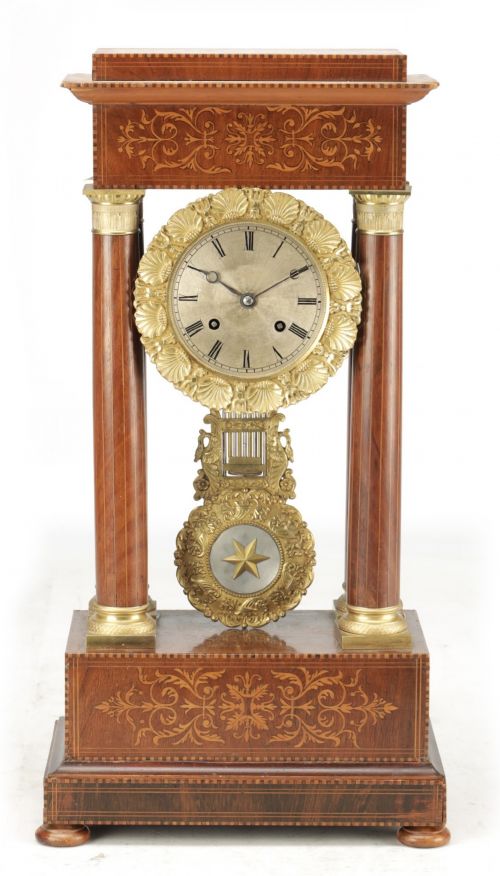


Floral Inlaid Mantel Clock
A floral inlaid mantel clock brings warmth and character to a room, combining precise timekeeping with decorative woodwork from the Victorian and Edwardian eras.
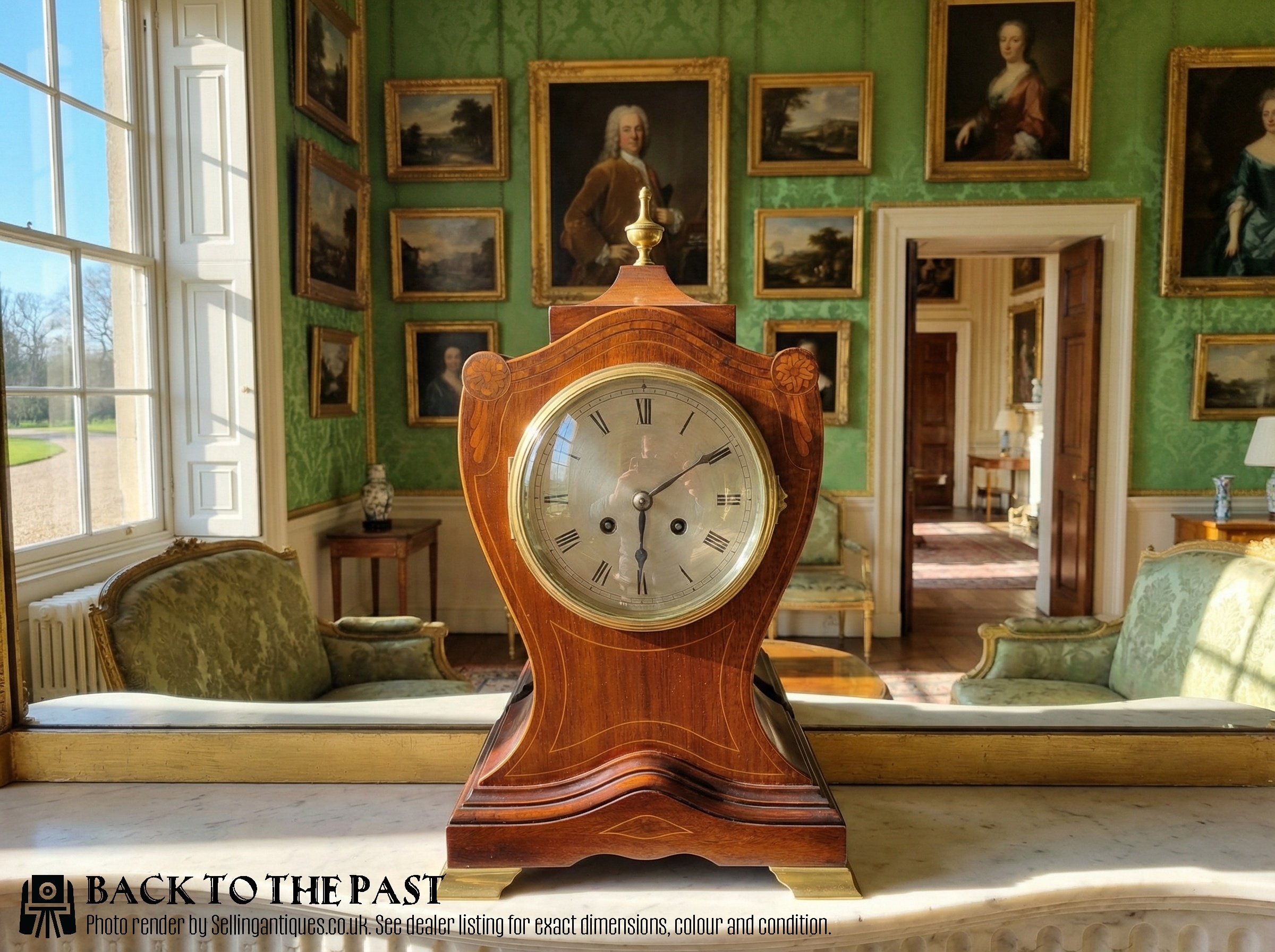
Floral Inlaid Mantel Clock
A floral inlaid mantel clock is a domestic timekeeper designed to sit on a shelf or mantelpiece, decorated with intricate wood inlay depicting flowers and botanical motifs. These pieces typically originate from the nineteenth century, including the Victorian and Edwardian periods, alongside French workshops.
The versions most commonly met on this page combine traditional French movements with cabinetwork executed in rosewood, mahogany, or satinwood. Many examples feature marquetry inlay using boxwood and other contrasting timbers to create floral designs.
Makers ranged from notable Paris firms like Henry Marc, Savory & Fils, and Malecot to British cabinetmakers producing Edwardian pieces with poppy motifs. The forms span upright shapes, portico designs, and bracket clocks.
How they were made
Cabinetmakers constructed the main body using timbers such as mahogany, rosewood, and satinwood, often shaping the wood to form arched or portico cases. Marquetry inlay was carefully sliced and fitted into the surface to form floral patterns, using boxwood and other contrasting woods for definition.
Glazed bezels protected the enamel dials, which were fitted with mechanical movements driven by springs or weights, sometimes running for eight days. Gilt brass mounts and feet were often added to French architectural cases to accent the polished woodwork.
One Edwardian mantel clock arrives specifically inlaid with poppies, bringing a touch of the cottage garden straight to the parlour.
What varies in quality
The precision and depth of the marquetry inlay set finer pieces apart from standard production, particularly where varied timbers create natural shading within the floral petals and leaves. Crisp casting on the gilt brass mounts and refined enamel work on the dial also indicate superior craftsmanship.
The reputation of the maker influences the standing of a piece, with signed movements from established Parisian clockmakers commanding greater interest. The choice of cabinet wood, such as figured rosewood or satinwood, further distinguishes the top of the range.
Henry Marc·Savory & Fils·Malecot
The Floral Inlaid Mantel Clock Glossary
- Marquetry inlay
- A decorative technique where small pieces of wood veneer are fitted together to form pictorial designs on a wooden surface. This method creates the floral patterns seen across the cases.
- Portico clock
- A monumental clock style shaped like a classical architectural temple with supporting columns. These French designs often utilise rosewood and gilt brass.
- Bracket clock
- A portable timekeeper originally designed to sit on a wall bracket rather than a floor or mantel. Later examples function as mantel clocks.
- Bezel
- The metal ring that holds the glass protecting the dial of the clock. It often opens on a hinge to allow hand-setting.
Floral Inlaid Mantel Clock: Frequently Asked Questions
How do I wind an antique mantel clock?
Most mechanical clocks use a key inserted into winding holes on the dial face to tension the internal springs. Care must be taken not to overwind the movement.
Eight-day movements require winding approximately once a week, while pendulum clocks may need regulation to keep accurate time.
Where should I place a floral inlaid mantel clock?
These clocks suit stable flat surfaces away from direct sunlight, moisture, and temperature fluctuations that might affect the wood veneer. A mantelpiece or sideboard provides an ideal setting.
Placing the clock away from exterior doors prevents vibrations that can disrupt the pendulum or escapement.
How do I distinguish French and Edwardian clocks?
French pieces from the nineteenth century often feature rosewood marquetry, portico shapes, and signed movements from makers like Henry Marc or Malecot. They frequently utilise enamel dials with ornate brass surrounds.
Edwardian pieces tend to employ mahogany or satinwood cases with distinct botanical motifs such as poppies, reflecting British tastes around nineteen hundred.
What maintenance do these clocks require?
Mechanical movements benefit from professional cleaning and lubrication every few years to prevent wear on the brass gears. The wooden case requires only gentle dusting with a dry cloth.
Avoid using modern polishes or solvents on the marquetry inlay, as these can damage the historic surface finish.