


Edwardian Satinwood Clock
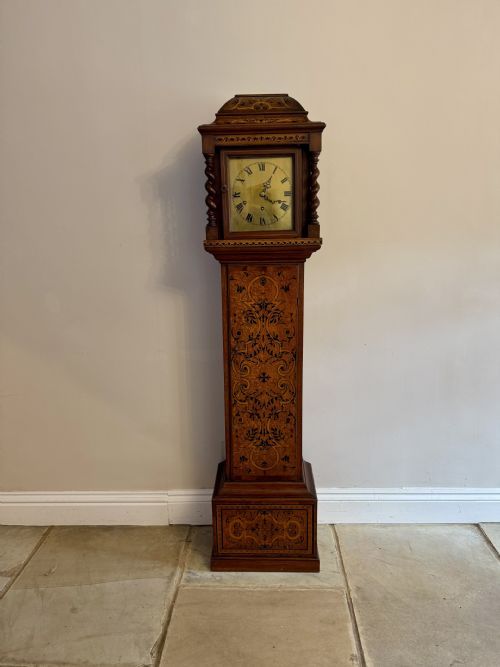
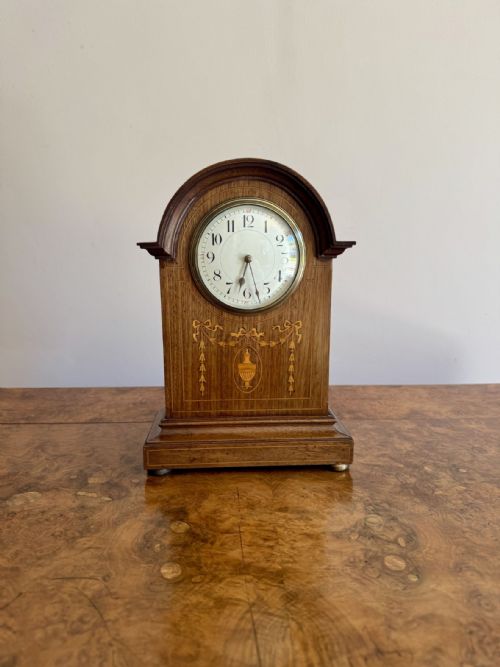
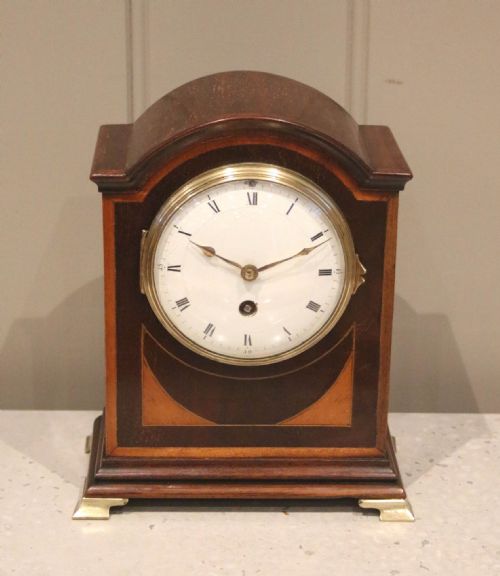
These edwardian satinwood clock pieces bring delicate marquetry and glowing timber into a room, offering both reliable timekeeping and period charm.
Edwardian Satinwood Clock
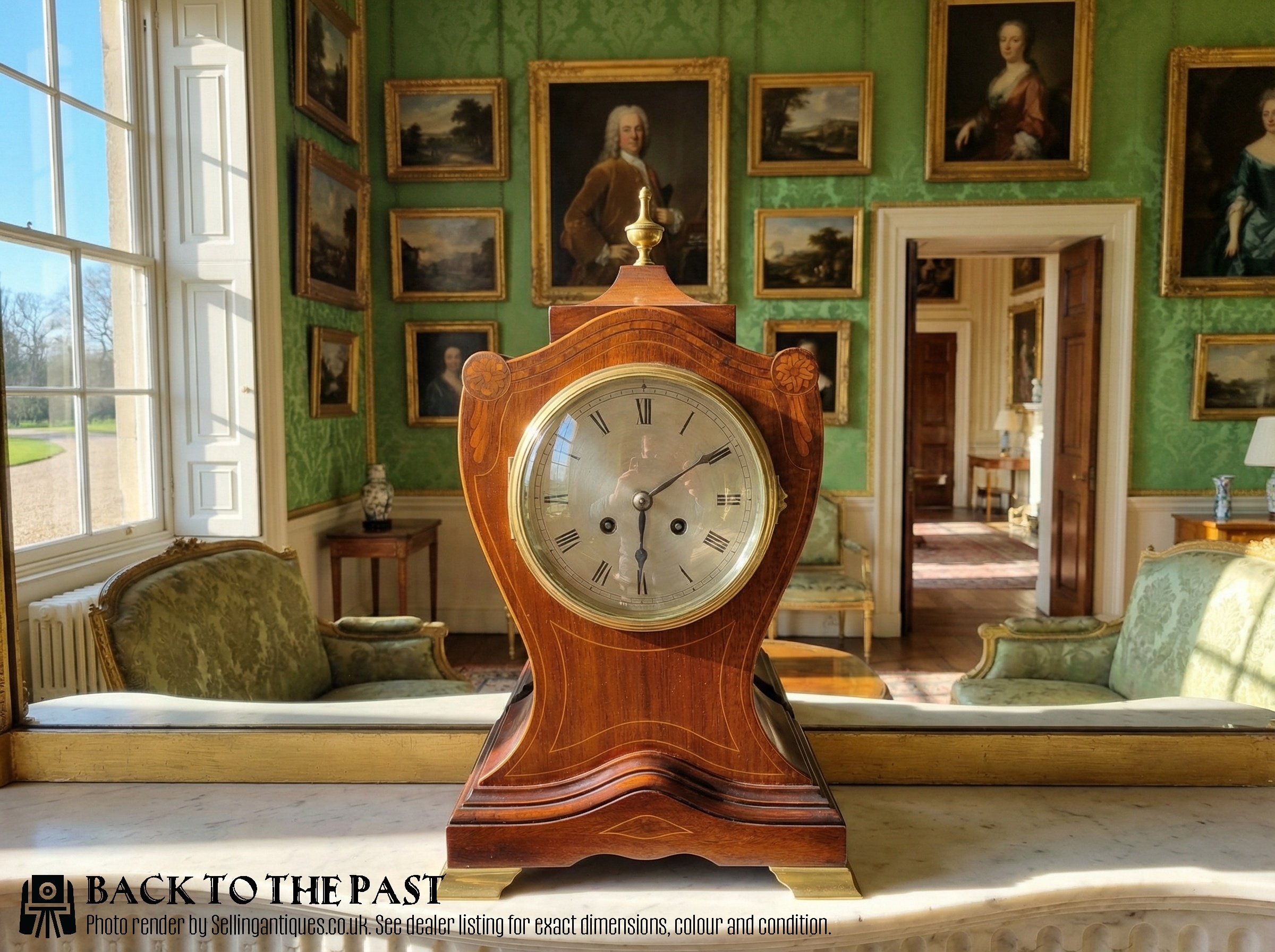
An edwardian satinwood clock typically takes the form of a mantel clock, balloon clock, or lancet shaped timepiece designed for domestic interiors. These domestic timepieces often utilise contrasting timbers and decorative boxwood inlay to create visual interest on a shelf or desk.
The objects seen here span the Edwardian period and the late nineteenth century, reflecting the tastes of around nineteen hundred. Buyers frequently encounter mantel clocks decorated with floral motifs, satinwood banding, or figurative subjects like Dutch girls and poppies.
While most examples are designed for the mantelpiece, variations include larger long case clocks and bedside desk timepieces housed in inlaid wooden cases. This range of forms allows collectors to find a timepiece suited to various spaces within a home.
Materials and construction
Makers built these clock cases using a carcase of mahogany or other woods, overlaid with satinwood veneers to achieve a bright, reflective surface. Boxwood inlay and marquetry work provide intricate decorative detail across the front and sides of the cases.
Glass panels protect the enamel dials and brass bezels, while interior movements measure the passage of time through mechanical gears and springs. The integration of contrasting wood bands demonstrates the careful cabinetmaking skills of the period.
One cheerful Edwardian timepiece depicts a Dutch girl in delicate wood inlay, watching the hours pass from the mantelpiece.
Distinctions in quality
The refinement of the marquetry and the precision of the boxwood inlay separate standard workshop production from finer examples. Artisans who executed delicate floral decoration or figurative scenes with clean lines achieved a more balanced and finished appearance.
The choice of cabinet timber and the preservation of the original satinwood surface influence the overall character of the piece. Clocks that retain crisp veneers and clear enamel dials demonstrate superior survival through the decades.
Mappin & Webb London·L Mumford London
The Edwardian Satinwood Clock Glossary
- Satinwood
- A durable tropical hardwood known for its golden sheen and smooth grain. It was frequently used as a veneer on Edwardian furniture and clock cases.
- Marquetry
- The art of applying decorative pieces of veneer to a structural structure to form pictorial or geometric designs. This technique created the floral patterns seen on many Edwardian timepieces.
- Balloon clock
- A mantel clock featuring a rounded, dome-shaped top that tapers outward toward the base, resembling the silhouette of a hot air balloon. These were popular in satinwood during the Edwardian era.
- Lancet clock
- A mantel clock designed with a pointed Gothic arch profile reminiscent of a lancet window. The wooden case is typically shaped from a single board or veneered gracefully.
- Bezel
- The metal ring that holds the glass protecting the clock face in place. On these pieces, it is commonly made of polished brass.
Edwardian Satinwood Clock: Frequently Asked Questions
How do I wind my Edwardian clock?
Most of these clocks utilise a key-wound mechanical movement that requires gentle turning until resistance is felt. Care should be taken not to overwind the mainspring.
Consulting the specific winding requirements of the movement helps maintain the longevity of the gears.
Where should I place a satinwood clock?
Satinwood benefits from placement away from direct sunlight and sudden temperature changes, which can dry out delicate veneers. A stable mantelpiece or desk surface is ideal.
Keeping the clock away from damp areas protects both the wooden case and the internal brass mechanism.
How do I tell an Edwardian clock from a Victorian one?
Edwardian clocks often feature lighter satinwood veneers, boxwood stringing, and brighter inlaid motifs compared to heavier Victorian walnut or mahogany styles. The transition around nineteen hundred brought a lighter aesthetic to domestic interiors.
Examining the internal components and secondary woods can also help confirm the manufacturing period.
What maintenance do these clock movements need?
Mechanical clocks generally require professional cleaning and lubrication every few years to ensure accurate timekeeping. Dust should be kept away from the movement using a soft brush.
Avoiding amateur adjustments to the escapement prevents accidental damage to vintage brass components.