
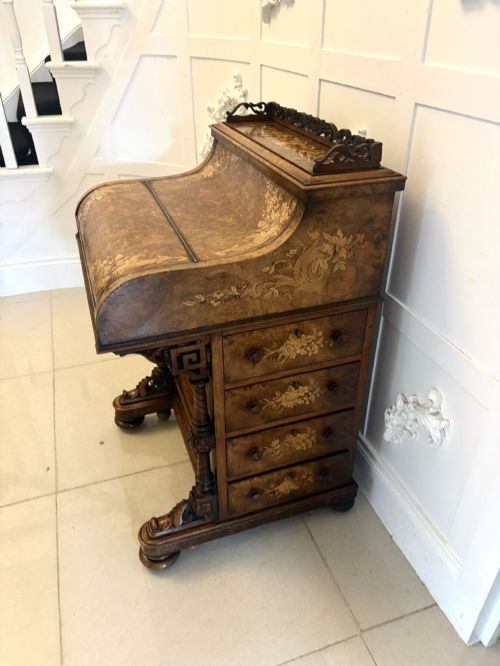
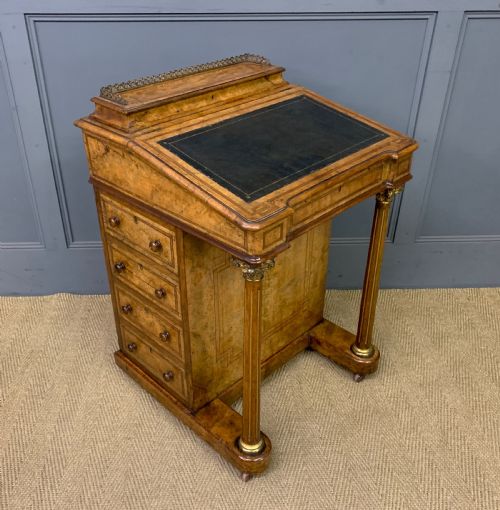
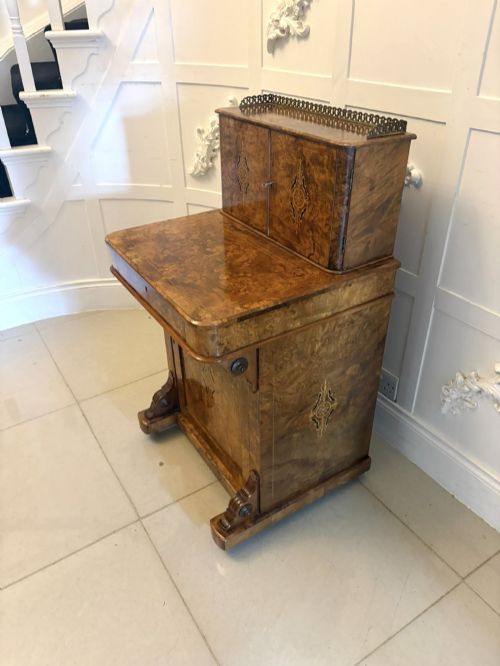
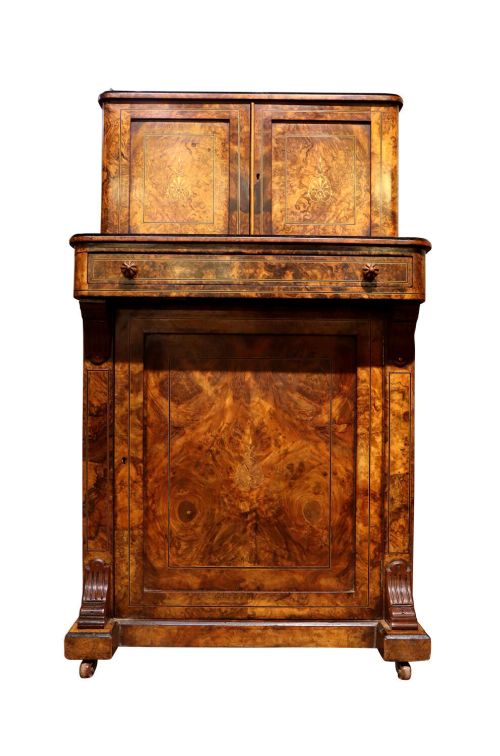
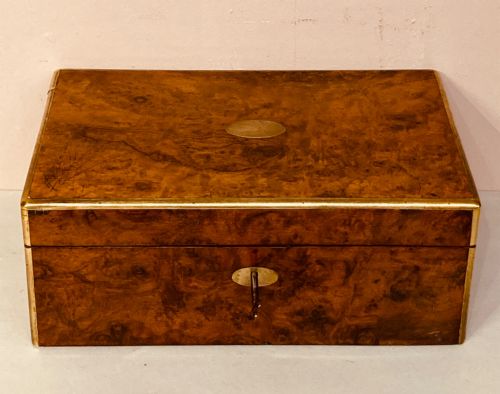


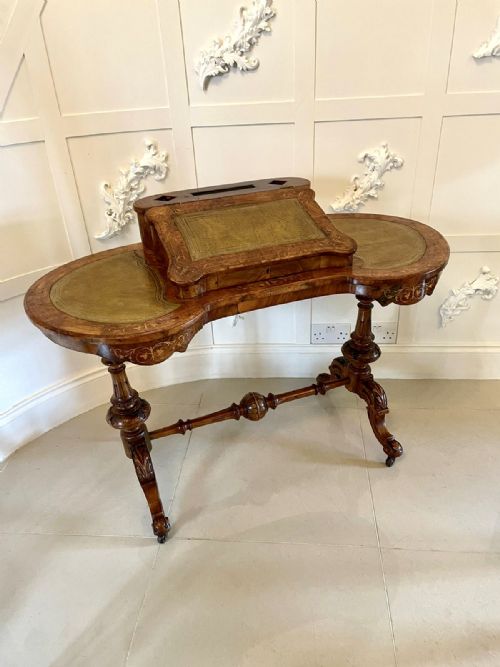


Inlaid Walnut Stationery Desk
An inlaid walnut stationery desk brings distinctive timber figure and meticulous decorative banding to any room.

Inlaid Walnut Stationery Desk
When you search for an inlaid walnut stationery desk, you encounter a specialised form of writing and correspondence furniture from the Georgian, Victorian, and Edwardian eras. The selection on this page centres primarily upon Victorian pieces, alongside Edwardian and late Georgian examples.
The objects take several distinct shapes, from fitted writing slopes and desktop correspondence boxes to freestanding Davenport desks, kidney-shaped writing tables, and bonheurs du jour. Walnut timber and burr walnut veneer dominate the forms, frequently enriched with boxwood inlay, marquetry, parquetry, and Tunbridge ware.
Stationery boxes and correspondence chests appear alongside slopes and multi-drawer Davenports, offering dedicated compartments for letters and papers. These smaller writing cabinets and desks reflect the domestic correspondence habits of the nineteenth and early twentieth centuries.
How they were made
Cabinet makers utilised figured walnut and burr walnut veneers over secondary timbers to achieve rich, swirling grain patterns across writing slopes and desk surfaces. Boxwood inlay, marquetry, and parquetry were then meticulously set into the walnut surfaces to create geometric or floral motifs.
Brass fittings, including hinges, escutcheons, and banding, appeared alongside mother-of-pearl accents and specialised mechanisms such as Bramah locks. Interior compartments frequently concealed secret drawers activated by hidden catches within the writing slope or Davenport structure.
Listings feature Victorian, Edwardian, and late Georgian periods, utilising walnut, burr walnut, boxwood inlay, brass, and mother-of-pearl.
What varies in quality
The distinction between standard production and exceptional craftsmanship rests upon the choice of timber figure and the precision of the marquetry or boxwood inlay. Burr walnut with deep, undulating grain commands attention, while crisp, unblemished parquetry indicates superior workshop execution.
Fittings and internal complexity also dictate standing, with proprietary locks like Bramah mechanisms and well-integrated secret drawers marking out the better examples. The structural integrity of freestanding Davenports and kidney-shaped tables further separates utilitarian pieces from ambitious cabinet work.
Edmund Nye
The Inlaid Walnut Stationery Desk Glossary
- Burr walnut
- A veneer sliced from the gnarled growths of a walnut tree, yielding a highly figured and swirling grain pattern. Cabinet makers reserved this timber for the primary exterior surfaces of finer desks and boxes.
- Writing slope
- A portable or table-standing box with a hinged, slanted lid that opens to reveal a leather-lined writing surface and internal compartments. Many examples include secret drawers and dedicated slots for pens and inkwells.
- Davenport desk
- A compact Victorian writing desk featuring a sloping desktop above a pedestal of drawers. The side often incorporates a pull-out pen drawer and stationery storage.
- Tunbridge ware
- A form of decorative woodwork characterised by tiny mosaic tiles formed from naturally coloured woods, assembled to create pictorial or geometric scenes. These intricate mosaics frequently adorn the lids of stationery boxes and writing slopes.
- Marquetry
- An applied decorative technique where thin veneers of various woods are assembled to form pictorial designs. Makers used this method to embellish the top surfaces of walnut writing desks and cabinets.
Inlaid Walnut Stationery Desk: Frequently Asked Questions
What is a Davenport desk?
A Davenport desk is a compact form of Victorian writing furniture featuring a sloping, hinged writing surface above a pedestal of drawers. The design allowed for a dedicated workspace without occupying the floor space of a larger library table.
Many versions include internal stationery compartments, side drawers, and pull-out slides for inkwells and pens.
How do I use a writing slope?
A writing slope opens flat or at an angle to provide a firm, portable surface for composing letters and storing correspondence. The interior typically contains small compartments for stamps, sealing wax, and pens.
Modern owners often utilise these boxes on top of standard tables to store stationery while retaining their traditional appearance.
What is Tunbridge ware?
Tunbridge ware refers to wooden items decorated with mosaic veneers made from many different natural timbers. These tiny wooden tiles combine to form geometric or floral patterns on the lids of correspondence boxes.
Pieces bearing this decoration represent a specialised form of nineteenth-century decorative woodworking originating from Kent.
How do I care for burr walnut furniture?
Burr walnut requires stable indoor humidity and protection from direct sunlight to prevent the delicate veneer from drying or fading. Regular dusting with a soft, dry cloth preserves the polished finish without needing heavy waxes.
Keeping these pieces away from direct heat sources ensures the timber and inlay remain stable over time.