




Inlaid Walnut Games Table
An inlaid walnut games table brings versatile Victorian play and clever surface engineering into a sitting room.

Identifying an inlaid walnut games table
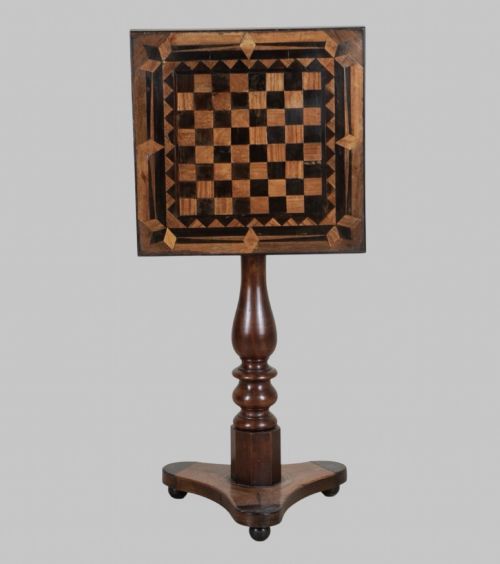
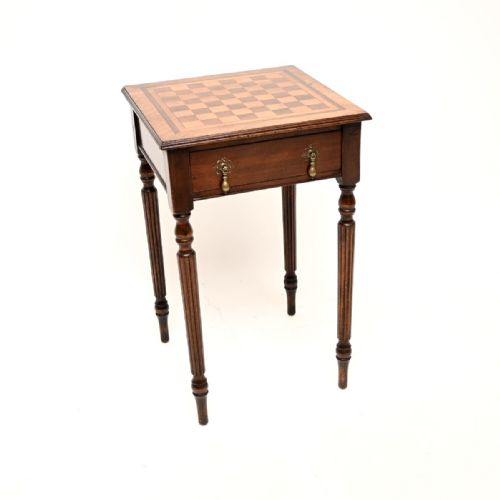
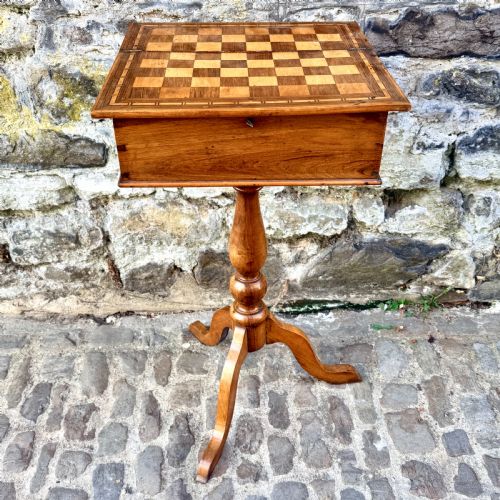
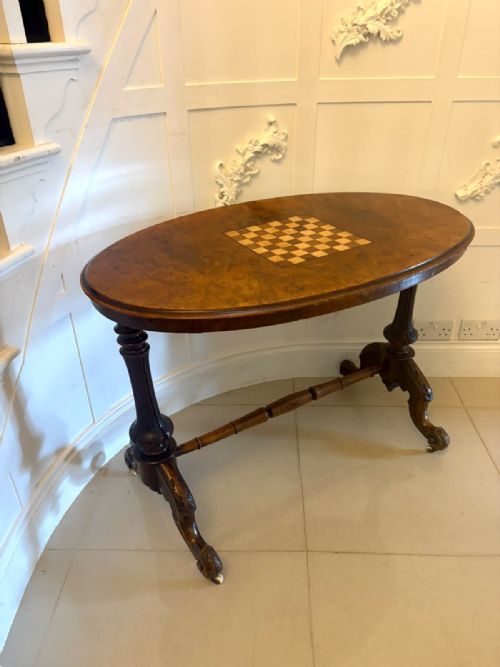
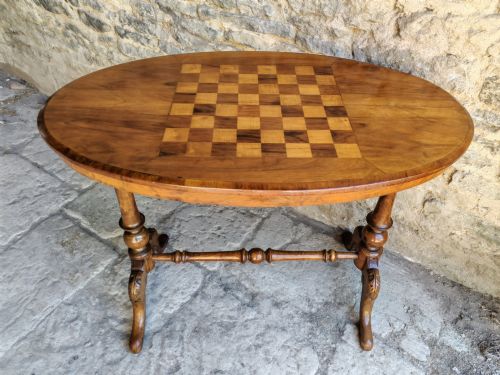
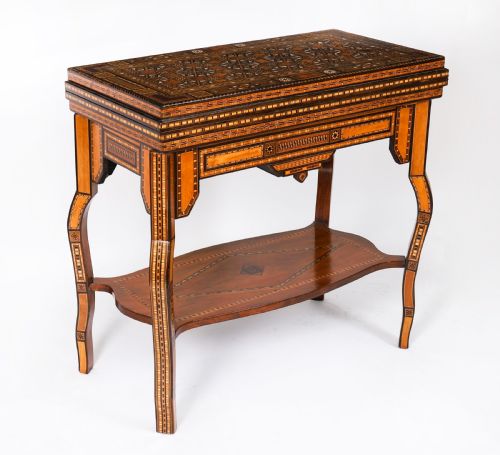
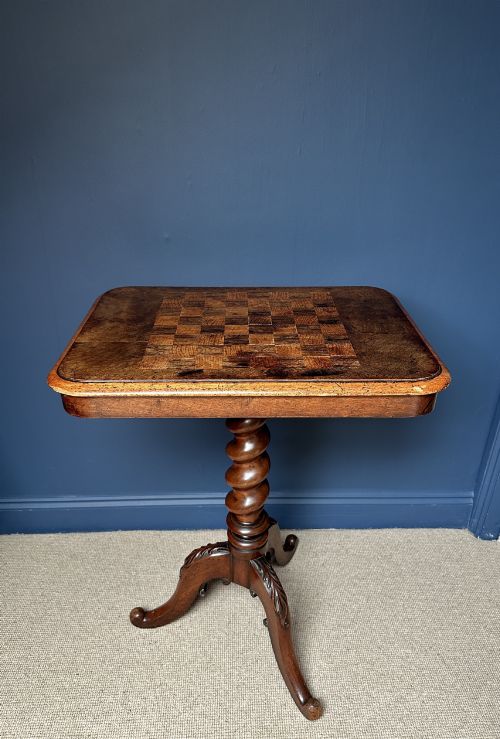
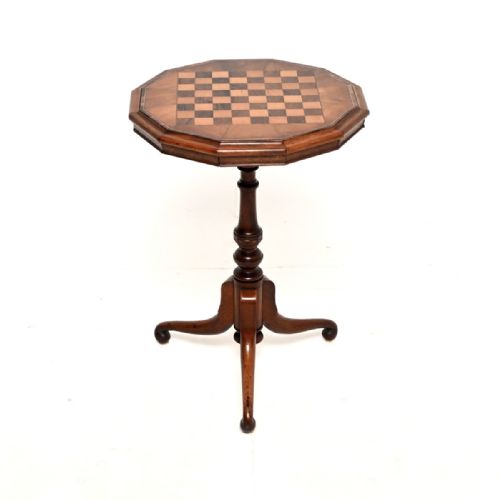
An inlaid walnut games table combines domestic utility with social recreation, most commonly appearing in Victorian forms from the mid to late nineteenth century. These pieces function as fold-over card tables, tripod tables, and multi-purpose sewing or work tables incorporating chess, backgammon, and card playing surfaces.
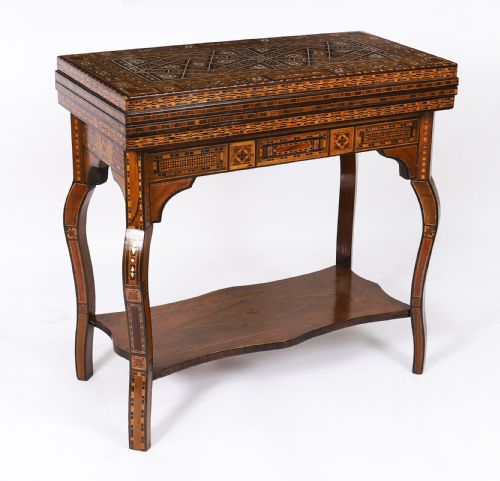
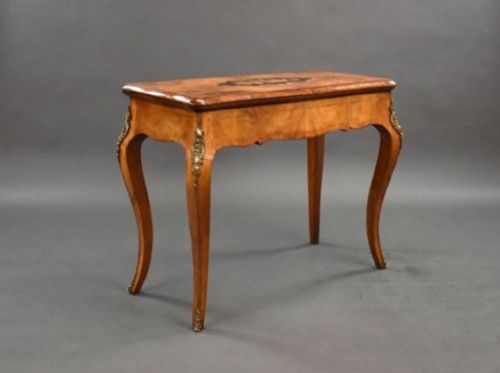
The dominant material signature across these pieces is burr walnut, chosen for its swirling grain, paired with intricate wood inlay and floral marquetry. Many examples originate from the Victorian period, while occasional variations include Edwardian or Syrian Ottoman styles from the early twentieth century.
Buyers encounter forms that pivot, fold, or lift to reveal integrated storage compartments for gaming pieces, sewing accessories, and stationery. The supporting structures range from pillar-and-tripod bases to pedestal columns and stretcher frames.
Distinguishing quality in walnut tables
Quality rests primarily on the depth and selection of the burr walnut veneer and the precision of the wood inlay work. Superior examples display tightly matched grain patterns across the folding leaves and crisp, unbroken geometric or floral marquetry.
The sophistication of the internal mechanism separates standard pieces from the finest survivors. Tables that successfully combine games surfaces with work compartments, sewing boxes, or desk configurations demonstrate higher levels of period cabinet-making skill.
Retail Price Guide 2026
Typical UK retail prices for inlaid walnut games table, calculated from the Sellingantiques database of over a million retail prices indexed since 2003. This retail price guide relies exclusively on Sellingantiques data; no external sources or auction records are used, so the figures do not describe the wider market.
Beneath the folding chessboard, many tables hide secret compartments just waiting to misplace your backgammon dice forever.
The Inlaid Walnut Games Table Glossary
- Burr walnut
- A veneer sliced from the woody growths of a walnut tree, yielding a swirling, highly decorative grain pattern. This timber forms the primary visual surface on superior nineteenth-century examples.
- Marquetry
- The art of applying small pieces of veneer to a structure to form decorative patterns and pictorial designs. Makers used mixed timbers to create floral and geometric motifs across the table tops.
- Tripod table
- A piece supported by a central pillar resting on three spreading feet. This construction allows the top to tilt or remain fixed depending on the table's specific domestic function.
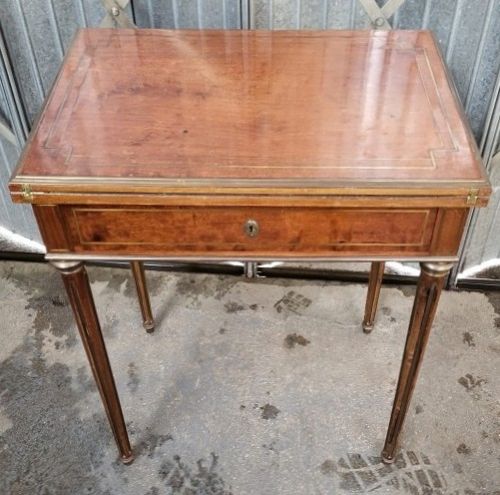
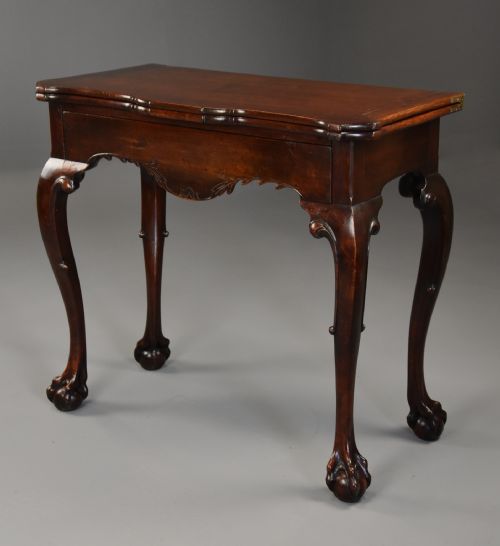
- Fold-over top
- A hinged table surface that opens to double its enclosed area, frequently revealing a baize-lined card playing space beneath. The interior often conceals storage wells for chess pieces and counters.
- Ormolu
- Gilded bronze mounts applied to furniture edges and legs for decorative accent. This technique appears on select Edwardian and French-influenced pieces.
Frequently Asked Questions
How do I use an inlaid walnut games table today?
These tables function well as central display pieces, side tables, or occasional desks in a modern living space.
Opening the fold-over top reveals a compact surface suitable for card games, chess, or writing letters while retaining period character.
What games were these tables designed for?
The integrated boards and compartments accommodated traditional pastimes including chess, draughts, backgammon, and card games.
Many examples feature reversible or removable tops alongside shallow drawers for storing playing pieces.
How can I tell a Victorian table from later styles?
Victorian examples dating from around 1860 to 1880 rely heavily on burr walnut veneers, floral marquetry, and robust tripod or pillar bases.
Later pieces from the Edwardian era often introduce decorative ormolu mounts and lighter framing structures.
Why do some games tables include sewing boxes?
Combined work and games tables reflect nineteenth-century multi-functional furniture design intended to maximise utility in domestic parlours.
Under-table compartments and hanging silk bags provided storage for needlework while the top surface remained dedicated to recreation.