


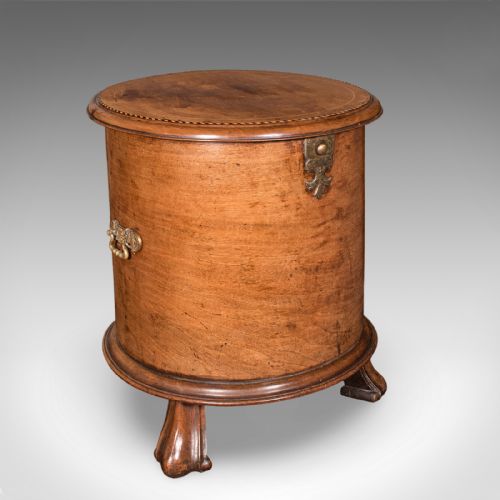


Inlaid Walnut Caddy
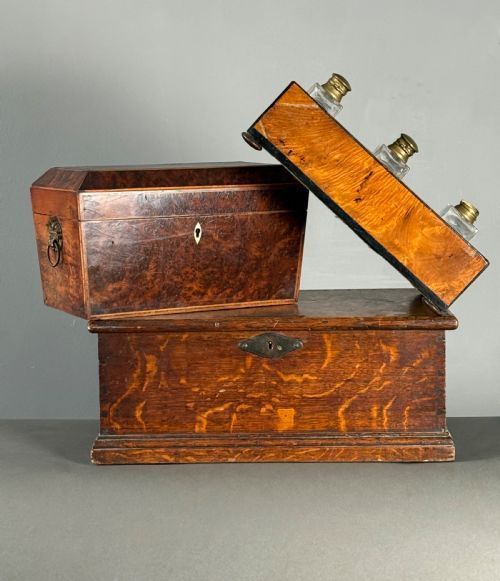
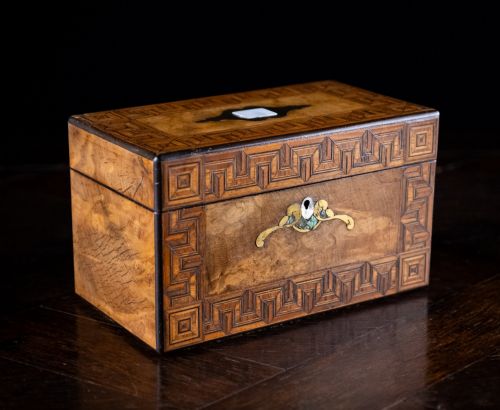
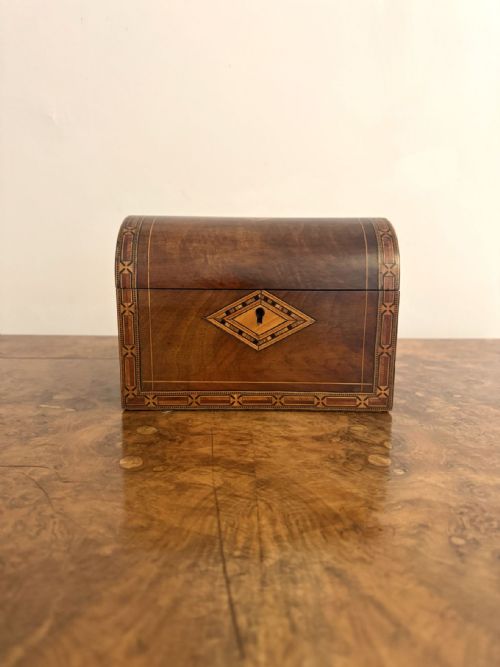
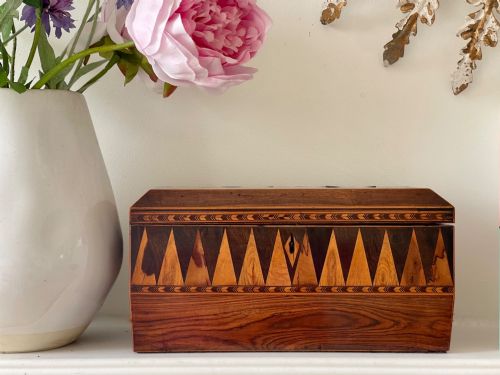
These inlaid walnut caddy pieces are timber boxes designed for holding dried leaves, displaying the rich grain and precision inlay that defined Georgian and Victorian domestic storage.
Inlaid Walnut Caddy
An inlaid walnut caddy is primarily a tea storage box, though the term also stretches to encompass related luxury containers like sewing boxes, decorative boxes, and small cabinet pieces. Most examples encountered here originate from the Georgian, Regency, and Victorian eras, spanning the eighteenth and nineteenth centuries.
The standard forms include rectangular tea caddies, sarcophagus double tea caddies, and domed variants, alongside related pieces such as teapoys and cellar-style stands. Makers applied decorative techniques to both domestic English items and continental pieces like French Napoleon III liquor caves.
Materials and construction
The primary construction relies on walnut and burr walnut, valued for their deep, figured grain, often supported by secondary timbers like elm. Artisans embellished these surfaces with intricate parquetry, marquetry, and Tunbridge inlay utilising contrasting woods such as boxwood.
Further textural contrast came from applied details in brass and mother of pearl, creating geometric patterns or pictorial bands. Interiors frequently featured fitted compartments, sometimes retaining internal mixing bowls or crystal decanters.
Some caddies kept the servants away by hiding the key inside a secret compartment that only opened after tilting the box sideways.
Assessing craftsmanship
Quality rests on the precision of the timber selection and the execution of the inlay work. Burr walnut with rich, highly figured movement commands attention, while crisp, tight parquetry and well-aligned Tunbridge banding indicate superior workshop standards.
The integrity of the construction, the survival of fitted internal lids or original hardware, and the harmony of contrasting materials like boxwood and mother of pearl separate standard utilitarian containers from finer parlour pieces.
Henry Hollamby
The Inlaid Walnut Caddy Glossary
- Tunbridge inlay
- A meticulous form of woodworking originating in Kent, creating mosaic patterns from thousands of tiny wood blocks. The resulting bands depict geometric designs or floral motifs.
- Burr walnut
- Timber taken from the wart or burl of a walnut tree, producing swirling, highly decorative grain patterns. It provides a dramatic surface for nineteenth-century boxes.
- Parquetry
- Geometric wood inlay forming regular patterns like cubes or herringbone across a surface. Artisans used contrasting timbers to create an optical sense of depth.
- Sarcophagus
- A box shape featuring a domed or steep-sided lid sloping up to a flat top, mimicking ancient stone coffins. This silhouette was popular for larger Regency and Victorian tea caddies.
- Teapoy
- A small table fitted with a lidded box on top designed to hold tea canisters and sugar. These stood beside chairs in polite drawing rooms.
Inlaid Walnut Caddy: Frequently Asked Questions
What was inside an inlaid walnut caddy?
These boxes held valuable dried tea leaves under lock and key, protecting them from damp and domestic staff in Georgian and Victorian households.
Inside, you typically find two foil-lined or wooden compartments for different teas, occasionally accompanied by a central glass mixing bowl.
How do I date an inlaid walnut caddy?
Dating relies on combining the overall silhouette, the style of the inlay, and the interior hardware. Georgian examples tend to favour restrained rectangular proportions with simple stringing, whereas Victorian pieces often adopt sarcophagus shapes or busy Tunbridge ware.
Examine the construction of the interior compartments and the type of hinges used, as these mechanical details shifted visibly across the decades of the nineteenth century.
How do I care for burr walnut veneer?
Burr walnut requires stable humidity and protection from direct sunlight to prevent the thin decorative veneers from drying out and lifting. Keep the timber nourished with appropriate beeswax rather than modern silicon polishes.
Avoid placing these boxes near radiators or open fires, as sudden temperature shifts cause the historic glue beneath the parquetry to fail.
Are all these boxes meant for tea?
While tea storage accounts for the majority of these items, the category also includes sewing boxes, liquor caves, and tabletop cabinets sharing identical decorative vocabularies.
Makers applied the same mastery of walnut, brass, and mother of pearl across various tabletop storage forms intended for the polite drawing room.