
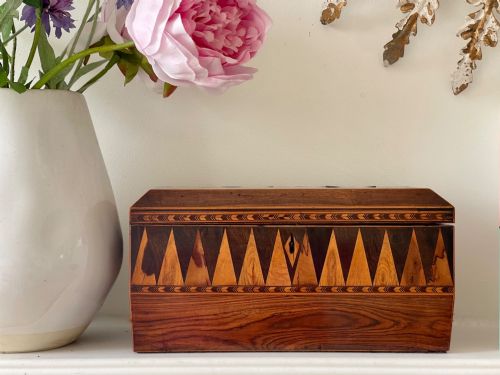

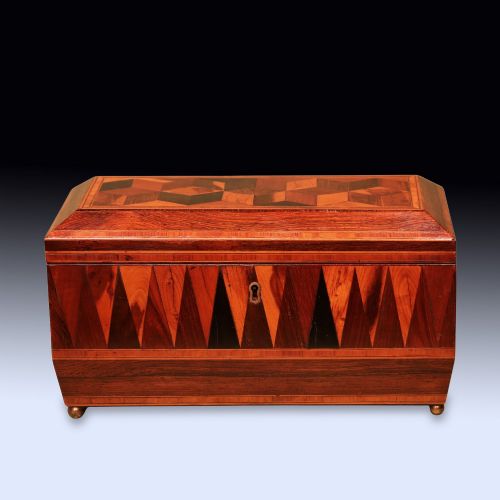


Inlaid Timber Tea Box
These inlaid timber tea box examples combine fine cabinetwork with historic utility, offering a decorative vessel for dry leaves that still organises small treasures today.
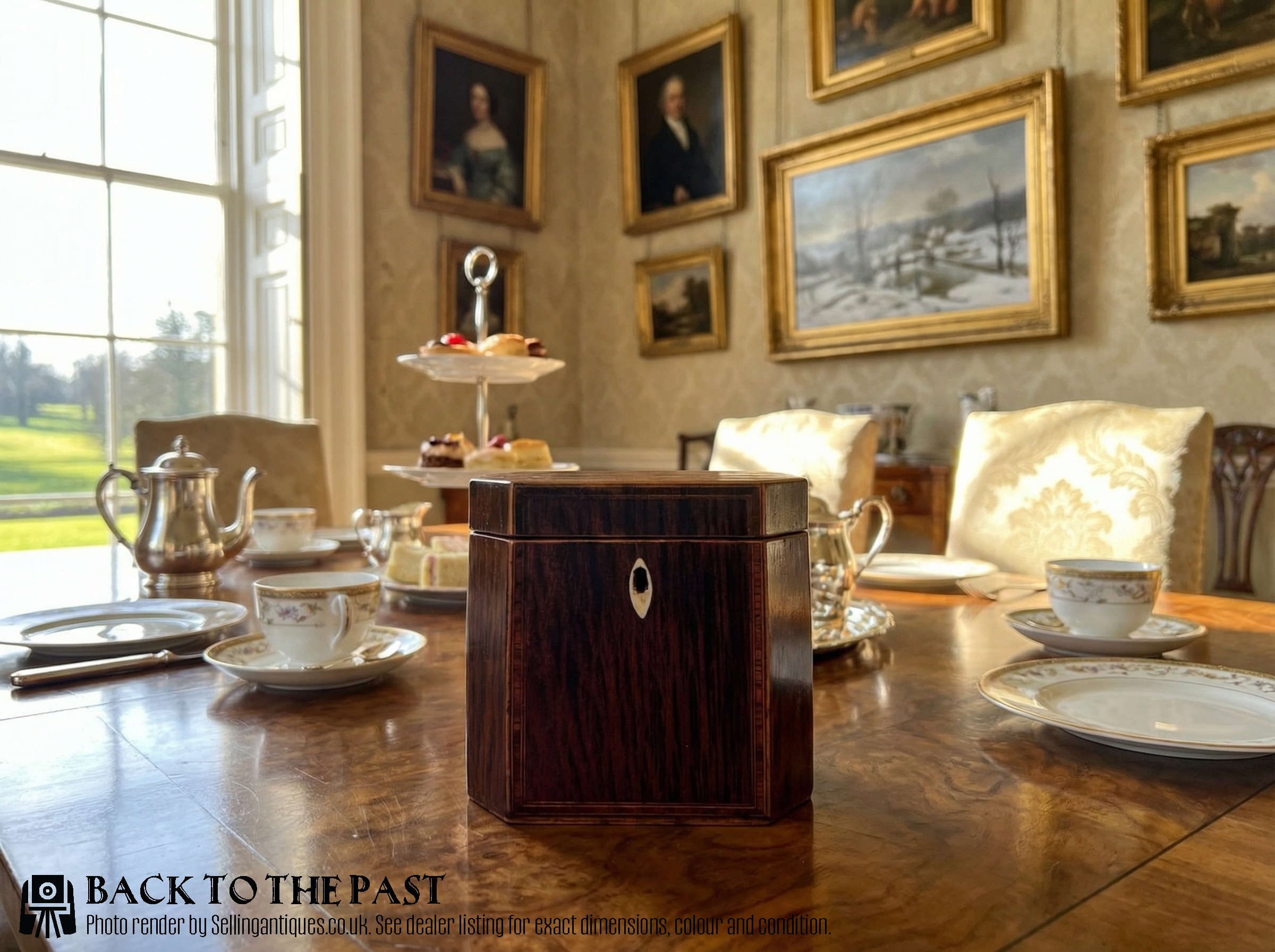
Inlaid Timber Tea Box
An inlaid timber tea box is a lidded container designed to store and preserve loose leaves during periods when tea was a costly commodity. These pieces range from substantial George III specimens to later Regency and Victorian examples, alongside occasional Art Deco variations.
The forms on this page include octagonal caddies, tea chests with fitted interiors, and related keepsake boxes. Buyers frequently encounter Georgian and 19th Century iterations featuring contrasting veneers and decorative parquetry.
Originating primarily from English workshops, these boxes reflect changing domestic habits and interior tastes across the eighteenth and nineteenth centuries. The survival of interior fittings and original keys varies across the selection.
Materials and construction methods
Cabinetmakers constructed these boxes using a carcase of native or exotic woods, applying fine veneers such as rosewood, mahogany, satinwood, coromandel, and partridge wood to the exterior surfaces. Decorative elements rely heavily on contrasting timber stringing and geometric parquetry patterns.
Tunbridge Ware examples utilise meticulous mosaic techniques, assembling tiny coloured wood segments to form pictorial or geometric motifs. Specialised inlays such as shell designs or sunray patterns further distinguish the surface decoration.
The listings span multiple centuries, incorporating George III, Regency, Victorian Tunbridge Ware, and Art Deco pieces.
Factors of quality and execution
Quality rests upon the precision of the cabinetwork, the complexity of the veneer selection, and the integrity of the surface timber. Finer examples display harmonious grain alignment and crisp execution of parquetry or shell inlays.
The presence of intact fitted interiors, original compartment lids, and functioning brass hardware elevates the standing of an individual piece. Lesser examples exhibit simplified construction or replaced components that alter the original character.
Henry Hollamby
The Inlaid Timber Tea Box Glossary
- Parquetry
- Geometric wood mosaic work used to create patterned surfaces on boxes and furniture. This technique involves arranging small wooden tiles of contrasting colours into repeating motifs.
- Tunbridge Ware
- Decorative woodwork originating from Kent, featuring mosaic designs built from thousands of tiny wood blocks. Artisans cut these blocks to form detailed floral or geometric pictures.
- Stringing
- Thin lines of contrasting wood inlaid into grooves on the surface of furniture or boxes. It creates delicate framing borders around panels and lids.
- Veneer
- A thin layer of decorative timber applied to a sturdier underlying wood carcase. This method allows cabinetmakers to utilise expensive or figured grains efficiently.
Inlaid Timber Tea Box: Frequently Asked Questions
What were these boxes originally used for?
These boxes served to store and lock away expensive loose tea leaves in the Georgian and Victorian household. The host kept the key to control access to the valuable contents.
Over time, many of these containers transitioned into general keepsake or stationery boxes once tea packaging changed.
How do I identify a Georgian tea caddy?
Georgian pieces typically exhibit classical proportions, restrained brass hardware, and timber choices such as mahogany, satinwood, or partridge wood. Details often include geometric stringing or shell inlays.
Construction methods from this era involve solid secondary timbers and hand-cut joinery within the interior compartments.
Are the interior fittings usually original?
Many surviving examples retain their original internal compartments, mixing lidded canisters and glass or wooden sugar bowls. The presence of these fitted elements depends on how heavily the box was used.
Some pieces have had their internal dividers removed or altered during their long history of domestic use.
How should I care for timber inlays?
Keep these boxes away from direct sunlight and steady heat sources to prevent the fine veneers and delicate wood stringing from drying out. Stable indoor humidity protects the structural joints and surface finish.
Applying occasional appropriate wax preserves the sheen of the polished timber without harming the historic surface.