
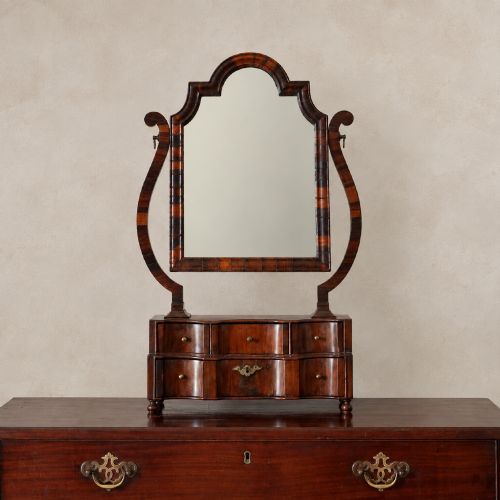
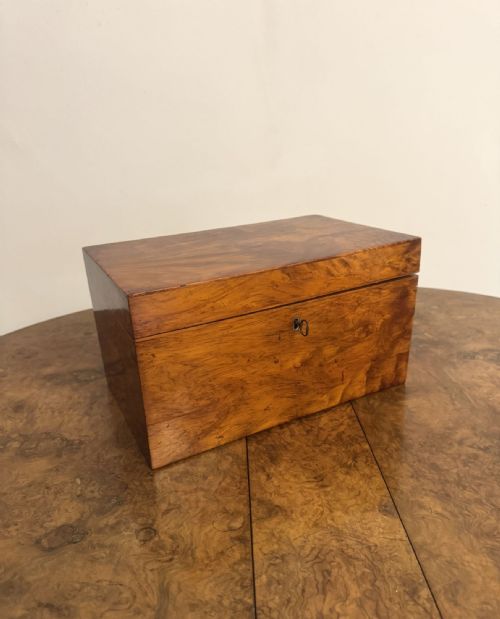


Georgian Veneered Box
A georgian veneered box brings tactile warmth and cabinet-making skill into a room, offering small-scale storage with figured timber surfaces.
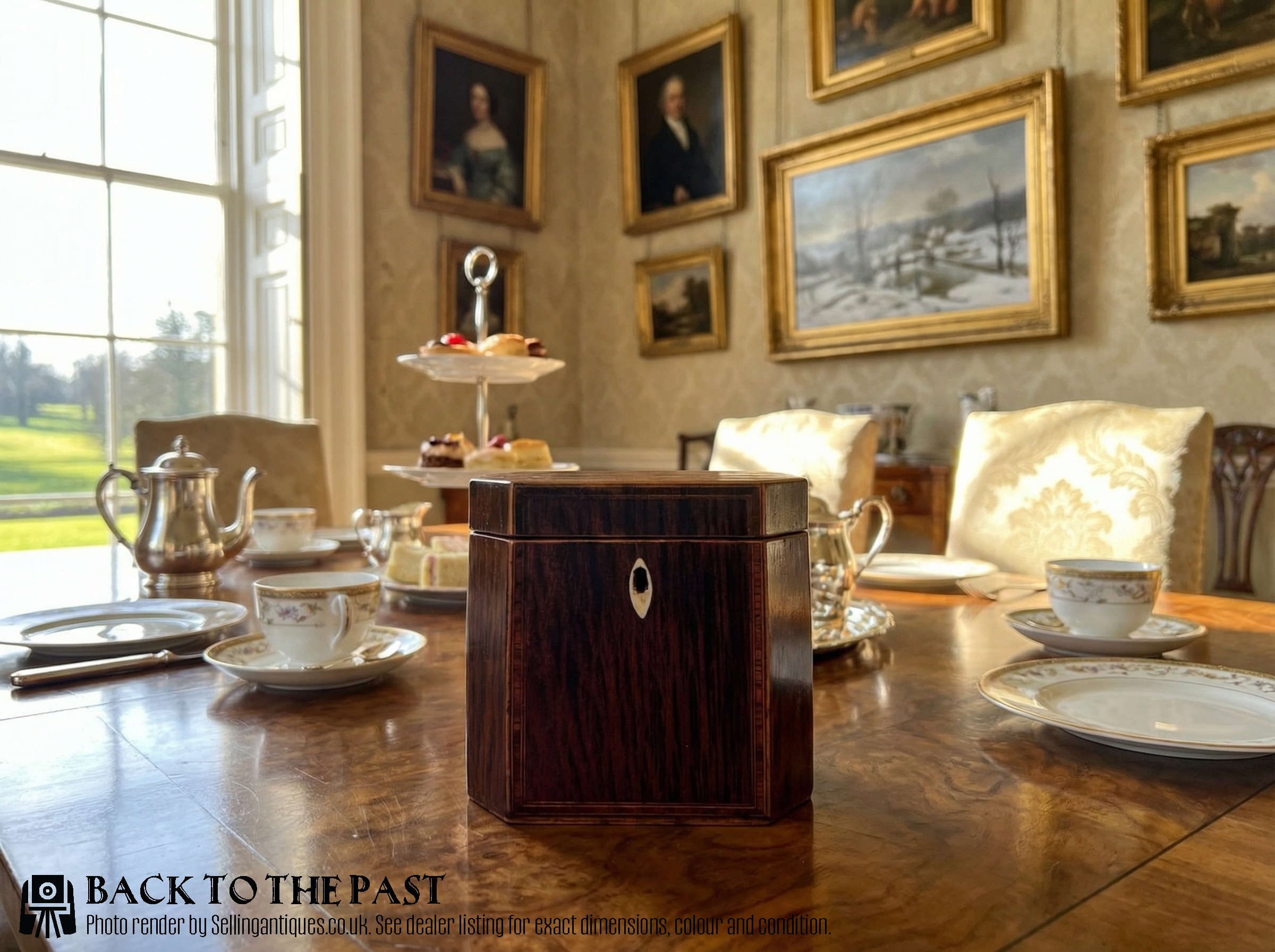
Georgian Veneered Box
When you search for a georgian veneered box, you encounter compact lidded containers designed for tea, games, or personal grooming. These pieces range from tea caddies and tea chests to toilet mirrors and games boxes, spanning periods from Queen Anne through to the Regency era.
The most common examples on this page are tea caddies and tea chests, alongside tabletop toilet mirrors and chest of drawers forms. They originate across the eighteenth and nineteenth centuries, carrying stylistic influences from George II and George III reigns.
Materials and construction
Cabinet-makers constructed these boxes using dense primary timbers overlaid with decorative sliced veneers including walnut, mahogany, laburnum, burr thorn wood, and amboyna. Fine details often incorporate contrasting inlay work, partridge wood, tortoiseshell, bone, and brass fittings.
Makers applied thin sheets of figured wood to structural carcases to showcase complex grain patterns and rich natural colours. Glass elements appear on toilet mirror plates, while internal compartments utilise fitted sections for storage.
Assessing quality
Quality rests upon the choice of timber and the dexterity required to lay intricate veneers across small surfaces. Richly figured grains and precise parquetry inlay indicate superior workshop output compared to plain or heavily restored examples.
The preservation of original brass hardware, internal fitments, and stable timber construction distinguishes finer boxes. Finer specimens display harmonious proportions and careful matching of wood grains across the lid and sides.
The Georgian Veneered Box Glossary
- Veneer
- A thin slice of decorative timber applied to a secondary wood carcase. This technique allowed cabinet-makers to display striking grain patterns without using solid costly lumber.
- Tea Caddy
- A small lidded box designed for storing loose tea leaves. These containers often featured interior compartments and locking lids to protect expensive provisions.
- Parquetry
- Geometric wood inlay work arranged in patterns. Makers used contrasting timbers to create decorative surfaces on boxes and game boards.
- Toilet Mirror
- A tabletop looking glass mounted on a small box base fitted with drawers. These dual-purpose items served dressing rooms during the eighteenth and nineteenth centuries.
Georgian Veneered Box: Frequently Asked Questions
What is a georgian veneered box used for?
These boxes served various domestic purposes including storing dry tea leaves, holding game pieces, or organising personal items on dressing tables. Interiors frequently included compartments or small canisters.
Today, they function as decorative tabletop objects or small-scale storage containers for modern items while retaining their original aesthetic character.
What woods were used for these boxes?
Cabinet-makers utilised a diverse selection of native and exotic timbers including walnut, mahogany, laburnum, amboyna, and burr thorn wood. Decorative accents often incorporated bone, tortoiseshell, and brass.
The contrasting colours and striking grain patterns of these materials defined the visual appeal of the finished piece.
Are these boxes fragile?
Veneered surfaces require stable environmental conditions to prevent timber movement or lifting of the thin wood layers. Gentle cleaning with appropriate polishes maintains the finish without harming the aged materials.
Keeping them away from direct heat sources helps preserve both the timber and the original brass mounts.