
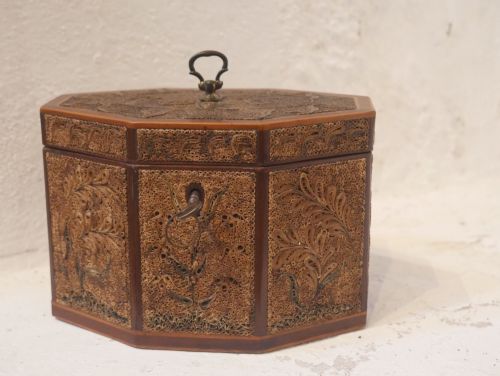


Octagonal Tea Chest
An octagonal tea chest is a refined household container built for storing dried leaves during the Georgian and Regency periods.
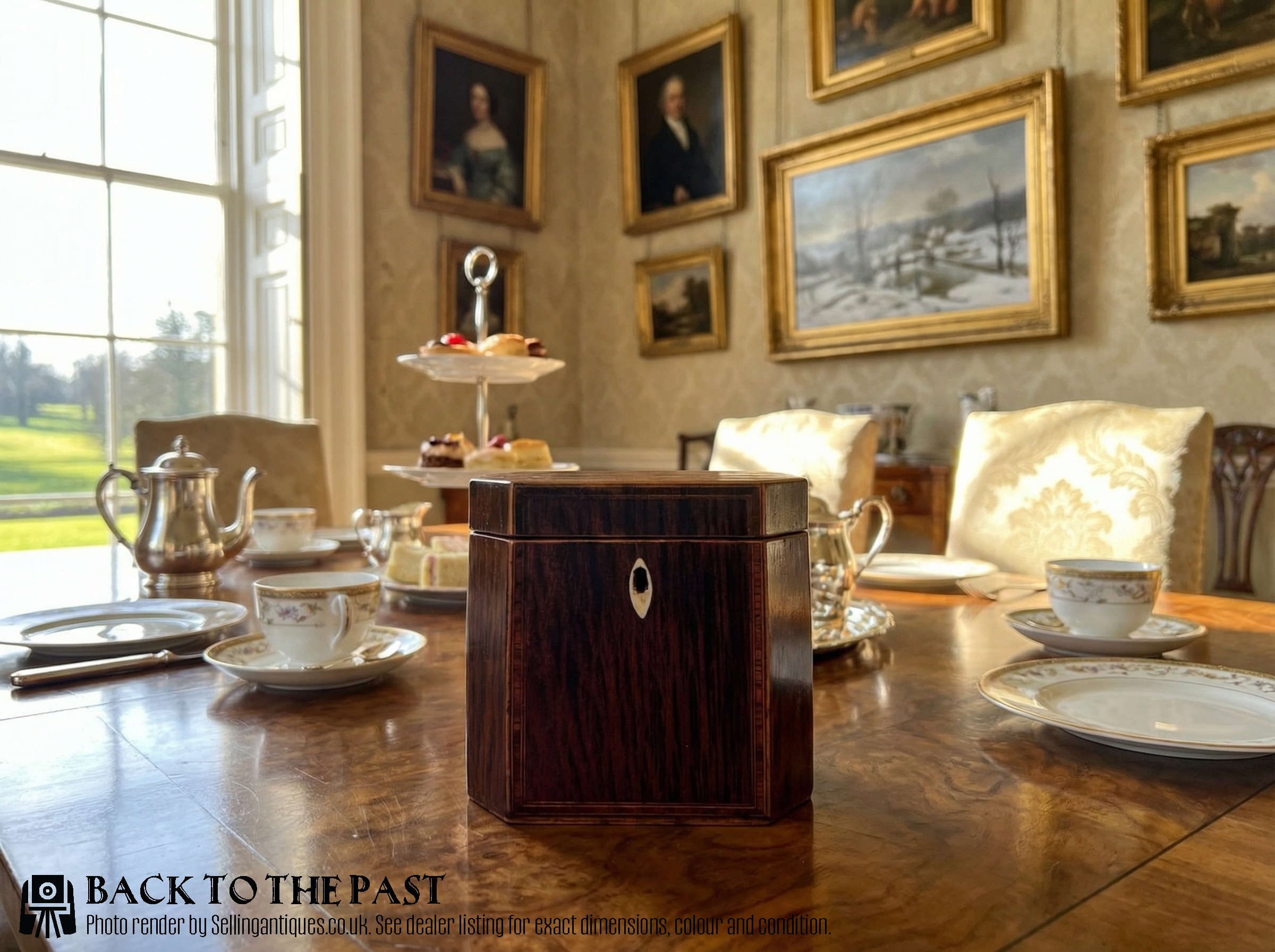
Octagonal Tea Chest
An octagonal tea chest presents an eight-sided form designed to hold precious leaves securely under lock and key. These pieces date principally from the eighteenth and nineteenth centuries, spanning the Georgian, Regency, and William IV periods. The selection here includes both tabletop caddies and larger freestanding teapoys mounted on stands.
Makers utilised exotic timbers and specialised techniques to shape these eight-sided receptacles. Examples range from Chinese export lacquer to British hardwoods inlaid with contrasting veneers and bone details. The geometric form allows light to play across multiple polished facets.
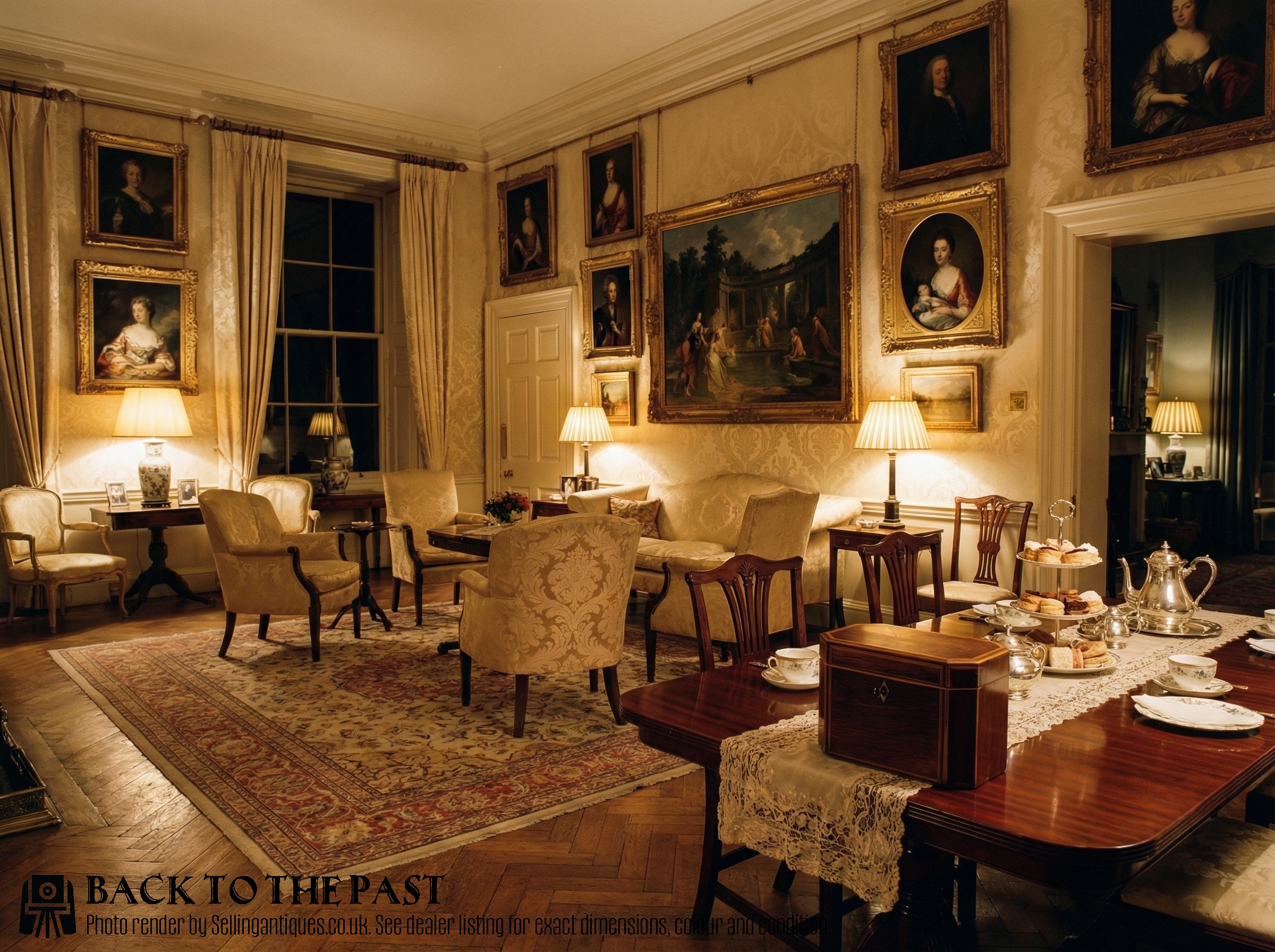
Materials and construction
Cabinetmakers constructed these chests using dense hardwoods such as mahogany, yew wood, harewood, and partridge wood. Carpenters applied fine stringing and shell inlays in satinwood and boxwood to accentuate the eight-sided geometry. Interior compartments often retained foil linings or secondary wooden lids to preserve the aroma of the leaves.
More ornate vessels featured tortoiseshell panels applied over metallic foils to create a rich, mottled depth. Brass handles, escutcheons, and hinges provided functional security and structural reinforcement for daily use.
The listings on this page include mahogany, yew wood, harewood, partridge wood, satinwood, tortoiseshell, and brass.
Distinguishing quality
Quality rests in the precision of the geometry and the selection of the timber figures. Flame mahogany veneers and intricate shell inlays require superior cabinetmaking skill to align cleanly across eight distinct angles. The presence of original fitted interiors and working locks elevates the standing of a piece.
The integrity of surface patination and the crispness of applied bone or brass elements determine the grade of the work. Maker attribution, particularly to established workshops like Gillows, separates standard production from exceptional examples.
Gillows
The Octagonal Tea Chest Glossary
- Teapoy
- A freestanding piece of furniture featuring a tea storage box mounted on a pillar and base, often incorporating mixing bowls inside. These stood in the drawing room for the hostess to prepare infusions.
- Escutcheon
- A protective metal plate surrounding the keyhole of a tea chest. This hardware prevents the surrounding wood from splintering when the key is inserted.
- Stringing
- A narrow strip of contrasting wood inlaid into the surface of a tea caddy to create geometric borders. Cabinetmakers used boxwood or ebony to frame the eight-sided panels.
- Partridge wood
- A dense tropical timber named for its spotted feather-like grain pattern. Furniture makers prized this exotic material for high-status Georgian tea caddies.
Octagonal Tea Chest: Frequently Asked Questions
What is an octagonal tea chest?
An octagonal tea chest is an eight-sided lidded box constructed during the eighteenth and nineteenth centuries to store high-value tea leaves.
These containers kept dry leaves secure and fresh in the formal rooms of substantial households.
How were these chests used?
The mistress of the house kept the leaves locked inside and doled them out daily, as tea was an expensive commodity.
Servants brought the tea caddy to the parlour so the host could mix the blend before brewing.
How do I date a tea caddy?
Dating relies on examining the timber species, construction methods, escutcheon styles, and inlay materials used by the cabinetmaker.
Georgian pieces often display satinwood stringing, whilst Regency examples introduce tortoiseshell and freestanding stand configurations.
Are teapoys and tea caddies the same?
A tea caddy is a tabletop box designed to be lifted and moved, whereas a teapoy is a larger tea chest mounted permanently on a pedestal stand.
Both served the same primary function of holding leaf tea securely.