

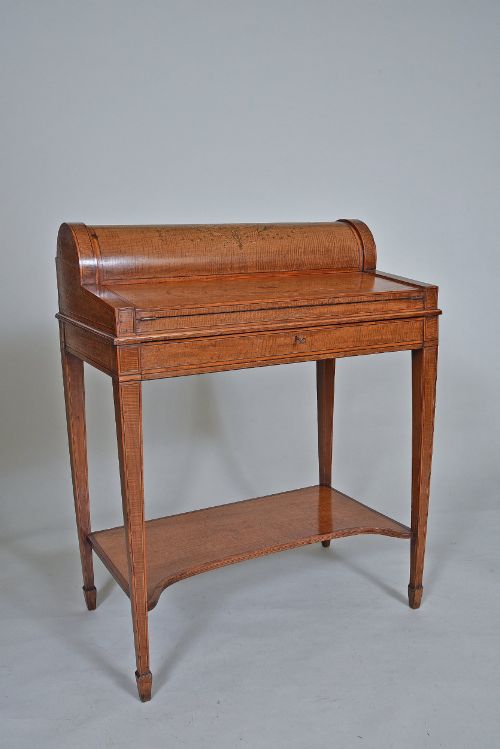
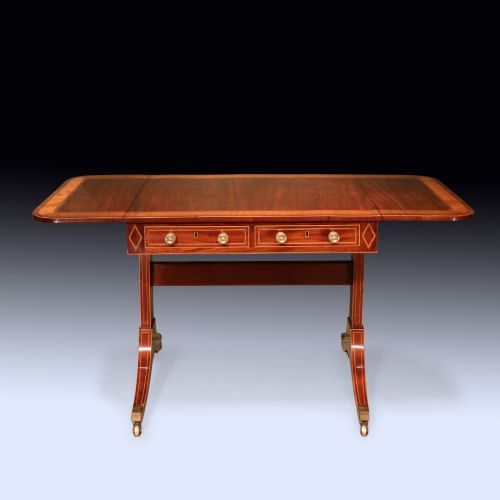
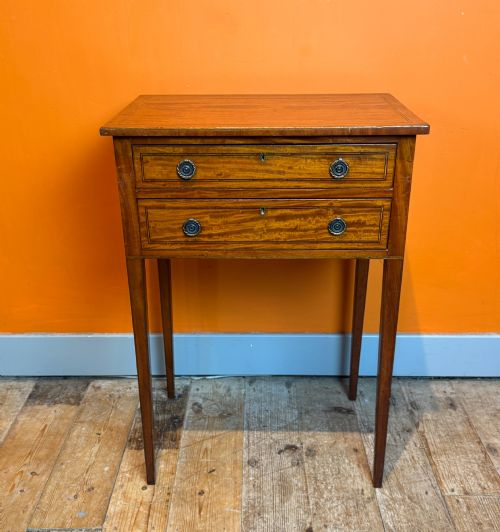
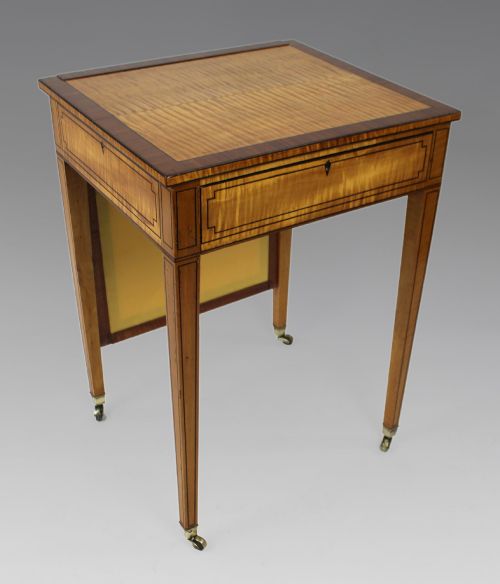

Inlaid Satinwood Writing Table
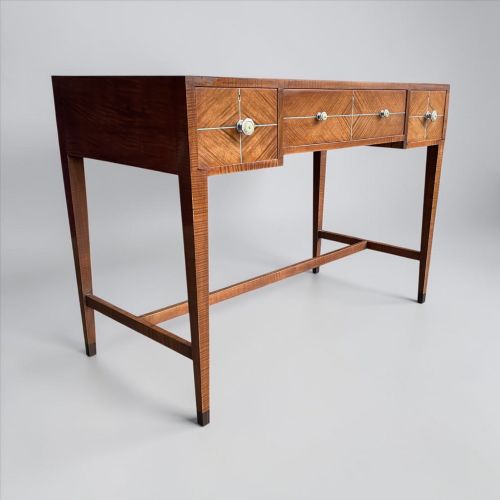
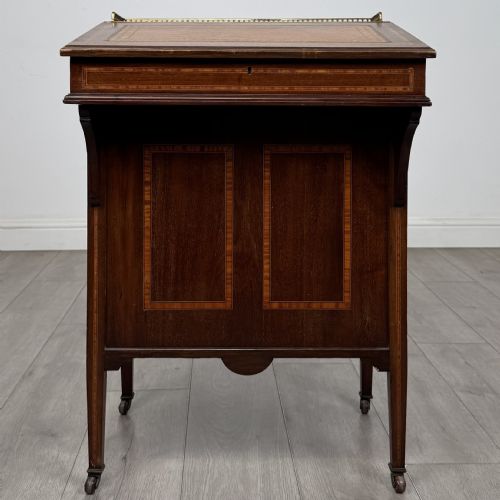
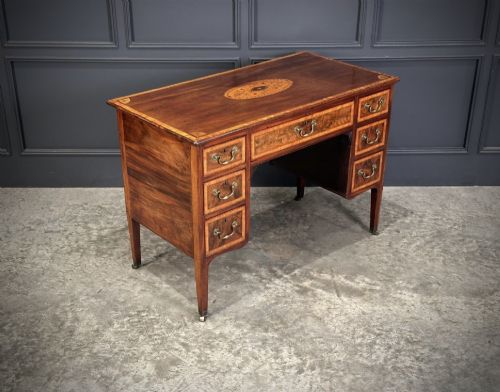
An inlaid satinwood writing table brings the luminous warmth of figured timbers and delicate marquetry directly to a study or drawing room.

Inlaid Satinwood Writing Table
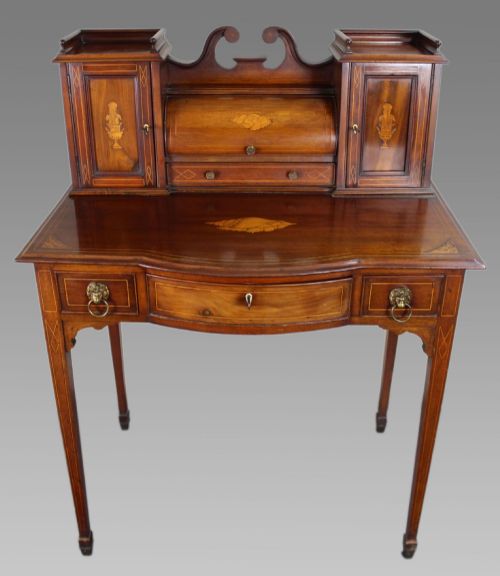
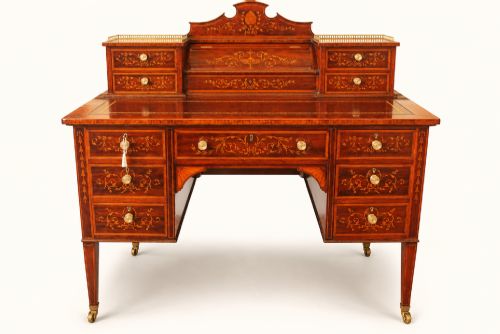
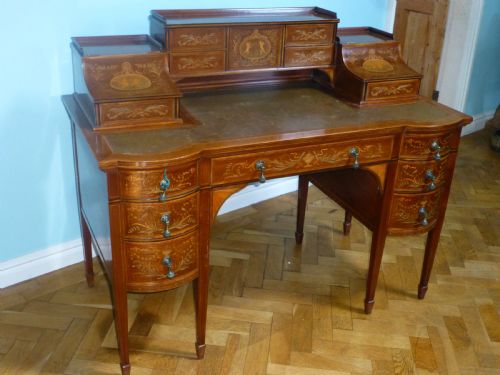
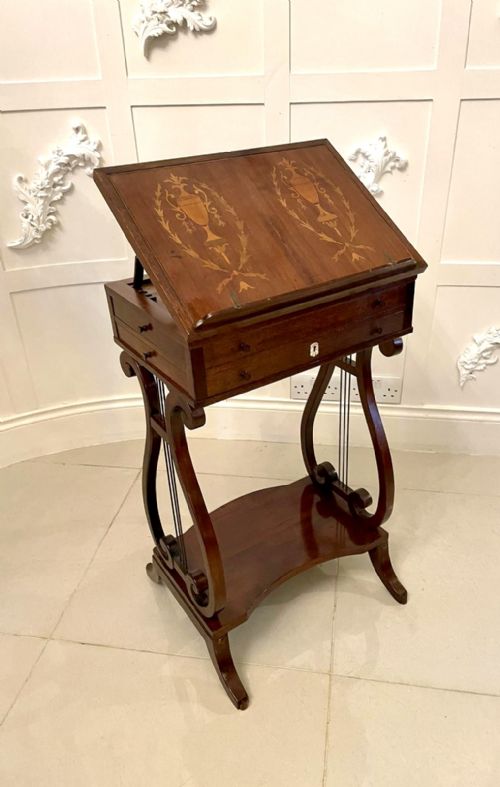
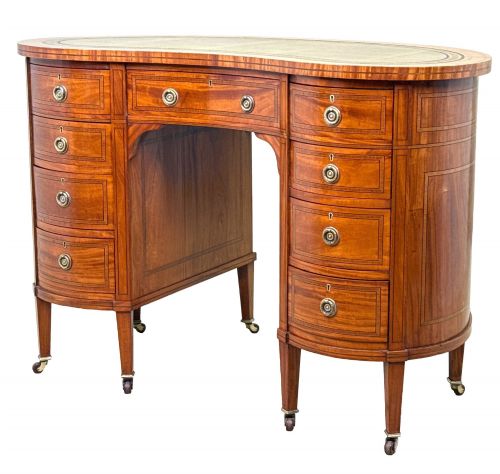
When you search for an inlaid satinwood writing table, you encounter pieces spanning the late eighteenth century, the Victorian era, and particularly the Edwardian period. The forms vary from compact ladies' writing desks and kidney-shaped tables to elaborate Carlton House desks and cylinder tops.
Edwardian and Sheraton Revival examples dominate the pieces seen today, frequently combining mahogany carcases with satinwood panels and intricate borders. Earlier eighteenth-century Georgian and Sheraton period pieces appear less often, offering simpler proportions and native timbers.
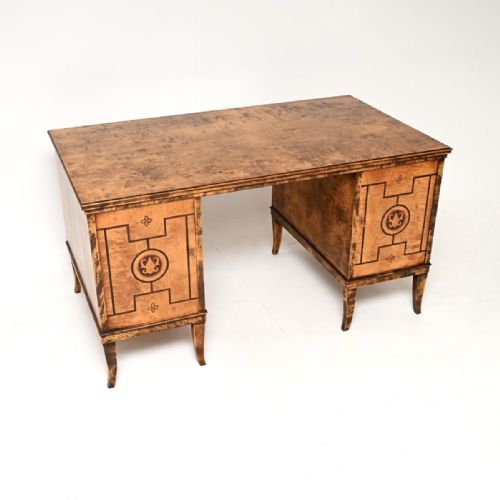
The assortment includes pedestal forms, freestanding writing tables, and occasional tables adapted for correspondence. Each version reflects the domestic requirements of its period, from grand library furnishings to delicate boudoir pieces.
How they were made
Cabinet makers utilised dense carcases of mahogany or oak as a stable foundation before applying fine veneers of satinwood across the primary surfaces. Contrasting timbers such as boxwood and rosewood were carefully cut for stringing and pictorial marquetry inlay.
Brass fittings, ormolu mounts, and hand-tooled leather writing surfaces were integrated into the superior desks and tables. Joinery relied on traditional dovetailing for drawers and secure tenon joints for the legs, ensuring structural integrity beneath the decorative veneers.
Inlaid Satinwood Writing Table Retail Price Guide 2026
Typical asking prices for inlaid satinwood writing table among the pieces listed under this phrase on Sellingantiques today, from the lower quarter to the upper quarter. They describe what is for sale here now, not the wider market.
Listings span the eighteenth, nineteenth, and twentieth centuries, uniting Georgian period pieces with Victorian and Edwardian Sheraton Revival examples.
What varies in quality
The standard of a piece rests heavily on the crispness of the marquetry and the figuration of the satinwood grain itself. Fine examples display tightly controlled botanical or classical inlay without lifting veneers or clumsy repair work.
Maker attribution elevates certain tables, particularly those bearing the stamps of established London cabinet makers. The presence of original brass hardware, working locks, and untampered leather inserts further distinguishes superior examples from standard production.
Edwards and Roberts·Maple and Co·James Shoolbred·Donald Ross
The Inlaid Satinwood Writing Table Glossary
- Satinwood
- A lustrous, yellowish-brown tropical timber prized for its reflective grain and smooth texture. It serves as the primary veneer on fashionable late eighteenth and early twentieth-century desks.
- Carlton House desk
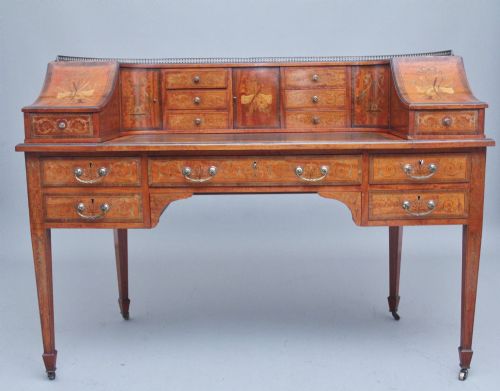
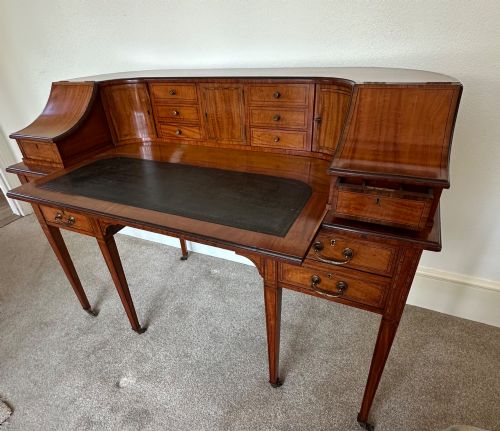
- A refined writing desk featuring a curved superstructure of small drawers and pigeonholes enclosing the writing surface. This form gained immense popularity during the Sheraton Revival period.
- Marquetry
- The art of forming decorative patterns and pictures by fitting together small veneers of different coloured woods. Craftsmen cut these elements precisely to create floral or geometric motifs.
- Stringing
- A thin, linear inlay of contrasting timber used to outline drawers, legs, and tabletops. It defines the geometric panels characteristic of Sheraton design.
- Kidney shape
- A curved desk or table silhouette designed to fit comfortably against the user's waist. This ergonomic form appears frequently in Edwardian satinwood pieces.
Inlaid Satinwood Writing Table: Frequently Asked Questions
What is a Carlton House desk?
A Carlton House desk is a distinctive writing table featuring a curved, stepped upper tier of small drawers and compartments wrapping around the back and sides of the writing surface. This form provides numerous pigeonholes for stationery and correspondence while maintaining a compact footprint in a room.
First created in the late eighteenth century, these desks were revived with great enthusiasm by Edwardian cabinet makers. They represent some of the most intricate and desirable writing furniture from the period.
How do I care for satinwood furniture?
Satinwood furniture requires protection from direct sunlight and extreme humidity fluctuations to prevent the delicate veneers from fading or lifting. Regular dusting with a soft, dry cloth maintains the surface without the need for heavy waxes.
When writing on the leather surface, use a blotter to prevent ink stains. Gentle application of microcrystalline wax once or twice a year keeps the polished wood nourished.
Are these tables suitable for daily use?
Many of these tables were built for daily correspondence and administrative duties, making them sturdy enough for modern laptop use or writing. However, the delicate satinwood veneers and antique leather tops demand a degree of care that heavier modern desks do not require.
Placing a desk pad or blotter on the writing surface protects the antique leather and wood from scratches. Ensuring the piece sits level prevents undue stress on the antique joinery.
How do I tell Edwardian revival from original Georgian?
Edwardian revival pieces typically display machine-sawn veneers, secondary timbers such as oak or deal with uniform machine cut dimensions, and bright, uniform satinwood. Eighteenth-century Georgian pieces reveal hand-cut internal elements, older patination, and subtle variations in construction technique.
Hardware styles also offer clues, as Edwardian manufacturers often utilised stamped brass handles styled after earlier eras. Examining the drawer linings and timber shrinkage provides definitive evidence of age.