
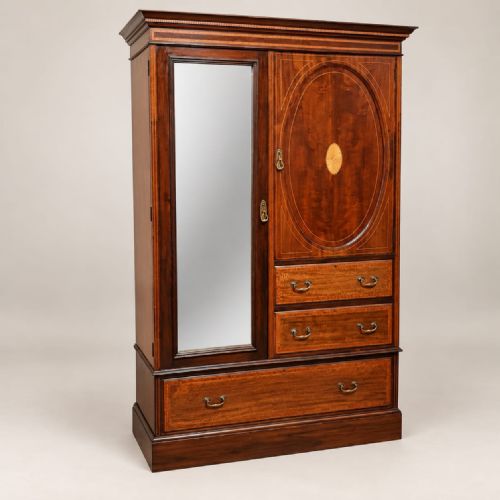
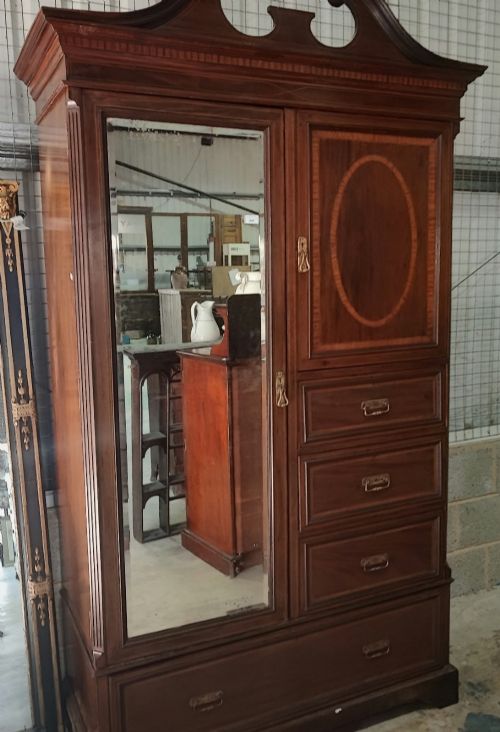
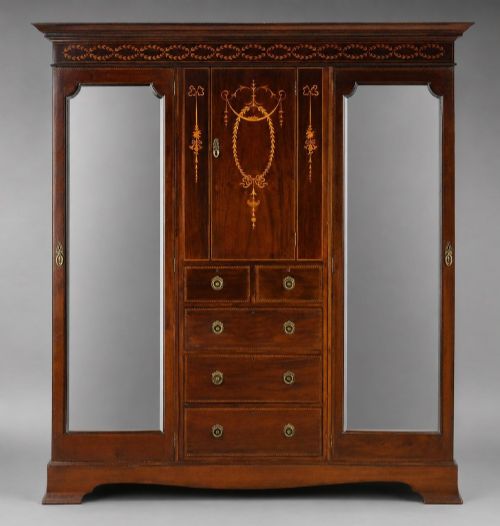
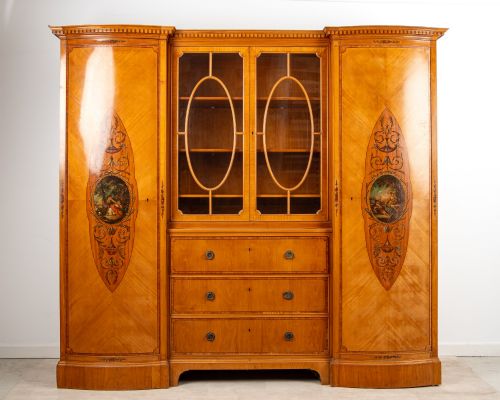
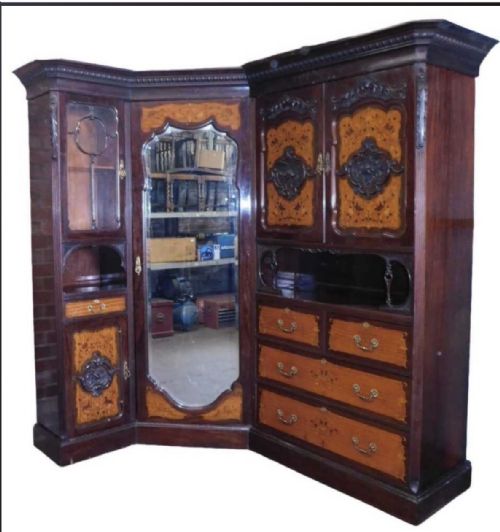


Inlaid Satinwood Compactum
These inlaid satinwood compactum pieces offer generous multi-section storage, combining fine cabinet-making with striking timbers.
Inlaid Satinwood Compactum
An inlaid satinwood compactum is a substantial wardrobe combining hanging space, drawers, and sometimes shelving or mirrored doors within a multi-section carcass. When you search for an inlaid satinwood compactum, you encounter sophisticated bedroom furniture from the late nineteenth century and the Edwardian period, often reflecting Sheraton Revival tastes.
The pieces on this page span Victorian and Edwardian eras, including examples from around eighteen eighty to nineteen hundred. Most items follow familiar formats such as triple wardrobes, breakfront designs, and corner configurations.
Makers such as Edwards and Roberts and Maples and Co produced notable examples, occasionally incorporating hand-painted panels alongside traditional stringing and marquetry. These wardrobe forms serve as prominent bedroom storage solutions with decorative presence.
Materials and construction methods
Construction relies upon cabinet timbers like mahogany and satinwood, enhanced by contrasting boxwood inlay and brass hardware. Artisans applied precise marquetry and stringing techniques to enrich the door panels and cornices.
Fitted interiors often incorporate mirror glass in the doors alongside internal drawers and sliding linen trays. Hand-painted panels appear on selected Edwardian pieces, adding pictorial detail to the satinwood surfaces.
Several wardrobes hide full-length mirror glass inside their doors, offering a private reflection while you dress.
Judging quality and craftsmanship
Quality rests upon the crispness of the boxwood inlay, the figuring of the satinwood timber, and the architectural proportion of the breakfront or multi-section carcass. Superior examples demonstrate refined marquetry work and integrated internal fittings rather than simple surface decoration.
The integration of original brass hardware, sound mirror glass, and well-fitted internal drawers separates standard production from pieces bearing maker attributions like Maples and Co or Edwards and Roberts.
Edwards and Roberts·Maples and Co
The Inlaid Satinwood Compactum Glossary
- Compactum
- A multi-section wardrobe designed to provide comprehensive clothing storage including hanging space, shelves, and internal drawers. This format maximises bedroom storage efficiency.
- Satinwood
- A lustrous, fine-grained yellow timber prized for cabinet-making and decorative veneers. It forms the primary visual surface on many Edwardian pieces.
- Marquetry
- Decorative veneer work arranged in pictorial or geometric patterns using various coloured woods. Craftsmen use this technique to adorn door panels.
- Stringing
- Thin strips of contrasting wood inlaid into grooves on furniture surfaces to create linear borders. Boxwood is frequently utilised for this purpose.
Inlaid Satinwood Compactum: Frequently Asked Questions
What is an inlaid satinwood compactum?
An inlaid satinwood compactum is a large nineteenth or early twentieth-century wardrobe featuring multiple internal sections for comprehensive clothing storage. These pieces typically combine hanging space with drawers and shelving.
They stand out through their pale satinwood veneers and contrasting decorative inlay work, frequently following Victorian or Edwardian stylistic traditions.
How do I date an inlaid satinwood compactum?
Dating relies upon examining construction methods, timber choices, and stylistic markers such as Sheraton Revival influences. Pieces generally originate from the Victorian era through to around nineteen hundred.
Maker signatures or stamps from firms like Maples and Co or Edwards and Roberts also assist in establishing a firm period of manufacture.
How were these wardrobes used historically?
These wardrobes served as the central storage furniture in Victorian and Edwardian bedrooms, housing entire wardrobes of contemporary clothing. The multi-section design allowed owners to separate hanging garments from folded linens and accessories.
Mirrored doors fitted to the exterior provided functional reflection for dressing within the bedroom.
How do I care for satinwood furniture?
Satinwood surfaces require gentle maintenance using soft cloths and avoidance of direct sunlight to prevent timber fading. Maintaining stable room humidity protects the underlying veneers and intricate boxwood inlay.
Harsh chemical polishes should be avoided in favour of traditional wax treatments suited to antique cabinet-work.