
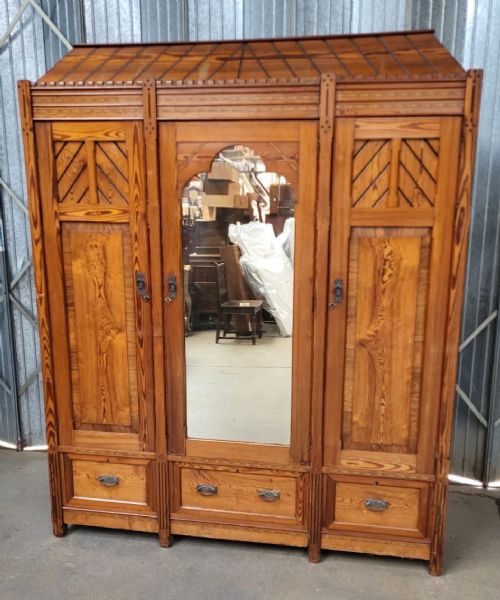


Edwardian Inlaid Triple Armoire
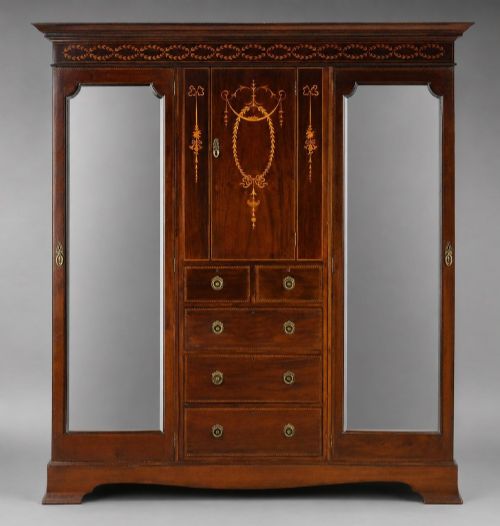
An edwardian inlaid triple armoire provides monumental bedroom storage with rich mahogany, satinwood, and delicate stringing.
Edwardian Inlaid Triple Armoire
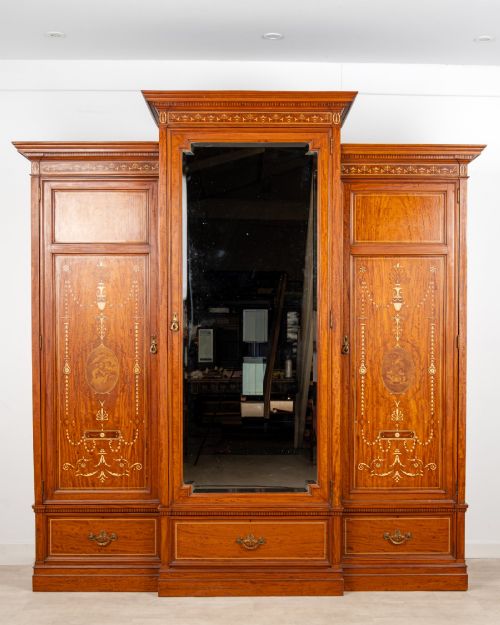
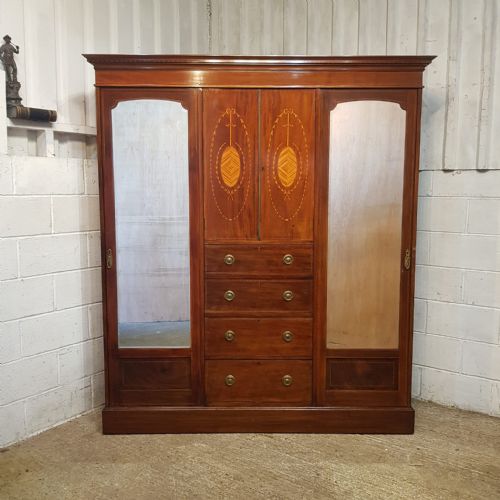
An edwardian inlaid triple armoire offers substantial scale and tripartite division, typically featuring flanking hanging spaces with a central section dedicated to shelving, drawers, or mirrored doors. These large wardrobes emerge primarily from the Edwardian period and around nineteen hundred, alongside Victorian examples.
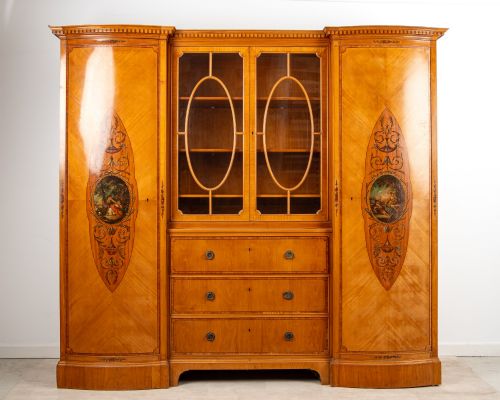
The prevailing timbers on this page are mahogany, satinwood, oak, pitch pine, and rosewood, frequently enhanced with contrasting wood inlays and decorative stringing. Many pieces incorporate central mirrored doors flanked by timber panels, creating depth and reflection within a bedroom interior.
Beyond standard wardrobe configurations, variations include compactum designs combining hanging space with internal drawers, as well as Arts and Crafts interpretations that favour structural honesty and simpler timber grain.
How they were made
Cabinet makers constructed these large wardrobes using solid timbers such as mahogany, oak, and pitch pine for structural integrity, often applying fine veneers of satinwood or mahogany to expansive surfaces. The massive carcases required modular construction so the heavy furniture could be transported and assembled in domestic chambers.
Inlay and marquetry ornamentation involved cutting contrasting woods and mother of pearl into recesses to form geometric borders, swags, or classical motifs. Brass hardware, iron fittings, and bevelled glass mirror plates completed the assembly of these complex tripartite pieces.
The wardrobe forms span standard triple hanging robes, expansive mirrored armoires, and fitted compactum cabinets with integrated internal drawers.
What varies in quality
The distinction between standard production and superior craftsmanship rests on the selection of timbers and the precision of the marquetry. Finer examples display meticulous hand-painted panels, intricate satinwood banding, and substantial brass mounts rather than simpler pressed metal or sparse stringing.
Internal configuration also separates basic wardrobe carcases from elaborate compactums fitted with multiple sliding trays, banks of dovetailed drawers, and original brass hanging hooks. The integration of large, heavy bevelled glass mirrors without distortion indicates a higher tier of workshop execution.
Maple & Co
The Edwardian Inlaid Triple Armoire Glossary
- Armoire
- A large freestanding wardrobe or cupboard with doors. Originally used in continental Europe for storing arms, the term later applied to grand British bedroom furniture.
- Compactum
- A multi-functional wardrobe combining hanging space, shelves, and internal drawers within a single carcase. This efficient layout maximises storage capacity in large bedrooms.
- Marquetry
- Decorative patterns formed by fitting veneer pieces onto a structural surface. Craftsmen used various woods and mother of pearl to create pictorial designs.
- Stringing
- Thin inlay lines of contrasting wood set into the surface of furniture to create geometric borders. It defines panel edges and highlights the grain of mahogany or satinwood.
- Arts and Crafts
- A design movement valuing handcraftsmanship and simple construction over mass production. Pieces from this style often feature oak or pitch pine with understated structural detailing.
Edwardian Inlaid Triple Armoire: Frequently Asked Questions
How do I dismantle a triple armoire?
These large wardrobes were built in modular sections to allow assembly inside period homes. The heavy cornice, central tower, and flanking hanging robes typically separate once internal bolts or screws are removed.
Careful handling of the mirrored doors and heavy timber cornices is essential during any relocation to prevent damage to the original joinery and glass plates.
What is a compactum wardrobe?
A compactum is a specialised tripartite wardrobe that integrates internal drawers and shelving alongside standard hanging compartments. This design offered complete bedroom storage within one unified piece of furniture.
Cabinet makers often fitted the central section with sliding linen trays or banks of graduated drawers below a mirror or cabinet door.
How do I tell Edwardian from Victorian styles?
Victorian examples on this page often utilise heavier timbers like pitch pine and rosewood, occasionally following robust Arts and Crafts principles. Edwardian pieces tend to favour lighter satinwood and mahogany with delicate stringing and Sheraton Revival influences.
Proportions also shift, with Edwardian cabinet makers embracing brighter, more reflective surfaces through extensive use of bevelled glass mirrors and painted panels.
Will an armoire fit my bedroom ceiling height?
Triple wardrobes are exceptionally tall and often include heavy projecting cornices that add significant vertical and horizontal dimensions. Measuring the clearance of your chamber ceiling and stairway access before delivery is critical.
Because many examples divide into separate modular sections, checking the height of individual components rather than the assembled unit can determine if the piece will clear low doorways.
How should I care for satinwood and mahogany?
Polished timber surfaces require consistent humidity levels and protection from direct sunlight to prevent veneer lifting or fading. Regular dusting with a soft, dry cloth preserves the natural lustre of the finish.
A light application of traditional beeswax helps nourish antique mahogany and satinwood without building up heavy chemical residue over time.