
Edwardian Armoire
An edwardian armoire provides generous bedroom storage through fitted hanging space, internal shelving, and mirror doors.
Edwardian Armoire
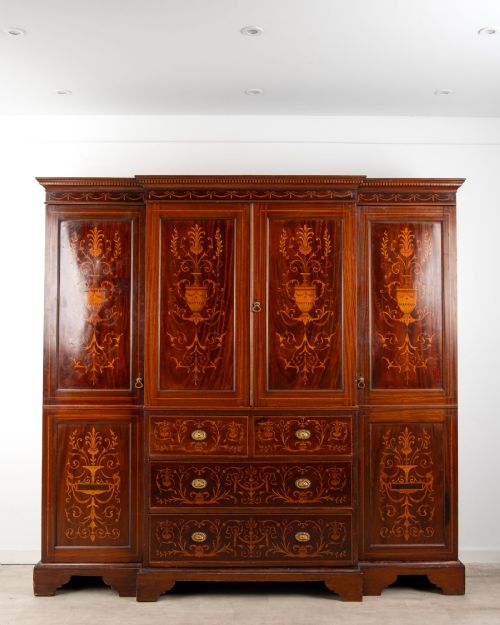
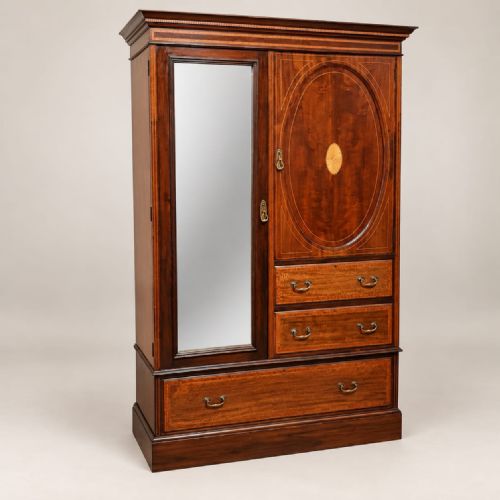
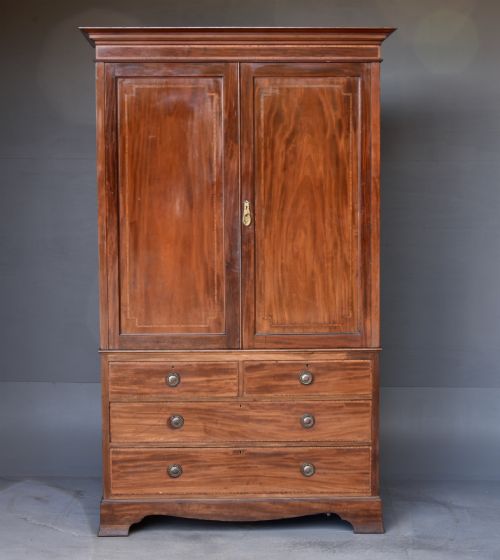
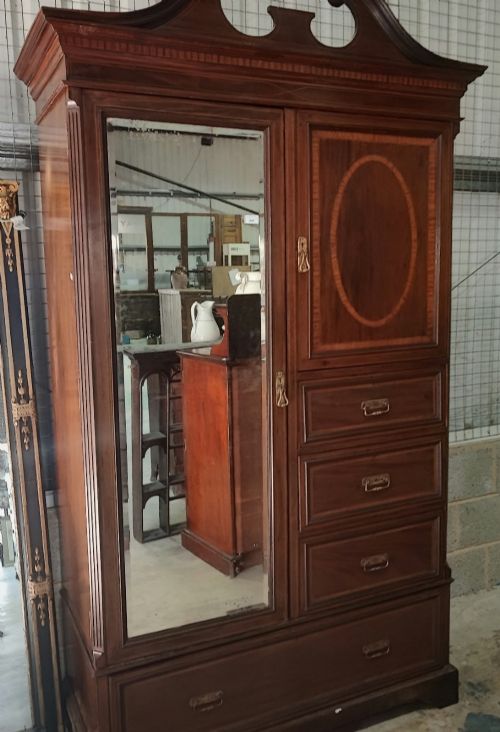
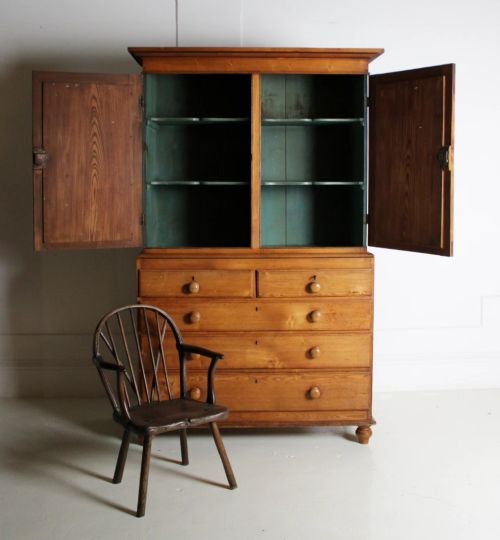
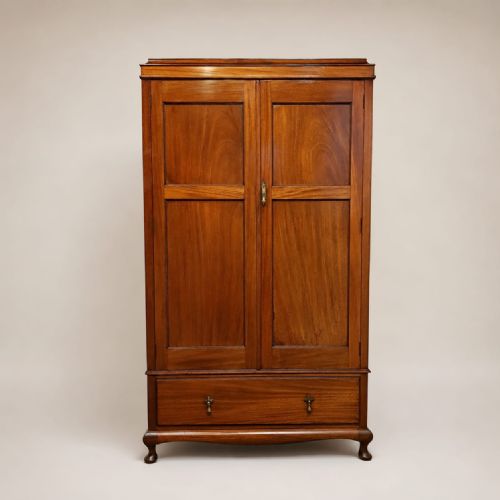
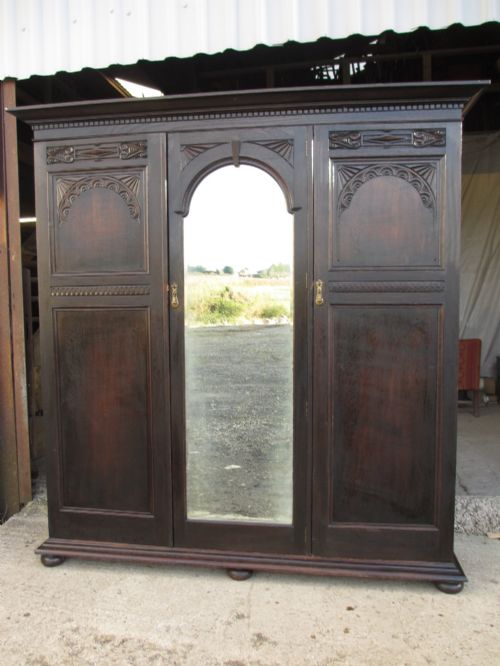
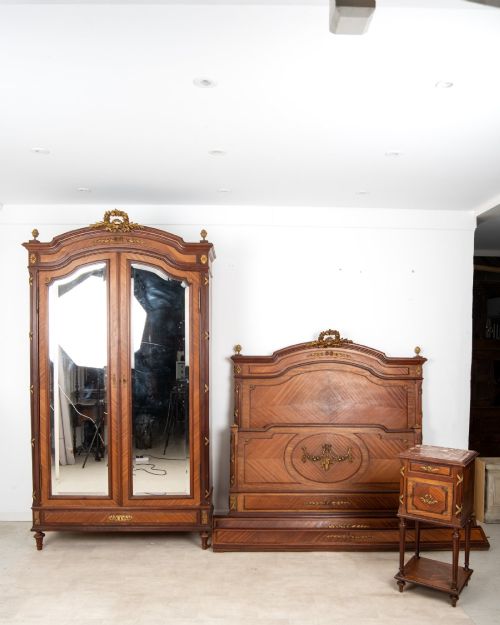
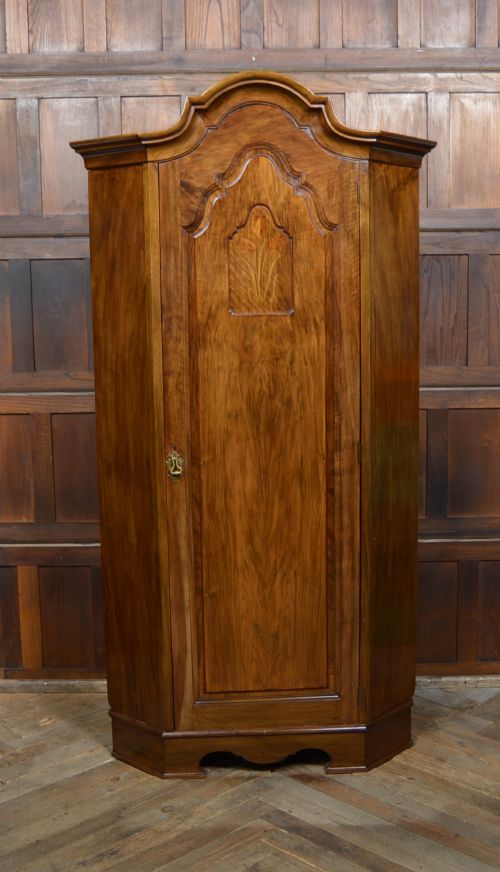
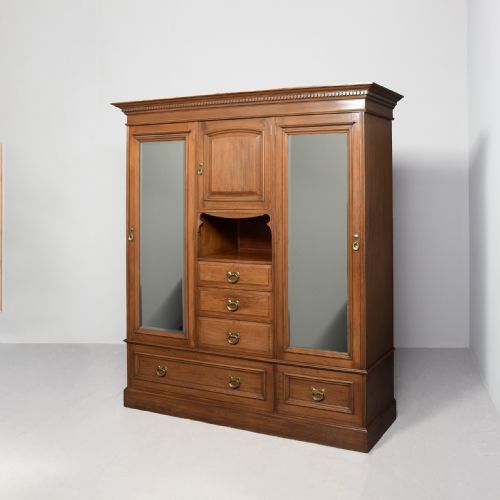
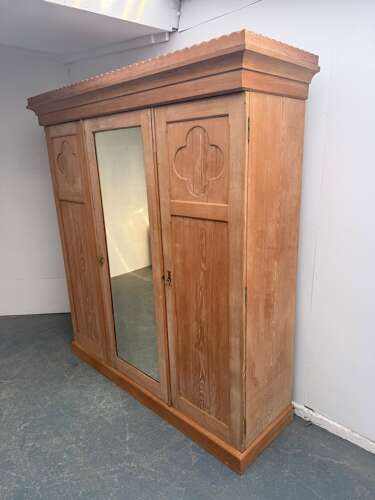
The edwardian armoire encompasses large freestanding clothes storage items made around the turn of the twentieth century, appearing frequently as double or triple wardrobe formats. These pieces often combine hanging compartments with central mirror doors, internal drawers, and linen press sections.
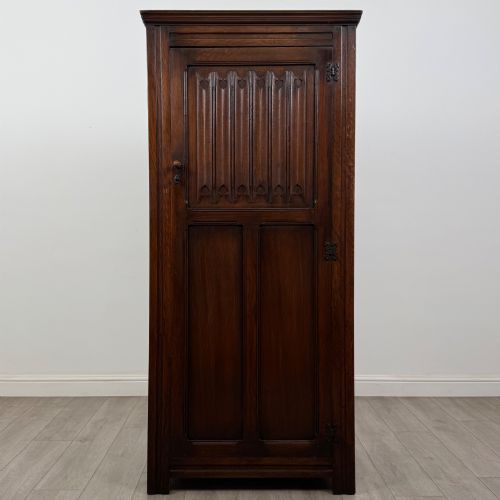
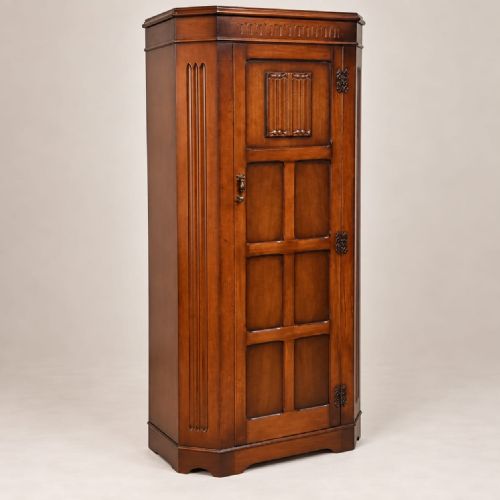
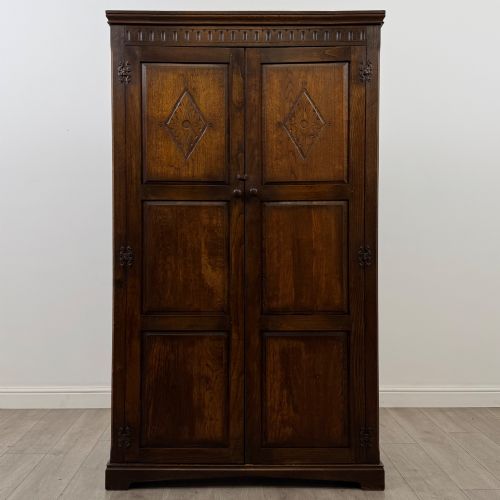
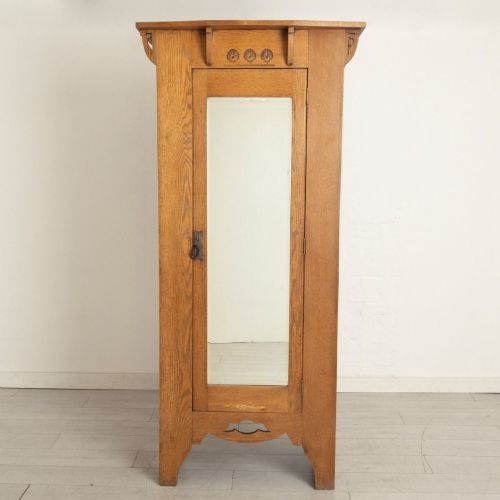
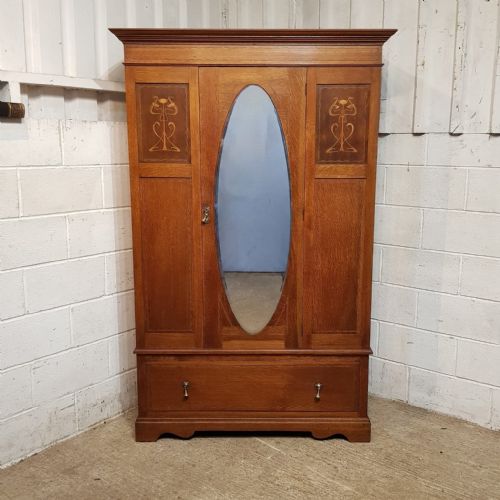
Makers of the period worked within diverse revival styles, producing satinwood painted cabinets alongside dark oak Arts and Crafts designs and mahogany Chippendale revival models. Smaller single hall robes and compactum configurations also serve narrower bedrooms while retaining characteristic period proportions.
Materials and Construction
Cabinet makers utilised dense hardwoods such as mahogany, walnut, and oak, frequently enhanced by decorative satinwood, burr walnut veneers, or marquetry inlay. Structural elements often incorporate secondary softwoods like pine for internal carcass framing and drawer linings.
Larger triple wardrobes and compactums were built as knockdown units utilising internal bolts and peg joints to allow assembly within domestic rooms. Brass hardware, bevelled glass mirror plates, and hand-painted panels complete the primary construction methods.
Faux bamboo framework appears alongside bird’s-eye maple to satisfy Victorian and Edwardian tastes for exotic botanical textures.
Determinants of Quality
Quality rests upon the selection of timber veneers and the depth of carved or inlaid decoration applied to the exterior facade. Pieces displaying figured mahogany, matched burr walnut, or detailed hand-painted panels sit at the upper end of the scale.
Internal configuration also separates standard production from superior cabinet work, particularly fitted compactums featuring numerous internal slides, linen trays, and well-executed dovetailed drawers. Maker attribution to notable workshops further elevates the standing of individual pieces.
maples & co·Edwards and Roberts·Shapland & Petter·Harris Lebus·Heals
The Edwardian Armoire Glossary
- Compactum
- A large wardrobe combining hanging space, linen shelves, and internal drawers within a single multi-door carcass.
- Linen Press
- A tall storage cabinet featuring upper sliding trays or shelves above a bank of lower drawers.
- Marquetry
- The art of applying decorative pieces of veneer to a structure to form geometric or floral patterns.
- Knockdown
- Furniture constructed to be easily dismantled into separate panels and cornices for transport and room assembly.
- Breakfront
- A cabinet facade where the central section projects forward from the flanking outer wings.
Edwardian Armoire: Frequently Asked Questions
How do I dismantle an edwardian armoire?
Most large edwardian armoires and triple wardrobes utilise internal metal bolts or wooden connector pegs designed to hold the cornice, base, and side panels together without permanent glue.
Unscrewing these internal fixings allows the heavy wardrobe to separate into flat sections for easier transport through doorways and up staircases.
What is the difference between a wardrobe and a compactum?
A standard wardrobe focuses primarily on vertical hanging space behind one or more full-length doors, occasionally featuring a single bottom drawer.
A compactum integrates multiple internal storage types into one cabinet, combining hanging sections with banks of linen shelves and sliding clothes trays.
Can I fit modern hangers inside an edwardian armoire?
Many early wardrobes feature front-to-back pull-out metal hanging rails rather than standard side-to-side hanging bars due to the shallow internal depth of older cabinets.
Modern wooden clothes hangers may prove too wide for older depths, requiring the use of narrower vintage hangers or fitted modern rail adapters.
How do I distinguish Edwardian from Victorian wardrobes?
Victorian wardrobes typically favour heavier proportions, darker finishes, and dense carved ornamentation executed in solid mahogany or walnut.
Edwardian cabinet makers shifted towards lighter satinwood inlays, painted panels, satin finishes, and revival styles reflecting eighteenth-century design influences.