



Inlaid Round Table
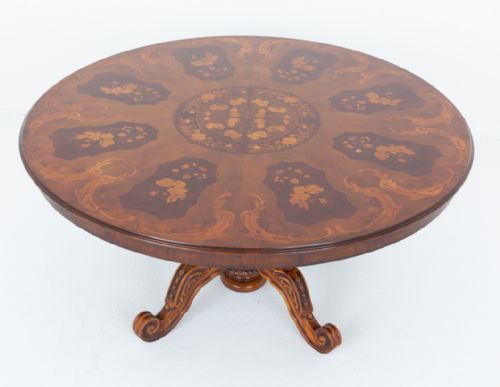
An inlaid round table brings together fine cabinetmaking and decorative surface work, offering a circular form well suited to central placement in a room.
Inlaid Round Table
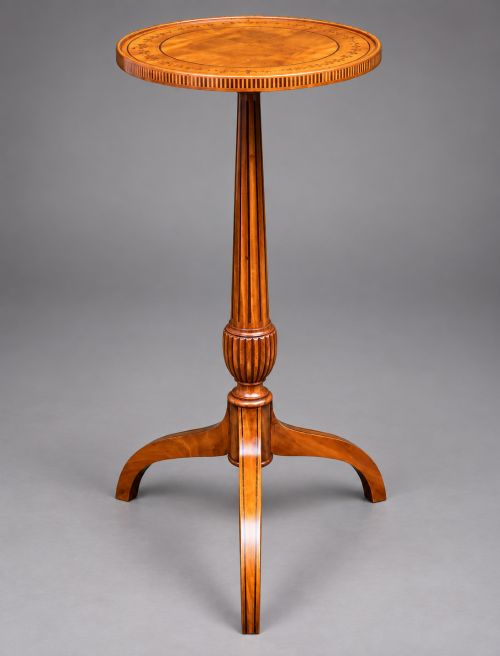
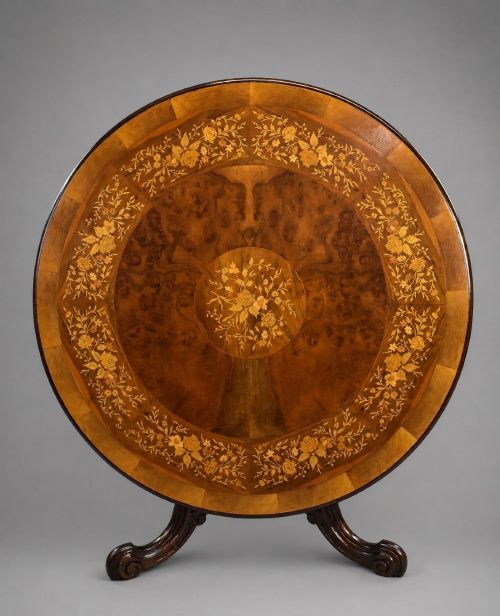
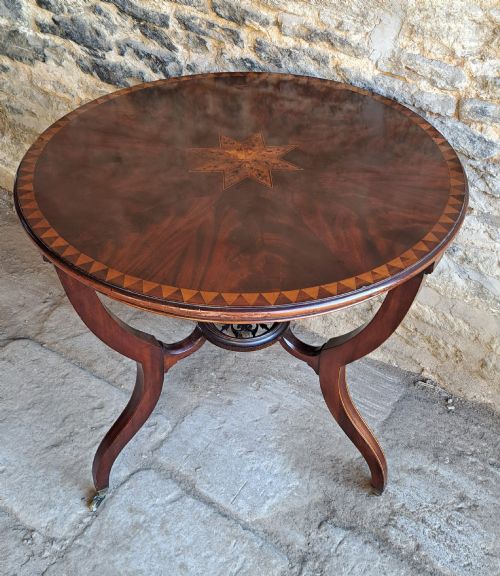
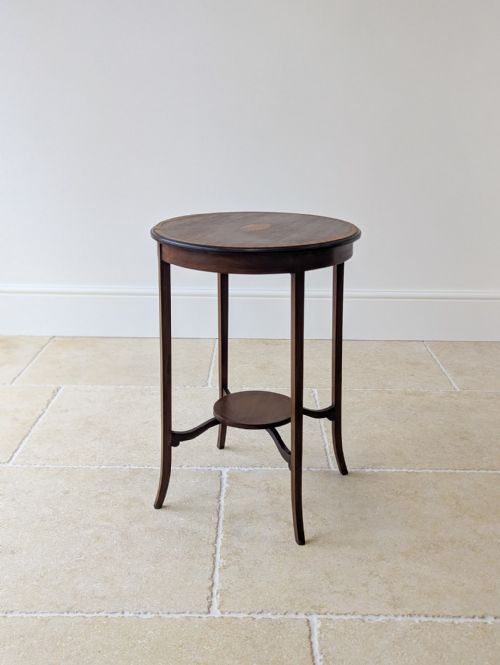
An inlaid round table appears across various formats including centre tables, occasional tables, breakfast tables, and tea tables spanning the nineteenth and early twentieth centuries. Victorian and Edwardian examples dominate the selection, frequently utilising rich timbers such as burr walnut, mahogany, and satinwood.
Makers and workshops across Britain, continental Europe, and beyond produced these pieces in styles ranging from Regency and French Neoclassical to Art Deco. The scale varies from compact lamp and wine tables to large dining and hall tables designed for central room placement.
Materials and construction
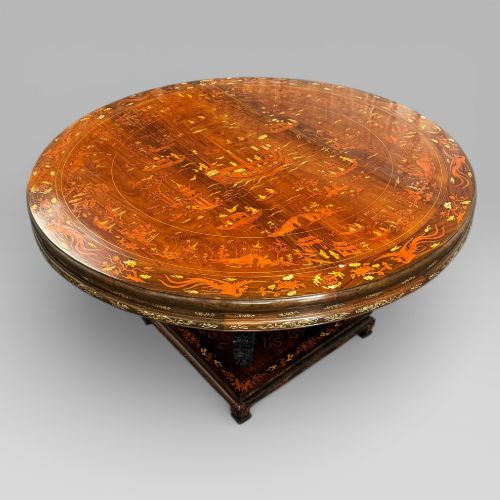
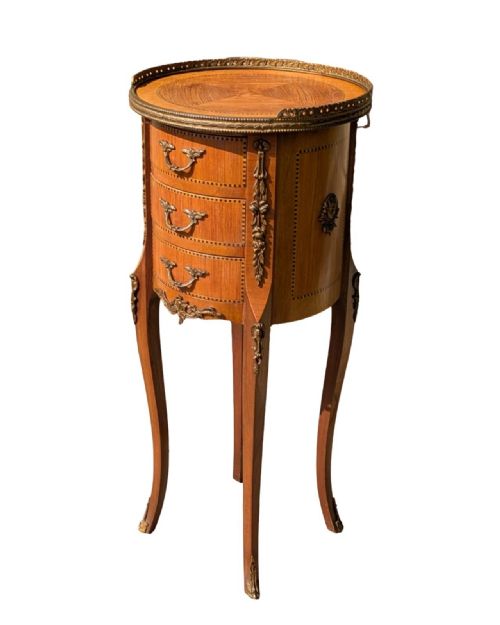
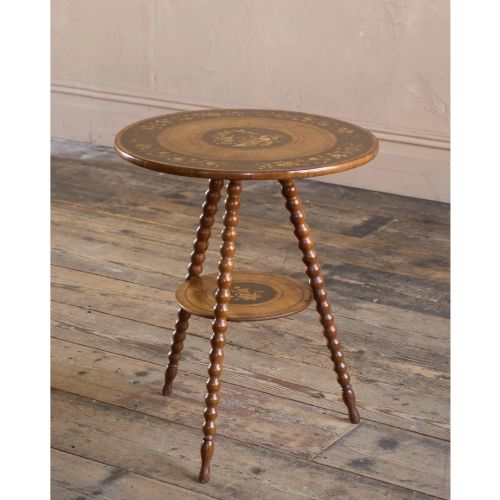
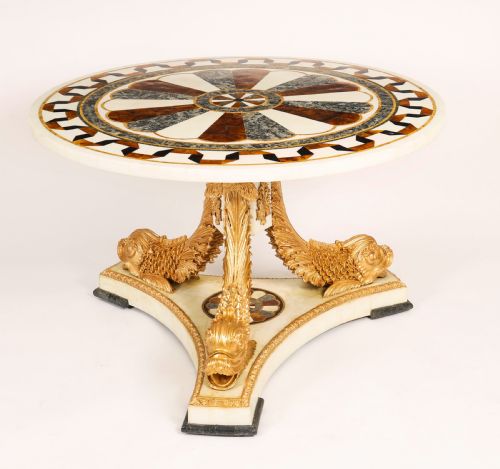
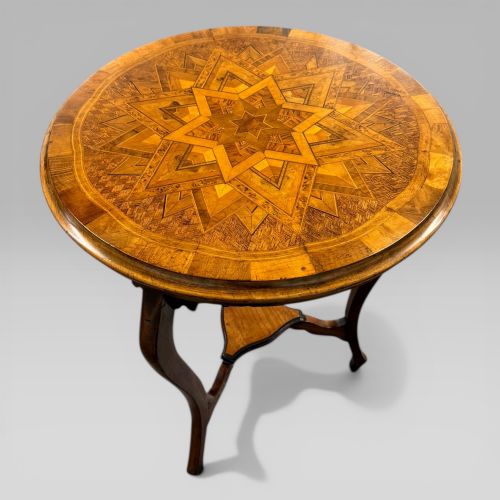
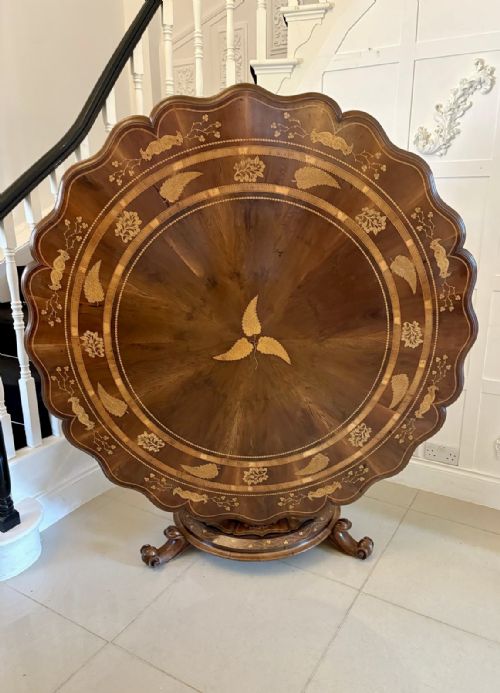
Craftsmen built the carcases from solid woods like mahogany, walnut, and oak, applying decorative veneers and contrasting timbers to the circular tops. Marquetry inlay, specimen wood arrangements, and brass detailing create intricate geometric, floral, or pictorial motifs across the surface.
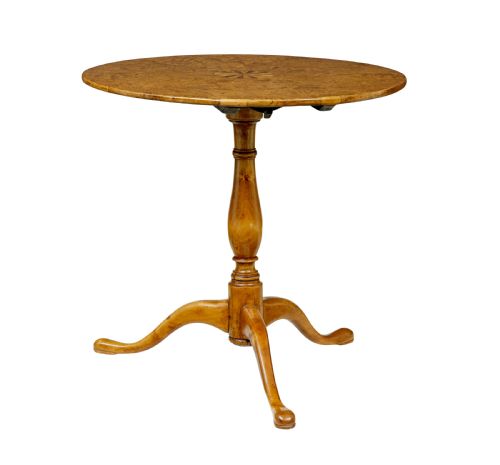
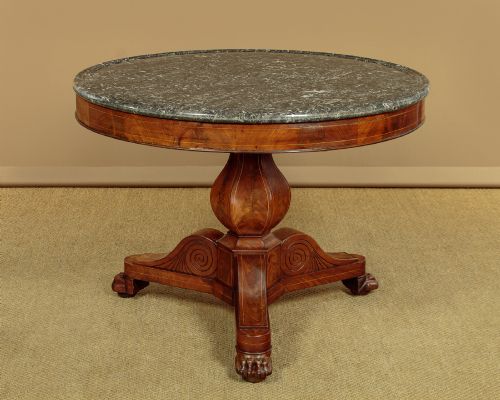
Structural supports take diverse forms, including central pedestals with tripod feet, columnar legs, and bobbin-turned supports. Marble and malachite tops also appear, set into timber frames with specialised joinery to accommodate weight and thermal movement.
Listings feature circular tables executed in walnut, mahogany, rosewood, satinwood, and marble across Victorian, Edwardian, and Regency periods.
Standards of craftsmanship
Quality rests in the precision of the marquetry and the choice of timber figures, such as burr walnut, bird's-eye maple, or thuya wood. Finer examples display seamless veneer matching and tightly fitted inlay work without visible gaps or lifting.
The sophistication of the structural carving and the integrity of the secondary woods further distinguish standard production pieces from exhibition-quality works attributed to prominent makers.
Edwards & Roberts·Anton Seuffert·Egan Workshop·Pietro Ferrario·Woodley family·Maples & Co·Gillows
The Inlaid Round Table Glossary
- Marquetry inlay
- Decorative patterns formed by fitting pieces of veneer into a prepared surface, often utilising contrasting woods and botanical motifs.
- Specimen wood
- An arrangement of numerous different timbers, chosen for their natural colours and grain patterns to create pictorial or geometric designs.
- Centre table
- A freestanding piece designed to be viewed from all sides, traditionally placed in the middle of a room rather than against a wall.
- Tripod table
- A small round table supported by a central pillar resting on three spreading feet, common in nineteenth-century domestic interiors.
Inlaid Round Table: Frequently Asked Questions
Where should I place an inlaid round table?
These tables function well as central display pieces in entrance halls or principal living spaces, where the decorated top remains visible from all angles.
Smaller occasional and lamp versions fit easily beside seating groups or in corners, providing a stable surface for lighting and decorative objects.
How do I care for antique veneered surfaces?
Protect the wood from direct sunlight and excessive temperature fluctuations to prevent the veneers and delicate inlay work from drying out or lifting over time.
Dust regularly with a soft, dry cloth and apply occasional specialist wax polish to maintain the sheen of the timber without building up heavy residues.
What is the difference between a centre table and a tea table?
Centre tables are built to stand freely in the middle of a room as decorative focal points, often featuring elaborate marquetry or marble tops.
Tea tables historically served a domestic function for social gatherings, sometimes featuring folding tops or lighter portable construction suited to entertaining.
How can I tell the period of a round table?
Stylistic clues such as Regency brass inlay, Victorian burr walnut marquetry, or Edwardian satinwood painting point directly to the prevailing tastes of their manufacturing era.
Construction methods, timber choices, and secondary woods underneath the top or inside the pedestal further clarify the historical period of origin.