
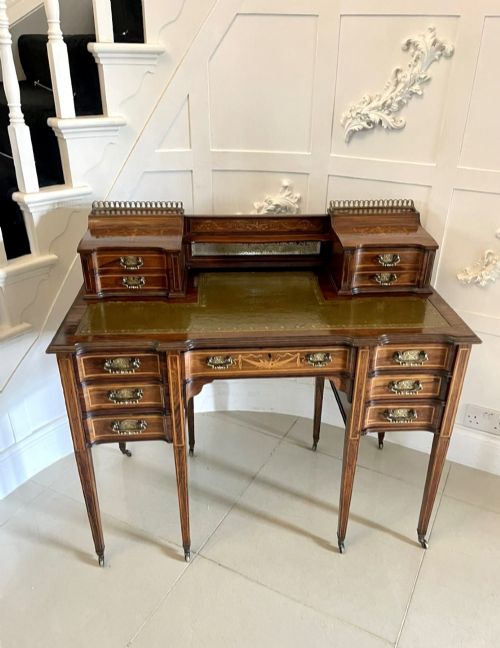
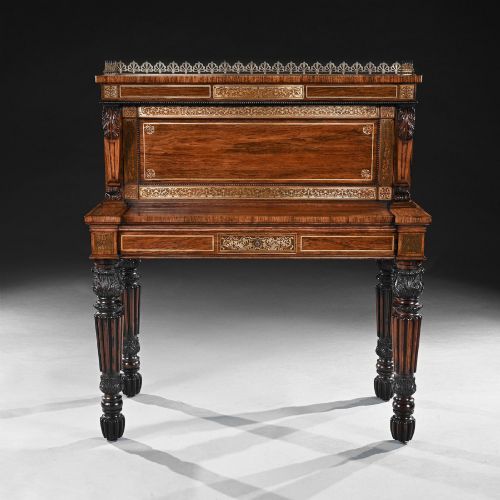
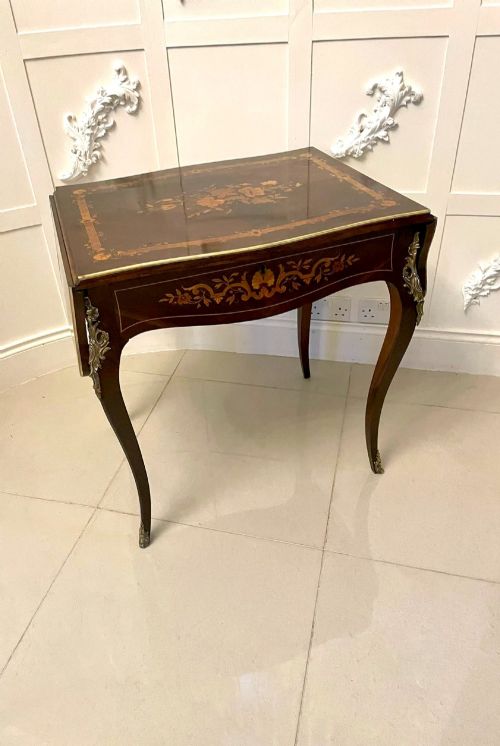
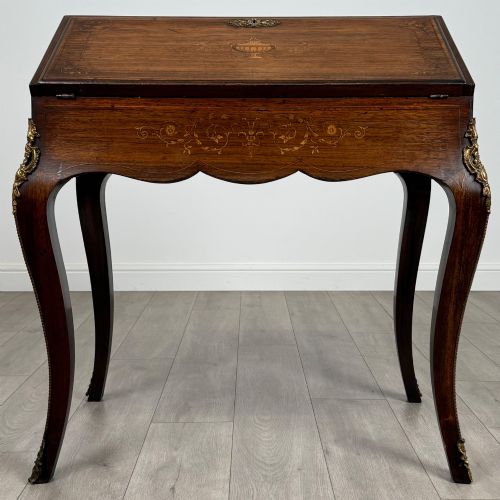
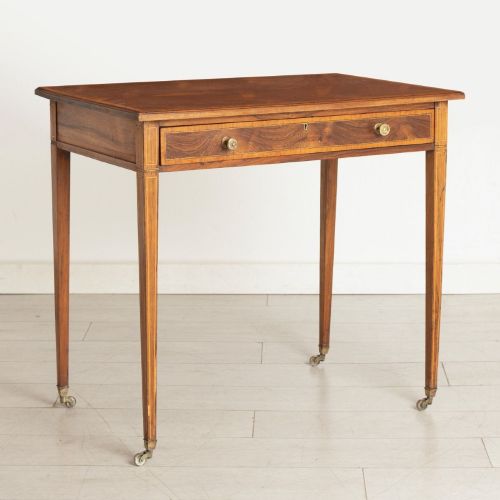
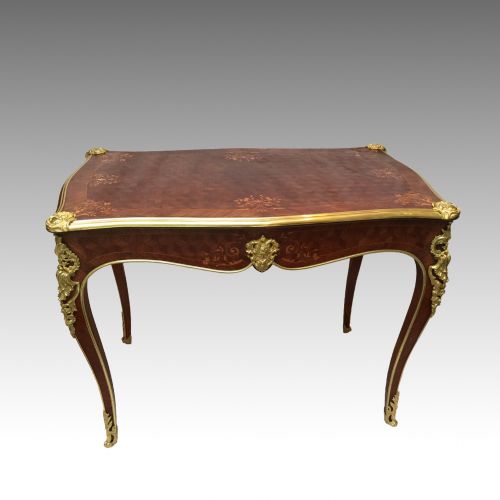
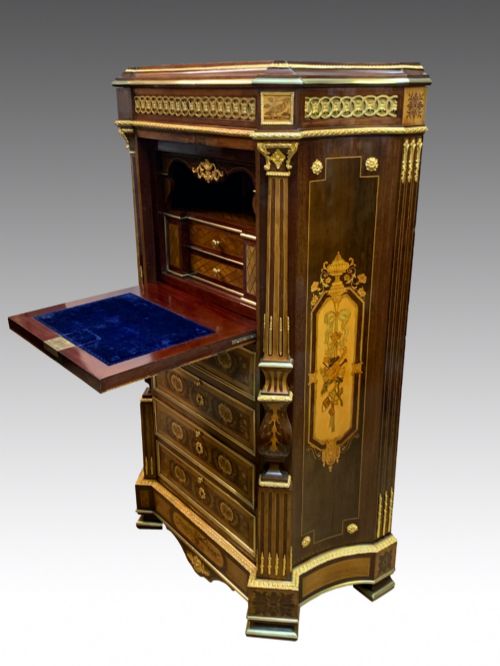
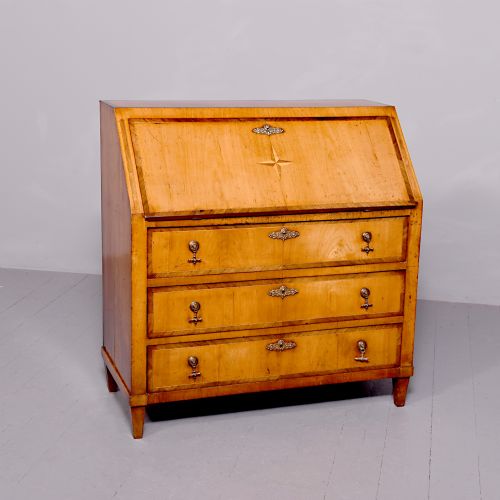
Inlaid Rosewood Writing Desk
An inlaid rosewood writing desk brings rich timber grain, precise brass or wood detailing, and practical writing space into a room.
Inlaid Rosewood Writing Desk
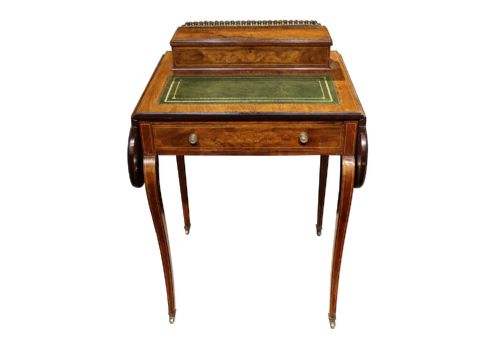
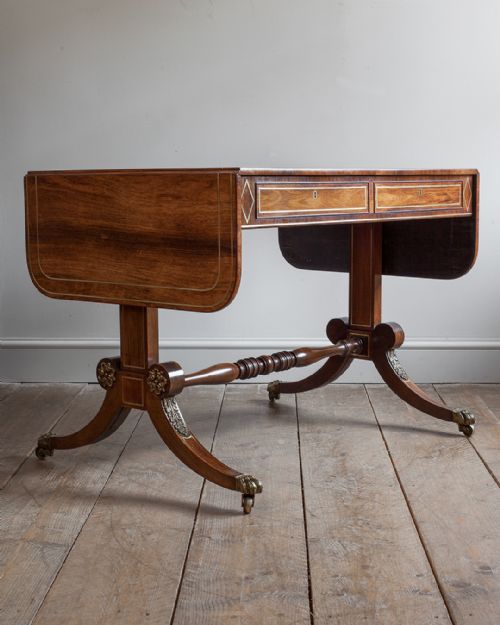
When you search for an inlaid rosewood writing desk, you encounter a refined group of antique furniture designed for correspondence, study, and light administrative work. The category spans compact table formats, ladies writing desks, and portable slope boxes meant for travel.
The versions you are most likely to meet on this page hail from the Victorian and Edwardian eras, alongside Regency periods and Sheraton Revival interpretations. These pieces often feature fitted interiors with small drawers, pigeonholes, and compartments for stationery.
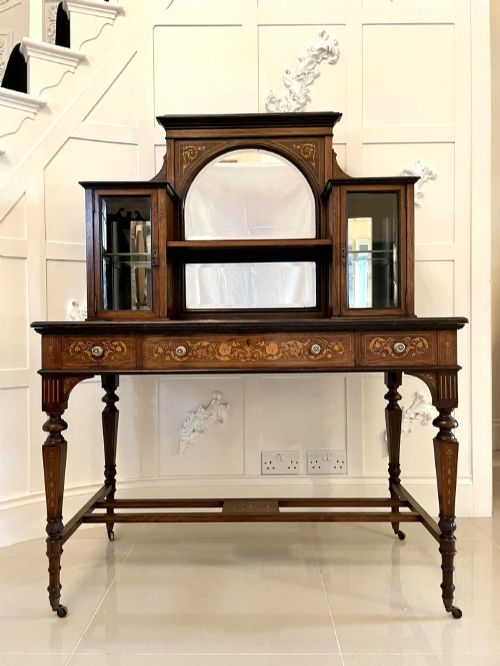
Makers utilised dense tropical hardwoods combined with lighter contrasting timbers to create elegant surface patterns. Many examples stand freestanding with polished backs, allowing placement in the centre of a room rather than strictly against a wall.
How they were made
Craftsmen built these tables and boxes using solid rosewood or applied fine rosewood veneers over secondary framing timbers. The dark, heavily figured grain of the primary wood provided a dramatic visual base for decorative work.
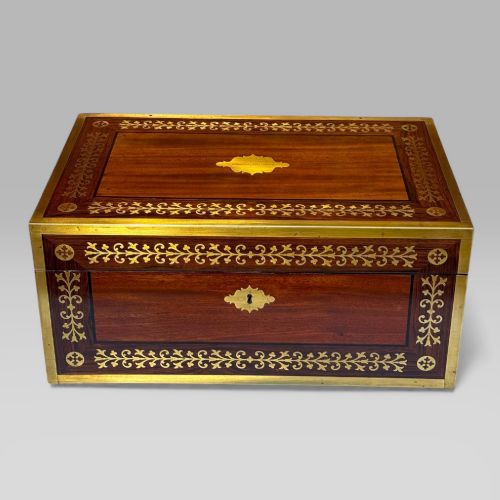
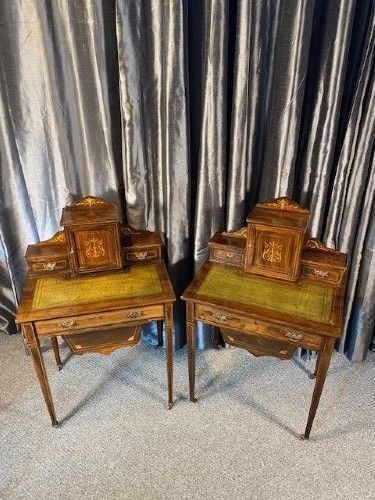
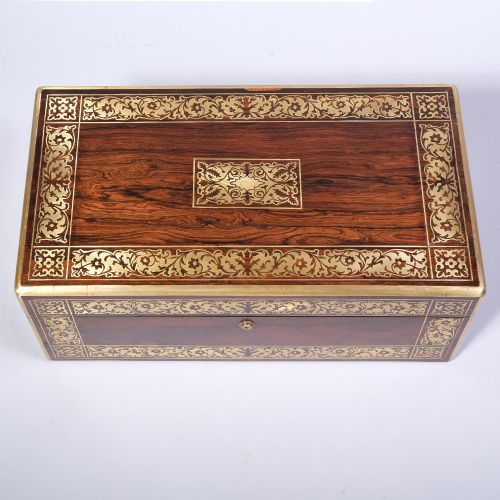
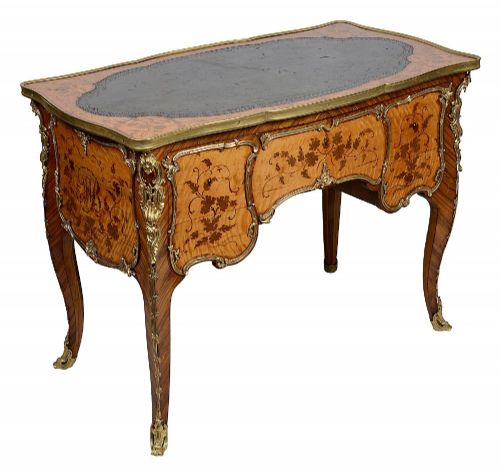
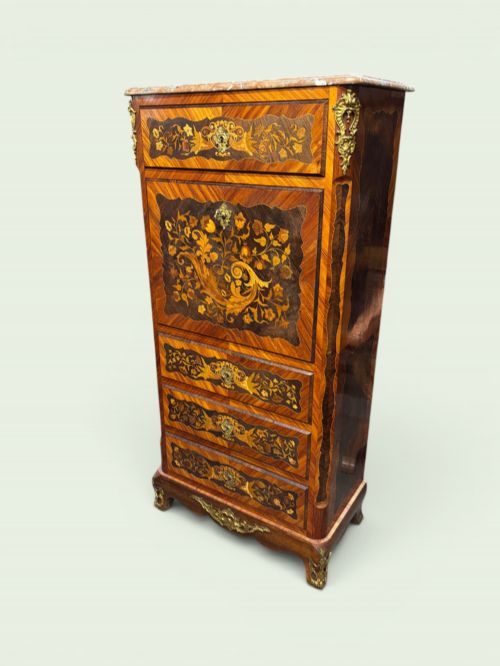
Surface enrichment relied heavily on marquetry and parquetry, incorporating lighter woods such as satinwood, boxwood, and kingwood to form floral or geometric motifs. Artisans also embedded cut brass stringing and foliate brass inlay directly into the wood surface.
For portable writing slopes and campaign pieces, makers integrated flush brass carrying handles, lockable mechanisms, and leather-lined writing surfaces that folded flat. Ormolu mounts and gilt bronze details occasionally appeared on French-influenced bureauplat and bonheur du jour forms.
Listings feature items from the Georgian, Regency, Victorian, and Edwardian periods, utilising rosewood, satinwood, kingwood, and brass.
What varies in quality
The standard of an inlaid rosewood writing desk depends significantly on the precision of the timber matching and the intricacy of the inlay work. Finer examples display tight, seamless botanical marquetry where contrasting woods fit together without visible gaps or excessive filler.
Structural execution also separates standard production from superior cabinetmaking. Top-tier pieces feature well-figured solid timber secondary linings inside drawers, original functioning brass locks, and stable joinery that prevents warping in the dense rosewood panels.
The refinement of the fitted interior dictates overall grade. Desks equipped with secret compartments, meticulously turned inkwell holders, and gold-tooled leather writing surfaces command greater appreciation than plain utilitarian compartments.
Maple and Co·Gillows Oxford Street Workshop·Maison Krieger·Collinson and Lock·William H Vaughan and Co·Jas Shoolbred and Co·Donald Ross
The Inlaid Rosewood Writing Desk Glossary
- Marquetry
- The art of creating decorative pictorial or geometric patterns by fitting together thin veneers of various coloured woods. This technique defined the elaborate floral motifs seen on many Edwardian and Victorian desks.
- Parquetry
- A geometric mosaic of wood pieces used for covering floors or furniture surfaces. It creates repeating patterns like cubes or chequers across the top of a writing table.
- Writing Slope
- A portable sloped box that folds open to reveal a slanted writing surface and internal storage for pens and paper. Regency examples frequently feature brass corners and inlaid brass stringing.
- Bonheur du Jour
- A light lady writing desk featuring a small cabinet or set of drawers and pigeonholes mounted on the back of the writing surface. This French form became popular during revival periods.
- Ormolu
- Gilded bronze mounts applied to furniture edges and corners for decorative effect. It appears frequently on French Louis XV and XVI style pieces in the archive.
Inlaid Rosewood Writing Desk: Frequently Asked Questions
How do I date a rosewood desk?
Dating relies on combining the stylistic evidence of the period with construction methods, such as screw types and drawer dovetailing. Regency pieces often showcase brass inlay and bold grain, whereas Edwardian items lean towards delicate Sheraton Revival satinwood borders.
Cabinetmaker stamps, paper trade labels, and documented workshop attributes also help narrow down the decade of manufacture. Examining secondary woods inside the drawers provides further clues regarding origin and era.
What is satinwood used for?
Satinwood serves primarily as a contrasting inlay material against the dark backdrop of rosewood. Its pale, golden yellow tone allows makers to highlight stringing lines, oval medallions, and delicate floral marquetry.
In some pieces, satinwood forms the primary interior drawer fronts while the exterior remains predominantly rosewood. This creates a striking visual contrast when the desk lid or writing flap opens.
Are writing slopes different from desks?
Writing slopes are portable box containers that unfold to create an angled writing surface. They lack permanent legs and were designed to be placed upon other tables or kept on a lap during travel.
Desks and writing tables are permanent furniture items with fixed legs, frames, and dedicated workspaces. Both categories, however, share internal compartments for stationery, inkwells, and documents.